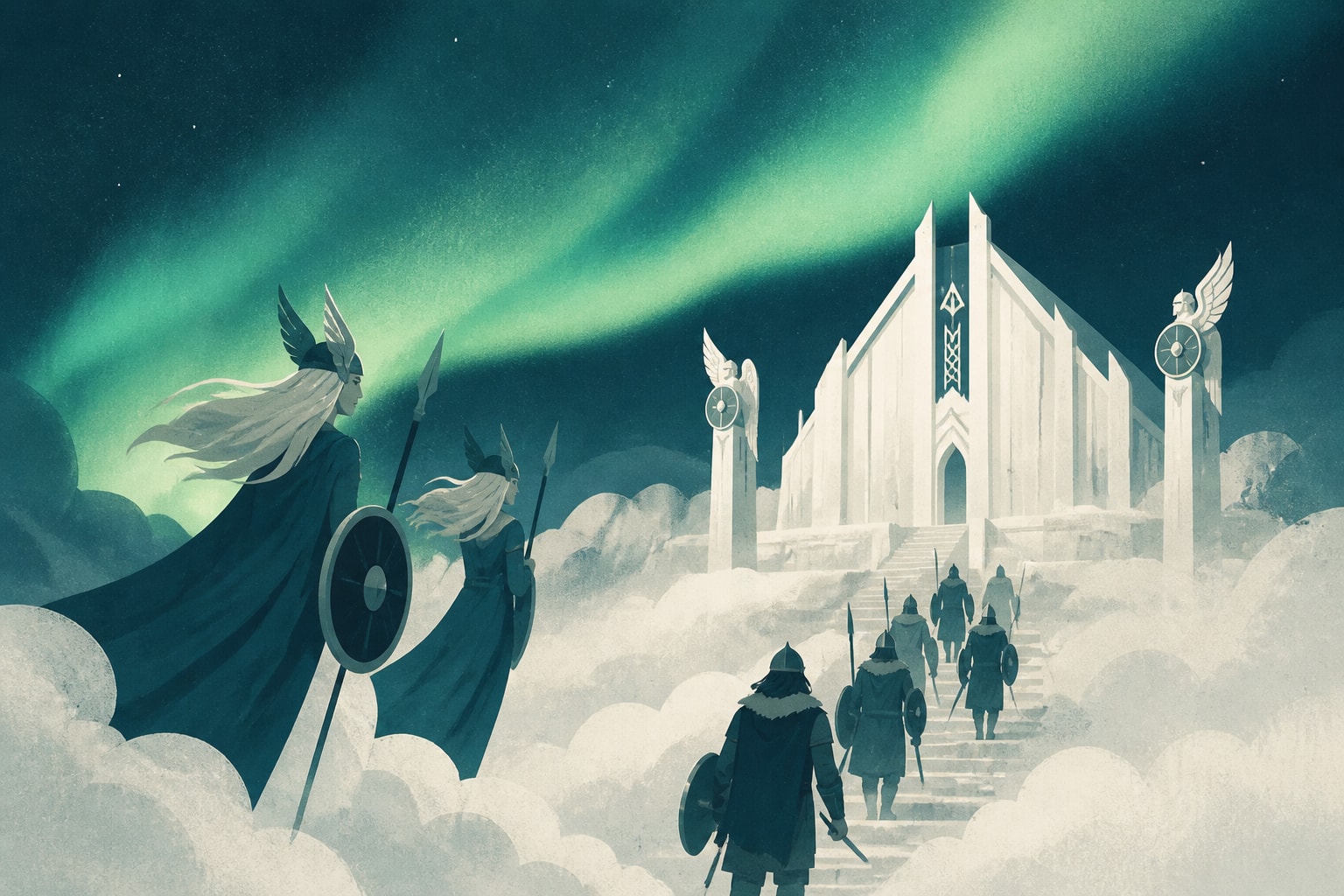
Valhal, more commonly spelled Valhalla, is the great hall of the Norse god Odin, where warriors slain in battle live on after death. According to Encyclopaedia Britannica, it is Odin's hall for the fallen, who dwell there under his leadership. The name comes from the Old Norse Valhöll, and the idea of this golden, feast-filled hall has shaped how people imagine the Viking afterlife for centuries.
For visitors to Iceland, where the sagas and the Eddas were written down, the story carries extra weight. The same winter sky that draws travelers north was, in the old tales, a place of gods, bridges and warriors.
What Is Valhalla?
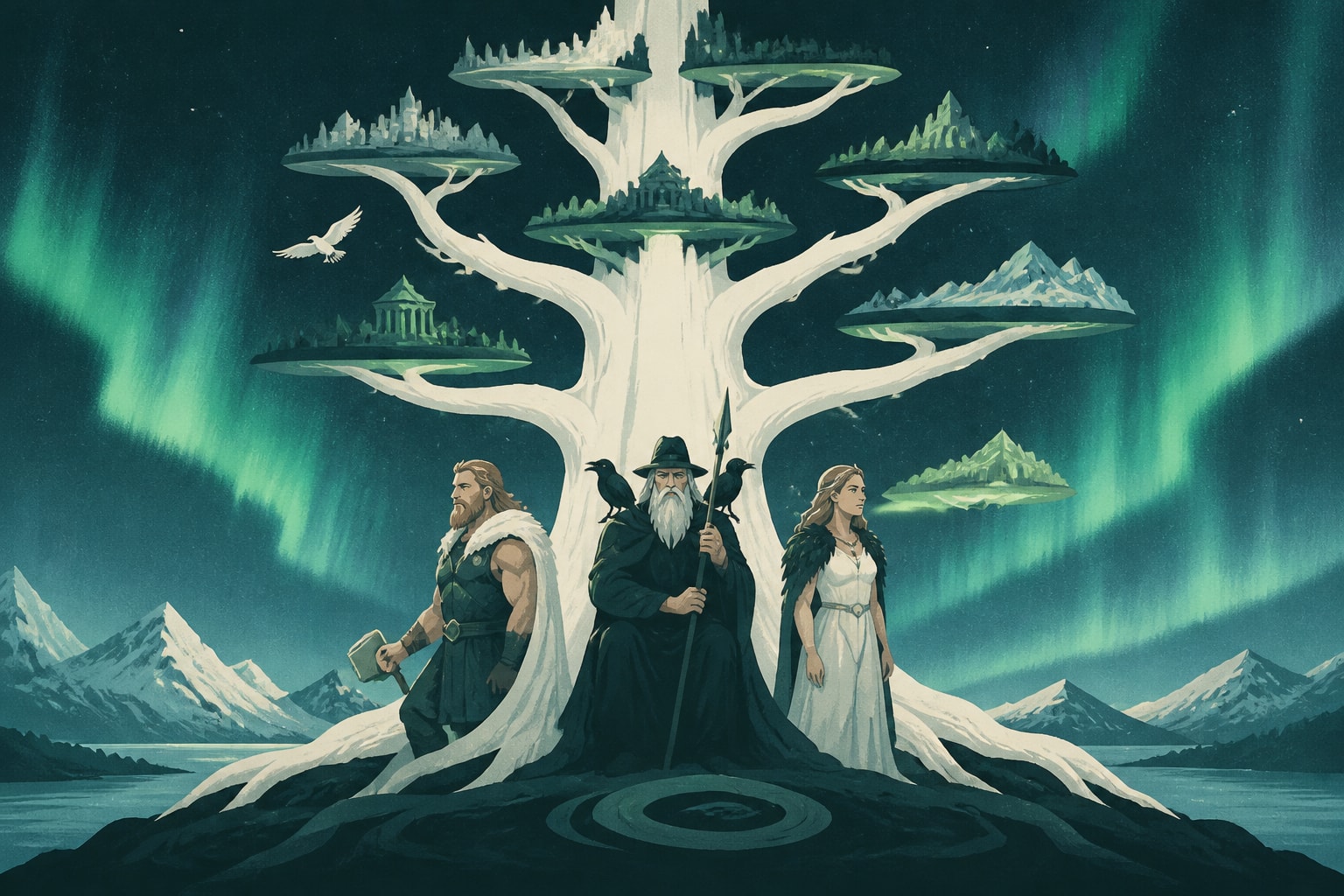
Valhalla is a vast hall in Asgard, the realm of the gods, where Odin gathers a chosen group of fallen warriors to prepare for the end of the world. Britannica describes it as one of 12 or more realms within Asgard, the dwelling place of the gods.
The medieval Icelandic sources describe it in vivid terms. The roof is made of shields, the rafters of spears, and the benches are strewn with armor. A wolf hangs near the western door and an eagle hovers above. The hall has many doors, and warriors march out of them to fight, a detail recorded in the poem Grímnismál.
Three features define the place:
- A feast without end. Warriors eat the meat of the boar Sæhrímnir, which is cooked each day and whole again by evening.
- Daily combat. The warriors fight one another every morning, are healed, and return to feast at night.
- A purpose. The whole arrangement is preparation for Ragnarök, the final battle in which gods and giants meet.
It is helpful to think of Valhalla less as a reward and more as a barracks with a banquet attached. The residents are there to serve Odin's cause.
Is It Valhall or Valhalla?
Both spellings refer to the same place, and Valhalla is the standard English form. Valhall is the Scandinavian-language version, used in modern Norwegian and Swedish, while Valhöll is the original Old Norse spelling with its distinctive accent and ö.
The variation is a matter of language rather than meaning. English adopted the form with the added "a" through Latinized and later Romantic-era usage, and it stuck in popular culture. If you type "valhal" into a search bar, you are most likely looking for the same hall described in this article, just with a shortened spelling. In an academic or museum setting you will usually see Valhöll or Valhalla.
What Does the Name Valhalla Mean?
The name Valhalla means "hall of the fallen." Britannica explains that the Old Norse Valhöll combines valr, meaning "the fallen" or "the slain," with höll, meaning "hall."
The word valr refers specifically to those killed in battle, not to the dead in general. That distinction matters, because it tells you who the hall was built for. Related words appear across the Germanic languages, and the same root survives in the term Valkyrie, which means "chooser of the slain."
Who Goes to Valhalla?
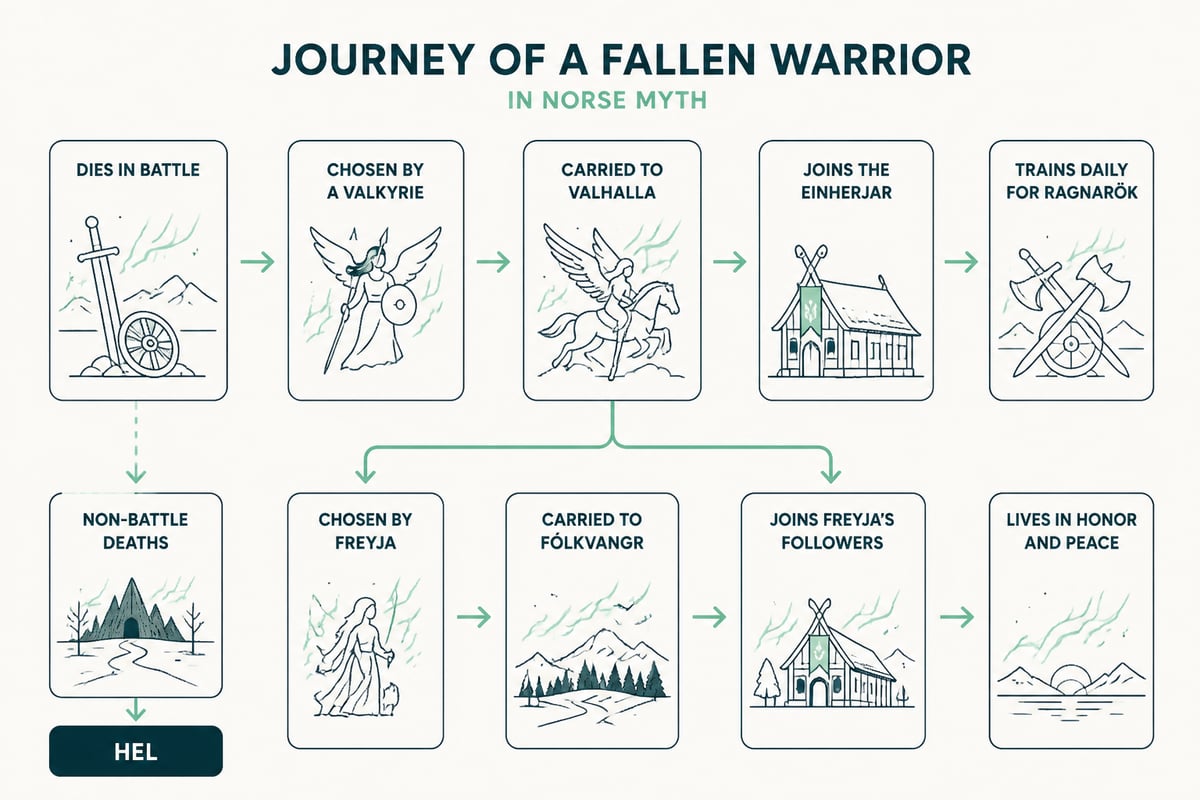
Those who die in battle may go to Valhalla, where they are chosen by the Valkyries, who serve Odin. Britannica Kids explains that these warriors are called the Einherjar, and that Valkyries select fallen heroes and bring them to Odin's hall. The Valkyries are warrior-maidens who ride over battlefields and decide who will live and who will die.
Some of the battle dead are said to go to Fólkvangr, a meadow ruled by the goddess Freyja. The sources are not detailed about how the division works, which is one reason scholars still debate it.
Several groups did not enter Valhalla:
- Those who died of old age or illness. They were thought to go to Hel, the realm ruled by the being of the same name. Hel was a neutral place, not a place of punishment, as later Christian writers sometimes implied.
- Those who drowned at sea. These were often said to belong to the sea goddess Rán.
- Women, in most surviving accounts. Valhalla is described as a hall of warriors, though the sources are limited and the picture is not uniform.
Odin himself is the host. To understand why he wants an army of the dead, it helps to read about Odin's roles, including his connection to the Valkyries, the Einherjar and Ragnarök. For a broader look at the figures around him, our guide to the Norse gods lays out who is who.
Why Does Odin Gather Warriors in Valhalla?
Odin gathers the Einherjar so that he has an army ready for Ragnarök, the prophesied battle at the end of the world. The Norse believed that gods and giants would eventually clash, and that even the gods could not avoid defeat.
This gives Valhalla a tragic edge. The warriors train and feast, but the myth never promises that they win. In the poem Völuspá, the wolf Fenrir breaks free and swallows Odin, and the world burns and sinks into the sea before rising again. The hall is a defense against an outcome the sources treat as fixed. If that story interests you, our article on Ragnarök tells it in full, and the story of the wolf appears in our piece on Fenrir.
Where Is Valhalla Located?
In the myths, Valhalla stands in Asgard, the heavenly stronghold of the Aesir gods, and not in any place on the ordinary map. Asgard is reached from the human world, Midgard, by a burning rainbow bridge called Bifröst, which our guide to Bifröst explains in detail.
Some versions place the hall near a grove called Glasir, whose leaves are golden. The sources are poetic rather than geographic, and the Norse did not draw maps of the afterlife. For travelers, this means there is no physical Valhalla to visit in Iceland or Scandinavia. What you can visit are the landscapes that inspired the storytelling, and the museums and sites that preserve it.
Is Valhalla the Same as Heaven?
No, Valhalla is not the same as the Christian Heaven, though people often compare them. Heaven in Christian teaching is open to the faithful regardless of how they die, and it is a place of rest and peace. Valhalla is restricted to selected battle dead and is a place of training, fighting and feasting before a coming war.
The two ideas also differ in tone. Heaven is a final destination. Valhalla is a waiting room before the last battle, and its residents are expected to eventually die again.
Is Valhalla in the Bible?
Valhalla does not appear in the Bible. It belongs to Norse religion and is known from Old Norse texts, mainly the Poetic Edda and the Prose Edda, written down in Iceland in medieval times. Christian writers of that era preserved the stories, which is partly why they survive at all.
How Widely Did Vikings Believe in Valhalla?
Evidence suggests that belief in Valhalla was real but not universal, and that Viking-age ideas about death were varied. Britannica's overview of Germanic beliefs about death and the afterlife cautions about how widespread belief in Valhalla may have been.
Most of what we know comes from sources written down after the conversion to Christianity, often by Icelanders such as Snorri Sturluson. Burial practices varied across the Norse world: some people were cremated, some buried with ships, some with weapons and some with everyday goods. That variety hints that there was no single, shared doctrine about what came after death.
Valhalla also seems to have been a literary and aristocratic idea in many cases. It flattered warriors and kings, and it appears frequently in praise poetry for dead rulers. Ordinary farmers and sailors may have held other views, including that the dead rested in grave mounds or mountains close to home.
Valhalla in Modern Culture
Valhalla today is a global brand of sorts, appearing in music, film, games and everyday speech. Richard Wagner's operas reintroduced the hall to European audiences in the 19th century, and comic books and films have kept it in view ever since. Phrases like "see you in Valhalla" have become shorthand for a hero's farewell.
That popular image tends to simplify the myth. The pop-culture Valhalla is a pure reward for bravery. The medieval one is a conscripted army awaiting an end it cannot prevent. Both versions are worth knowing, and the original is stranger and more thoughtful than the movie version.
Seeing the Norse World in Iceland
Iceland is the best place to feel the setting behind these stories, since the myths were preserved here in medieval manuscripts. Lava fields, black beaches and glacier-fed waterfalls make it easy to picture Odin's world, and Icelandic culture still carries echoes of the old tales, including elves and trolls.
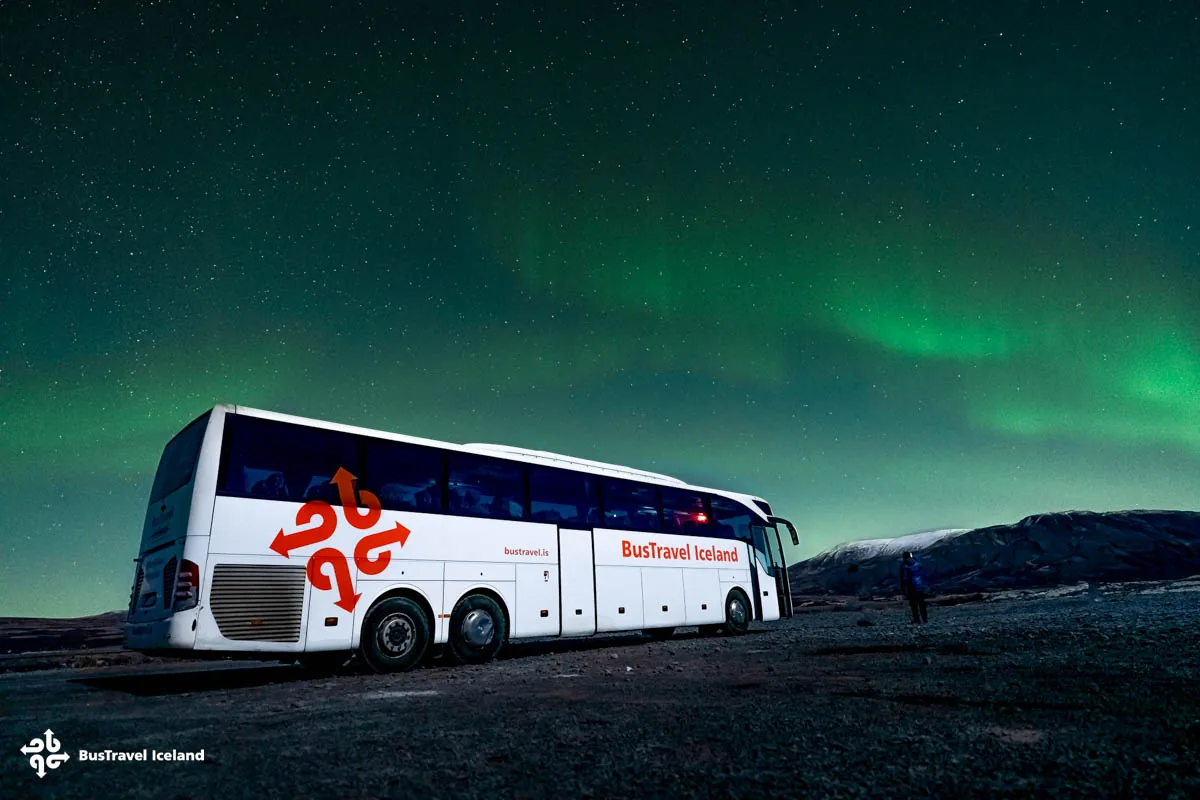
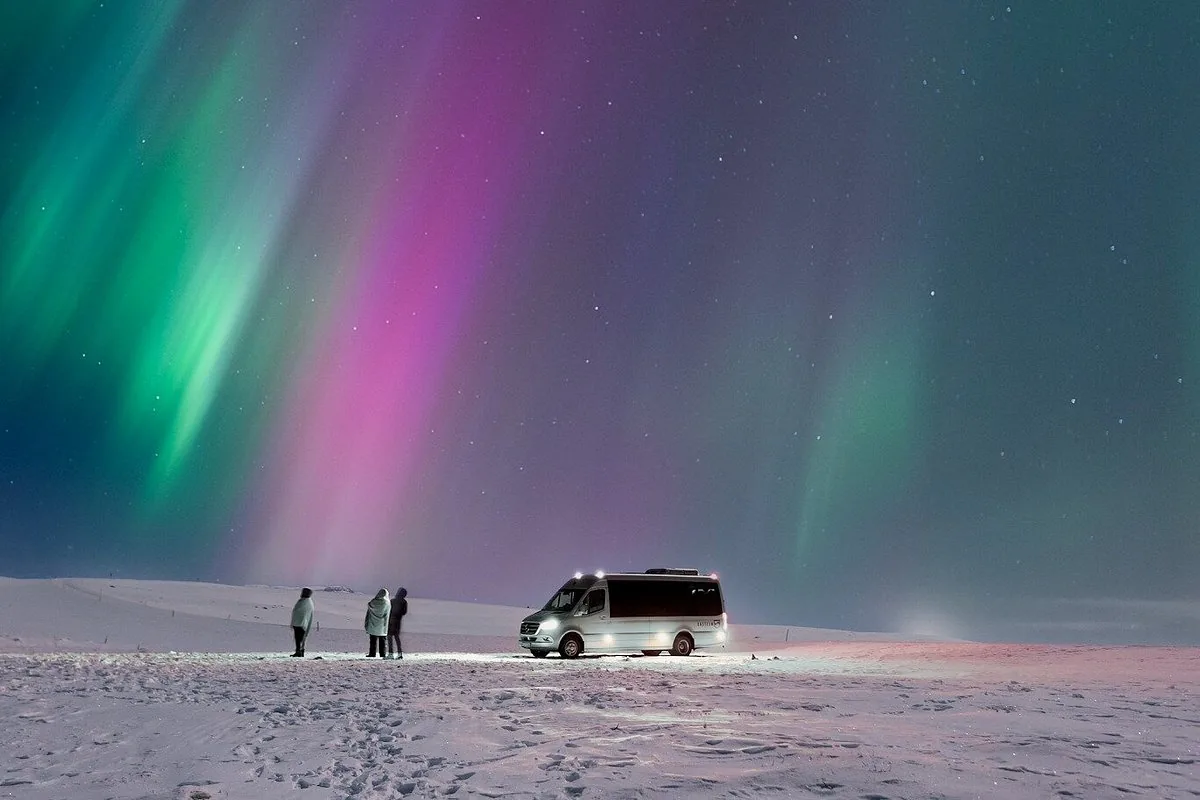
In winter, the aurora adds a layer of atmosphere that suits the subject. Some storytellers like to connect the shimmering sky with Bifröst or with the glint of Valkyrie armor, though those links are modern poetry rather than ancient belief. If you are visiting Reykjavik between autumn and early spring, a guided evening is a good way to combine mythology with the sky. Our guide to the best time for the Northern Lights in Reykjavik helps you choose dates.

Small groups and couples often prefer a smaller format for a more personal evening, and the jeep storyteller tour suits storytelling, which is a natural fit for a night spent talking about Odin and Ragnarök. For what to bring, see our advice on what to wear on a Northern Lights tour. To compare formats in more detail, read about the superjeep experience.

FAQ
Can women go to Valhalla?
The surviving sources mostly describe Valhalla as a hall of male warriors, but the picture is not complete. Women who died in battle, or whom the Valkyries chose, may have been included in some traditions, and Freyja's field Fólkvangr received half of the slain. The texts are limited, so scholars are cautious about firm claims.
What is the difference between Valhalla and Fólkvangr?
Valhalla is Odin's hall, where chosen warriors prepare for Ragnarök. Fólkvangr is a meadow ruled by Freyja, who receives half of those who die in battle. The sources say little about daily life in Fólkvangr, so Valhalla is far better known.
Did the Vikings call it Valhalla?
The Vikings said Valhöll, the Old Norse form. Valhalla is the English adaptation, and Valhall is the form used in modern Scandinavian languages. All three point to the same hall of the fallen.