The ancient tales of Norse gods continue to captivate visitors who journey to Iceland, where these mythological figures once shaped the cultural landscape of the Viking age. When travelers venture into Iceland's dark winter skies searching for the northern lights, they walk in the footsteps of ancestors who attributed the aurora borealis to divine phenomena. Understanding the pantheon of deities that influenced Scandinavian civilization offers profound insight into Iceland's heritage, from place names scattered across the landscape to cultural traditions preserved through centuries. The rich tapestry of these ancient beliefs provides context for modern explorers seeking authentic connections to Iceland's past while experiencing its natural wonders.
The Norse Pantheon Structure and Divine Hierarchy
The norse gods were organized into two primary groups: the Aesir and the Vanir. This division represented distinct aspects of divine power and influence in ancient Scandinavian society.
The Aesir gods served as the principal deities associated with war, governance, and cosmic order. These powerful figures resided in Asgard, their celestial fortress connected to the mortal realm of Midgard through the rainbow bridge Bifrost. The Aesir maintained dominance over most aspects of existence, from battle outcomes to the enforcement of oaths and agreements.
Understanding the Vanir Deities
The Vanir represented fertility, prosperity, and natural abundance. These gods governed agricultural success, maritime ventures, and the cyclical patterns of seasons that determined survival in harsh northern climates.
- Controlled fertility of land and sea
- Oversaw wealth accumulation and trade
- Managed magical practices known as seidr
- Regulated natural cycles and seasonal changes
According to historical sources for Norse mythology, these two divine families initially warred against each other before establishing peace through an exchange of hostages. This mythological reconciliation symbolized the integration of different cultural practices within Norse society.
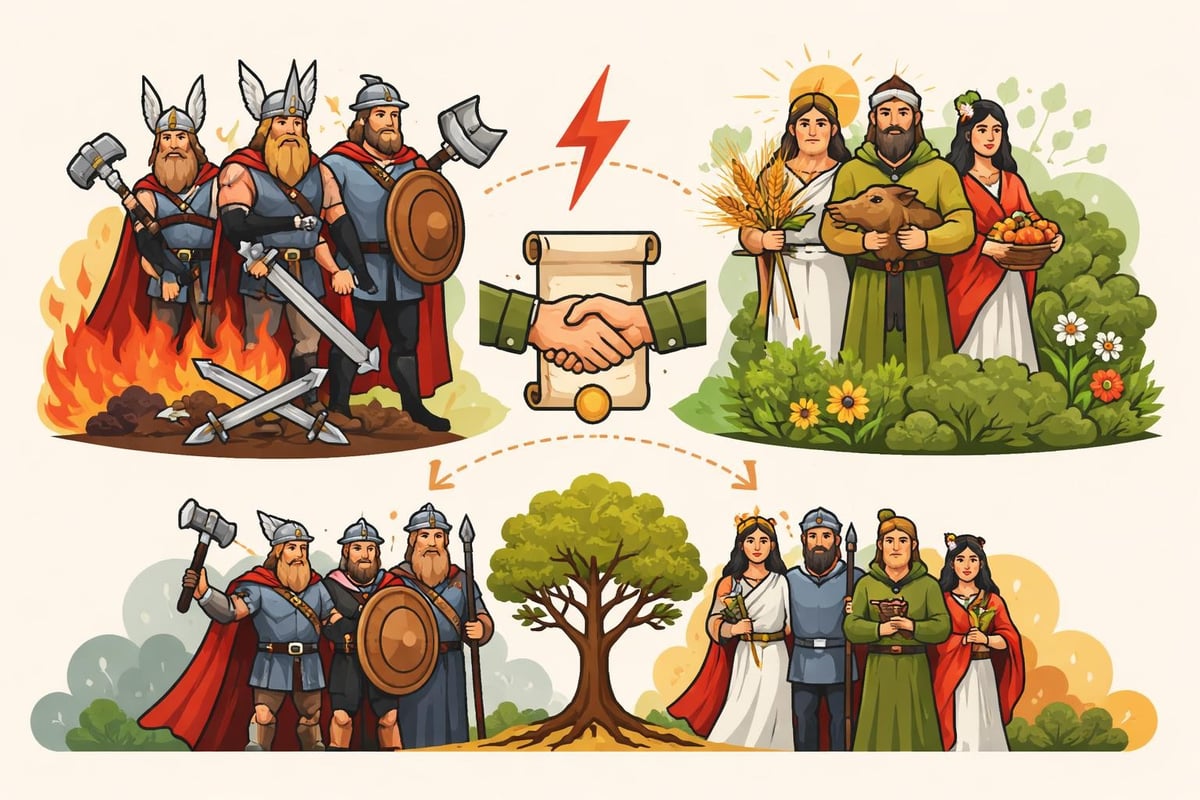
The merging of these divine families created a comprehensive pantheon that addressed every aspect of human concern, from battlefield glory to agricultural harvest. This theological structure reflected the practical needs of societies dependent on both raiding expeditions and farming productivity.
Odin: The Allfather and Seeker of Wisdom
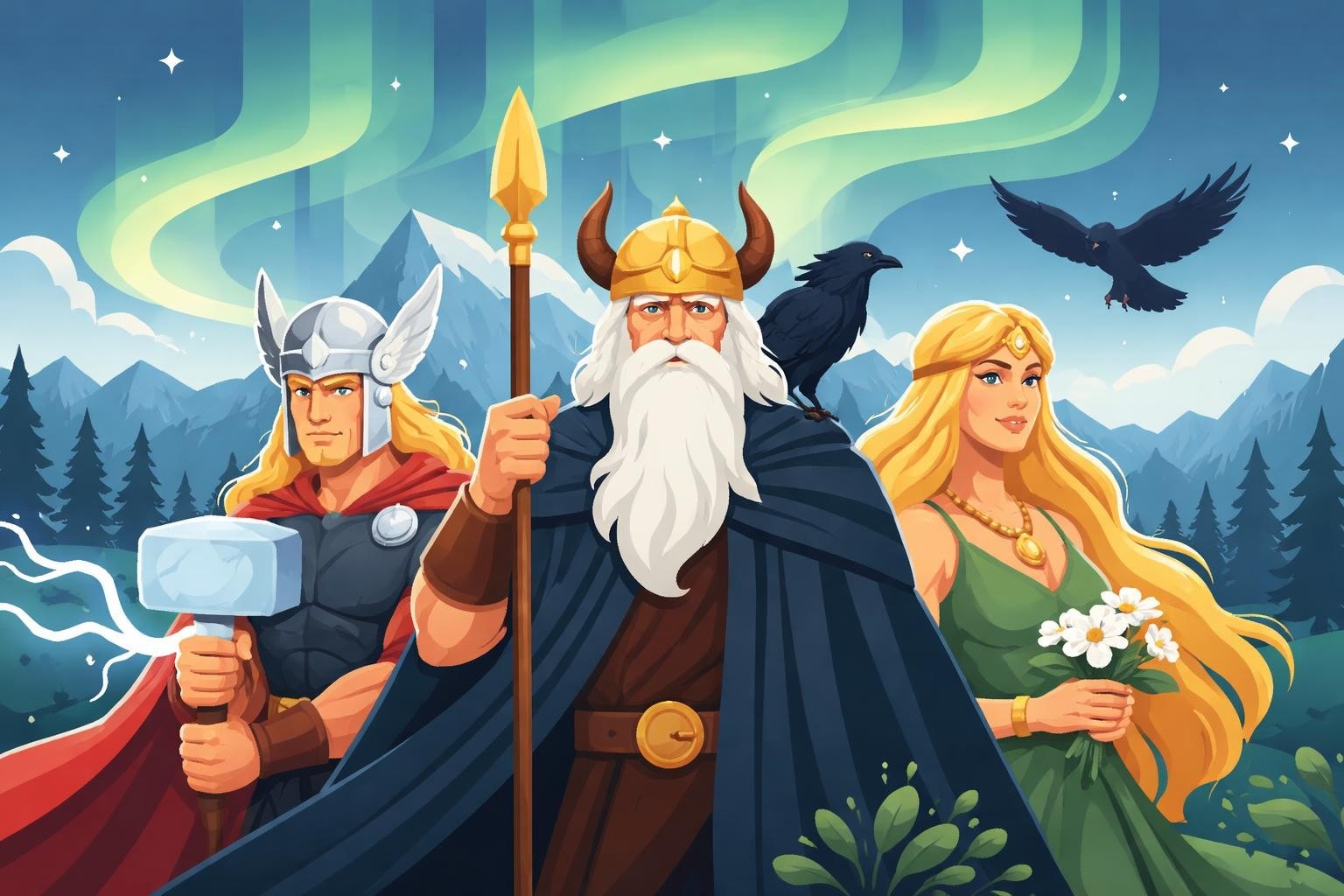
Odin stood as the chief among norse gods, commanding respect through his relentless pursuit of knowledge rather than mere physical strength. His character embodied the complexities of leadership, combining strategic thinking with willingness to sacrifice for greater understanding.
The Allfather sacrificed his eye at Mimir's well to gain cosmic wisdom. He hung himself from Yggdrasil, the world tree, for nine days and nights to discover the secrets of runic magic. These acts of self-sacrifice demonstrated that true power required personal cost and dedication.
| Odin's Attributes | Significance |
|---|---|
| Two ravens (Huginn and Muninn) | Thought and Memory gathering information |
| Eight-legged horse (Sleipnir) | Ability to travel between worlds |
| Spear (Gungnir) | Authority and precision in warfare |
| One eye | Vision beyond physical sight |
Travelers exploring Iceland today encounter numerous locations named for Odin, reflecting his prominence in the settlement-era belief system. His association with poetry, battle strategy, and shamanic practices made him particularly relevant to chieftains and poets who shaped early Icelandic society.
Odin's Connection to Natural Phenomena
Ancient Scandinavians sometimes attributed the northern lights to reflections from the armor of Valkyries, Odin's warrior maidens who selected the heroic dead. These supernatural women transported fallen warriors to Valhalla, where they would feast and train until Ragnarok, the final battle. When modern visitors join northern lights tours in Iceland, they witness the same celestial displays that inspired such mythological interpretations.
Thor: Protector of Midgard and Common Folk
Thor commanded tremendous popularity among ordinary people as the defender of humanity against chaotic forces. Unlike the strategically-minded Odin, Thor represented straightforward strength and reliability that resonated with farmers, craftspeople, and travelers.
His hammer Mjolnir symbolized both destructive power and protective blessing. Scandinavians wore hammer amulets for protection during voyages and invoked Thor's name when consecrating marriages or claiming land. The god's thunder announced his chariot racing across the sky, pulled by two goats he could slaughter for food and resurrect the following day.
Thor's primary responsibilities included:
- Defending Asgard and Midgard from giants
- Controlling thunder, lightning, and storms
- Blessing agricultural fields and vessels
- Maintaining cosmic order through strength
The Norse gods and goddesses played distinct roles within the mythological ecosystem, but Thor's accessibility made him especially beloved. His adventures often involved straightforward confrontations with threats, making his stories popular entertainment that also reinforced cultural values about courage and perseverance.
Freyja and Freyr: Vanir Twins of Fertility and Abundance
Freyja emerged as the most prominent goddess among norse gods, commanding powers over love, beauty, fertility, and magical practices. She rode a chariot pulled by cats and possessed a falcon-feather cloak enabling flight between realms. Her fierce independence and mastery of seidr magic set her apart from typical gender expectations in Viking culture.
As a Vanir deity who came to live among the Aesir after the divine peace treaty, Freyja brought essential knowledge and capabilities that balanced the warrior-focused Aesir perspective. She claimed half of all warriors who died in battle, bringing them to her hall Sessrumnir rather than Odin's Valhalla.
The Agricultural God Freyr
Freyr, Freyja's brother, governed sunshine, rain, and the earth's fertility. Farmers particularly revered him, as their survival depended on favorable weather and productive harvests. His magical ship Skidbladnir could hold all the gods yet fold small enough to fit in a pocket, while his sword fought on its own accord.
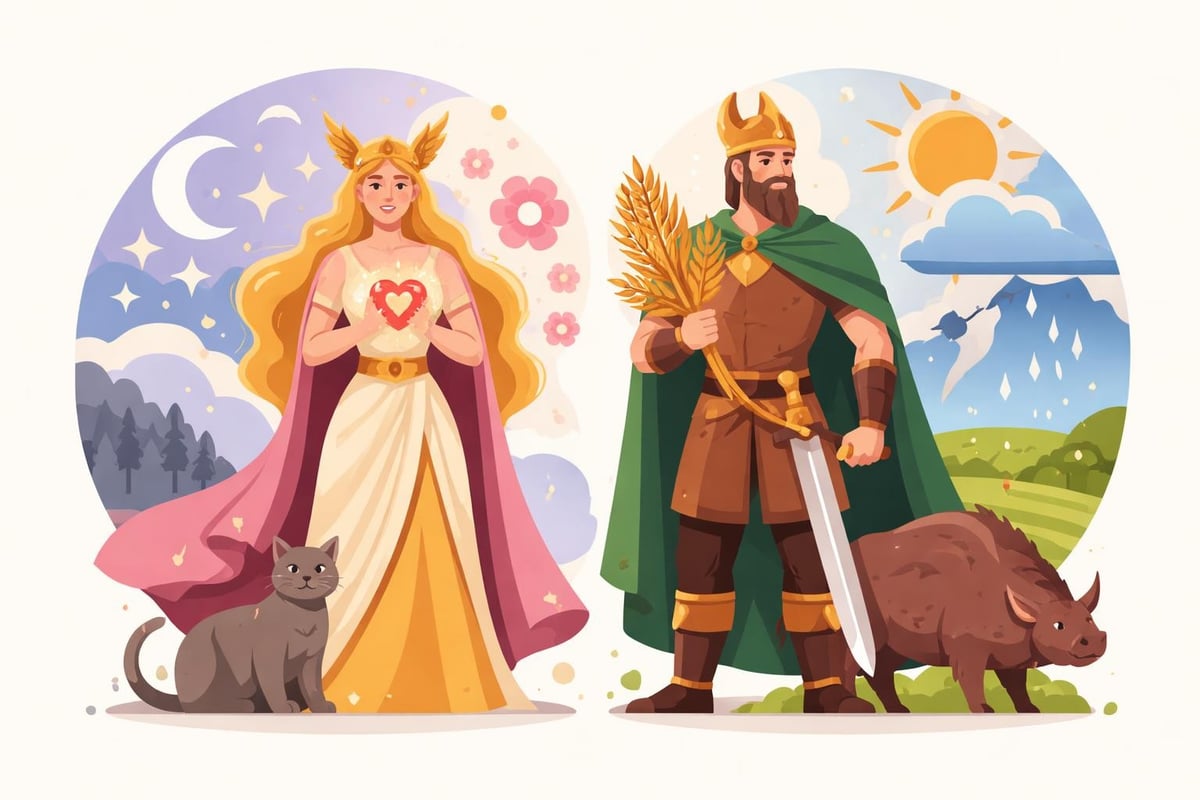
Together, these siblings represented the life-giving forces that sustained communities through harsh northern conditions. Their worship remained strong throughout the Viking age, particularly in regions dependent on farming and fishing.
Loki: The Trickster and Agent of Change
Loki occupied a unique position among norse gods as neither fully divine nor entirely monstrous. His complex character defied simple categorization, serving sometimes as helper and other times as antagonist to the other deities.
The trickster's shape-shifting abilities allowed him to become animals, change gender, and infiltrate situations where other gods could not venture. His cunning solved numerous problems for the Aesir, yet his actions also created catastrophic consequences that would ultimately lead to Ragnarok.
- Early helpful deeds - Retrieved Thor's hammer, built Asgard's walls, created treasures for the gods
- Growing transgressions - Caused Baldur's death, insulted the gods at Aegir's feast
- Final imprisonment - Bound beneath a serpent dripping venom as punishment
- Prophesied role - Destined to lead forces against the gods during Ragnarok
Loki fathered several significant creatures including Fenrir the wolf, Jormungandr the world serpent, and Hel who ruled the underworld realm of the same name. These offspring would play crucial roles in the final destruction and renewal of the cosmos.
Lesser-Known Deities and Their Cultural Impact
Beyond the prominent figures, numerous Norse deities governed specific aspects of existence. Heimdall stood watch at Bifrost with senses so acute he could hear grass growing. Tyr sacrificed his hand to bind Fenrir, embodying honorable sacrifice for the greater good.
Baldur, son of Odin and Frigg, represented beauty, light, and goodness until his tragic death set in motion the events leading to Ragnarok. His mother had extracted promises from all things not to harm him, but Loki discovered mistletoe had been overlooked, leading to the god's downfall.
| Deity | Domain | Notable Attribute |
|---|---|---|
| Heimdall | Guardian of Bifrost | Supernatural senses |
| Tyr | Law and justice | One-handed warrior |
| Baldur | Light and purity | Invulnerability (almost) |
| Frigg | Marriage and motherhood | Prophetic knowledge |
| Njord | Sea and wind | Father of Freyr and Freyja |
Skadi, the mountain goddess associated with skiing and hunting, chose her husband by selecting the most attractive feet among the assembled gods. She selected Njord, only to discover they were incompatible due to their preference for different environments.
Norse Mythology in Iceland's Landscape
Iceland's dramatic geography carries the imprint of these ancient beliefs. Volcanic eruptions were attributed to conflicts between gods and giants dwelling beneath the earth. Geysers represented doorways to other realms, while glaciers housed powerful spirits.
The settlement-era Icelanders who arrived in the ninth century brought these beliefs with them, naming landmarks after divine figures and mythological events. Understanding this context enriches modern exploration of Iceland's natural wonders, connecting geological features to cultural narratives that shaped human responses to the environment.
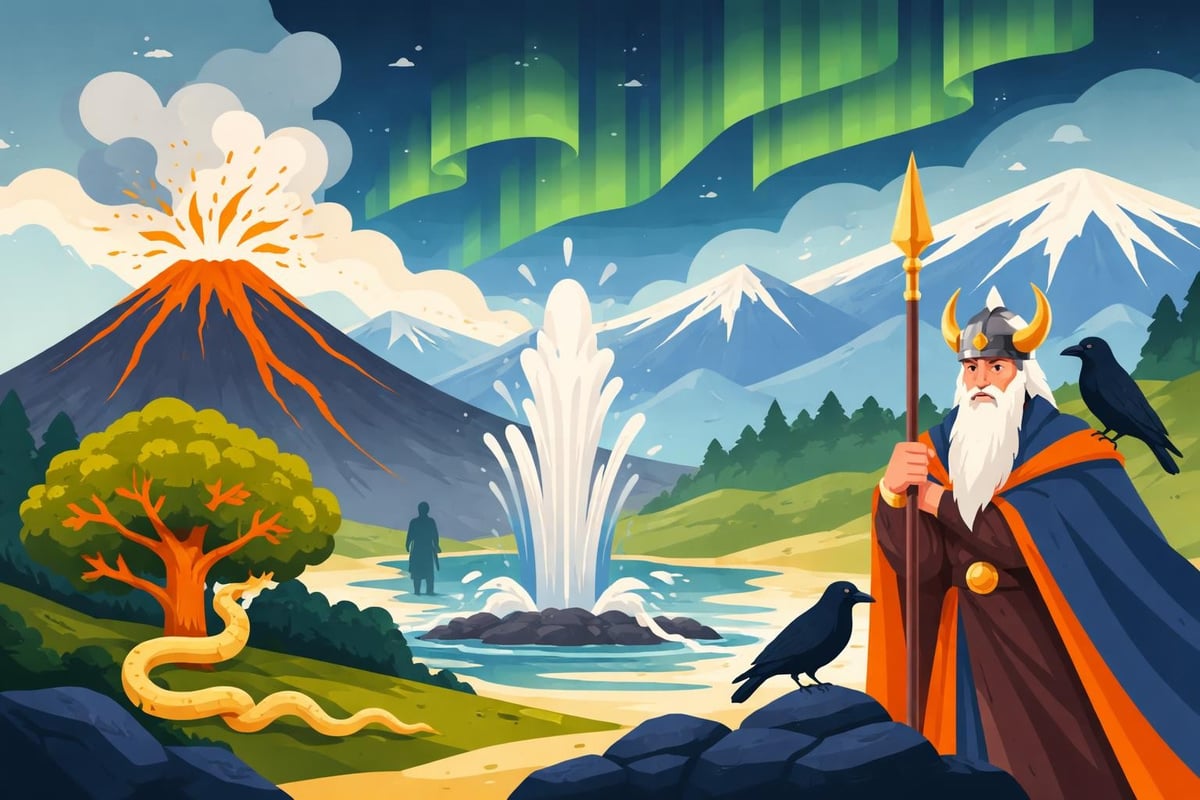
When visitors explore Iceland through adventure tours, they traverse landscapes once believed to be playgrounds and battlegrounds of supernatural forces. The best waterfalls in Iceland inspired stories of gods, giants, and hidden people that persist in folklore today.
The Preservation of Norse Mythological Knowledge
Our understanding of norse gods comes primarily from medieval Icelandic manuscripts written centuries after Christianization. The Prose Edda, composed by Snorri Sturluson around 1220, and the Poetic Edda, compiled from older oral traditions, represent the most comprehensive sources of these ancient beliefs.
Archaeological evidence supplements written sources, revealing how people actually practiced their faith. Temple sites, ritual objects, and burial practices demonstrate that Norse mythology shaped daily life far beyond mere storytelling.
Key sources for understanding Norse deities:
- Poetic Edda poems preserved in the Codex Regius
- Snorri Sturluson's Prose Edda and Heimskringla
- Skaldic poetry fragments embedded in sagas
- Runic inscriptions on stones and artifacts
- Archaeological findings from temple and burial sites
The Viking Ship Museum and similar institutions preserve physical evidence of how these beliefs manifested in material culture, from ship burials honoring the dead to amulets protecting the living.
Norse Gods in Contemporary Icelandic Culture
Modern Iceland maintains connections to its mythological heritage through literature, place names, and cultural practices. The Icelandic Yule Lads, while Christian-era creations, reflect continuity with earlier supernatural beliefs about beings dwelling in Iceland's wilderness.
Contemporary Icelanders may not worship the ancient gods, but they maintain cultural pride in this heritage. Surveys consistently show significant percentages of the population express belief in hidden people or at least uncertainty about dismissing such possibilities entirely. This openness to unseen forces echoes the worldview of ancestors who saw divine and supernatural beings as integral to reality.
The main Norse gods continue appearing in art, literature, and popular culture worldwide, but Iceland maintains particularly strong connections through language preservation and geographic continuity with settlement-era society.
The Relevance of Ancient Beliefs for Modern Travelers
Understanding norse gods enriches the experience of visiting Iceland beyond superficial tourism. When standing beneath the aurora borealis, knowing that ancestors attributed these lights to divine phenomena adds depth to the encounter. Walking through landscapes named after gods creates tangible connections to how humans have interpreted this environment across centuries.
The best places for northern lights offer more than photographic opportunities. They provide spaces where natural wonder intersects with cultural heritage, where the same celestial displays that inspired mythological explanations continue generating awe in modern observers.
Guides who share these stories during tours transform simple sightseeing into cultural education. Learning about Thor's battles while viewing thunderstorms over glaciers, or hearing about Freyja's magical practices while searching for aurora, creates memorable experiences that honor Iceland's living relationship with its past.
Mythological Themes and Human Values
The stories of norse gods addressed fundamental human concerns: mortality, justice, family loyalty, and the relationship between order and chaos. Unlike some mythological systems portraying gods as purely benevolent, the Norse pantheon acknowledged complexity and moral ambiguity.
Gods could be petty, vengeful, or foolish alongside their heroic and wise moments. This nuanced portrayal reflected realistic understanding of power and leadership. The inevitability of Ragnarok, when gods themselves would fall in final battle, demonstrated acceptance of cyclical destruction and renewal rather than eternal triumph.
These themes resonated with societies facing harsh environmental conditions, frequent conflicts, and uncertain futures. The emphasis on courage, loyalty, and acceptance of fate provided philosophical frameworks for navigating difficult circumstances while maintaining dignity and purpose.
Worship Practices and Sacred Sites
Ancient Scandinavians worshiped norse gods through sacrifices, oaths, and seasonal celebrations. Major festivals marked solstices and harvests, combining religious observance with community bonding. Leaders demonstrated piety through generosity and proper ritual conduct rather than merely personal devotion.
Sacred groves, springs, and mountains served as worship sites before temple construction became common in the later Viking age. Iceland's landscape preserves memories of these practices in place names referencing religious activities or divine associations. Some locations remain culturally significant even after a millennium of Christianity.
The transition from paganism to Christianity occurred relatively peacefully in Iceland through legal decision in the year 1000, allowing private practice of old beliefs while officially adopting the new faith. This pragmatic approach reflected the negotiated, communal nature of religious life rather than purely individual spiritual choice.
The norse gods who once shaped Icelandic worldviews continue enriching modern understanding of this remarkable island's cultural heritage and natural wonders. These ancient stories provide context for place names, folklore, and the unique Icelandic perspective on nature's power and mystery. Whether you're seeking the ethereal beauty of the northern lights or exploring Iceland's dramatic landscapes, Reykjavik Northern Lights offers guided experiences that connect you with both natural phenomena and the rich mythological traditions that have interpreted these wonders for over a thousand years.