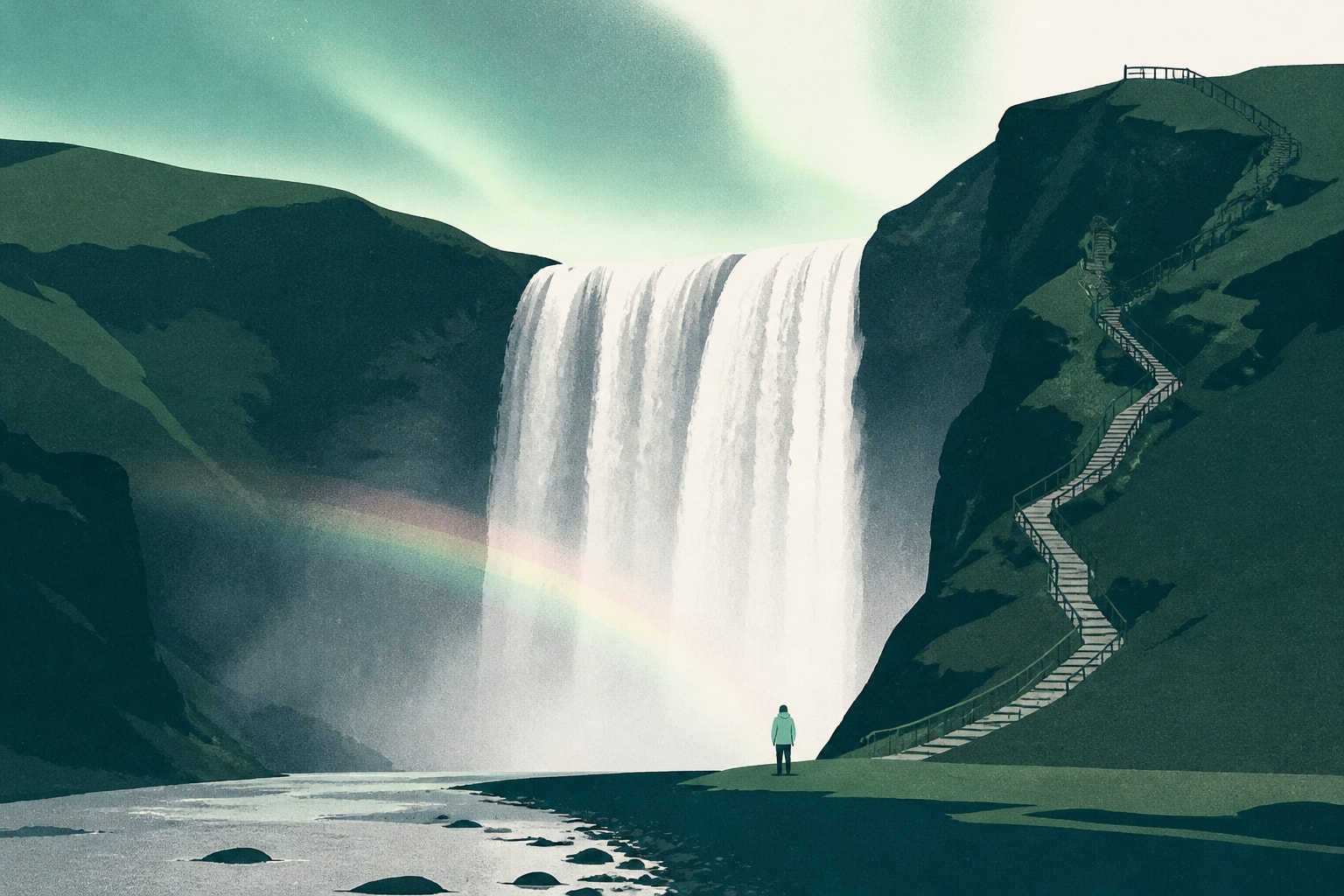
Skogafoss Iceland is one of the country's most visited waterfalls, a 60 m high and 25 m wide curtain of water beside Route 1 at Skógar in South Iceland, according to Iceland.org. You can park, walk to the base in about two minutes, climb a staircase to the top and, if you have the legs for it, continue on one of Iceland's best-known multi-day trails. This guide covers how to get there, when to go, what to do on site, where to photograph it and how to fit it into a trip that also includes an aurora evening from Reykjavik.
What Is Skógafoss and Why Is It Worth the Stop?
Skógafoss is a single-drop waterfall on the Skógá River, notable for its width, its easy access and the way its spray regularly produces a rainbow on sunny days. Unlike many Icelandic falls that require a long hike, this one sits a short walk from the car park.
The name comes from Icelandic: skógar means "forests" and foss means "waterfall." The village of Skógar is named for the woodland that once covered the area, though the landscape is now mostly open grassland and cliffs.
A few reasons it earns a place on a South Coast itinerary:
- Scale at close range. You can walk almost to the plunge pool and feel the full force of the falls.
- Free and open access. There is no gate or ticket for the waterfall itself.
- Trail connections. The path beside the falls leads upstream past dozens of smaller cascades.
- Folklore. Local legend says a Viking settler hid a chest of treasure behind the falls, and a ring from that chest was reportedly recovered long ago.
If waterfalls are a main interest of your trip, the best waterfalls in Iceland roundup puts Skógafoss alongside others worth the drive.
How Do You Get to Skógafoss From Reykjavik?
Skógafoss is roughly a two-hour drive east of Reykjavik along Route 1, the Ring Road, and is signposted from the highway. The falls stand directly beside the road, so the turn-off is short and easy to spot.
The drive follows the South Coast past Selfoss, Hvolsvöllur and the foothills of Eyjafjallajökull. Most visitors combine it with Seljalandsfoss, about 30 minutes before, and with Reynisfjara black sand beach and the village of Vík, about 30 minutes after.
Driving Yourself
A rental car gives you control over timing, which matters in a country where daylight changes sharply by season. Winter conditions on Route 1 can include ice, strong crosswinds and temporary closures, so check road and weather reports before departing. If you plan a longer loop, the Ring Road guide explains what to expect on Iceland's main route.
Parking and Facilities
There is a car park at the foot of the falls, with a campsite, a hotel and a small museum complex nearby in Skógar. Facilities are modest, so bring water and layers. The Iceland Environment Agency manages the protected area and publishes local conditions and guidance for visitors.
Is Skógafoss Part of the Golden Circle?
No. The Golden Circle covers Þingvellir National Park, the Geysir geothermal area and Gullfoss, all northeast of Reykjavik. Skógafoss lies on the South Coast route, in the opposite direction. You can see both in separate day trips, but combining them in one day is not realistic.
When Is the Best Time to Visit Skógafoss?
The best time to visit Skógafoss is early morning or late evening in summer, or any clear winter day, when crowds are thinner and the light is softer. Midday between June and August is the busiest period, with tour coaches arriving in waves.
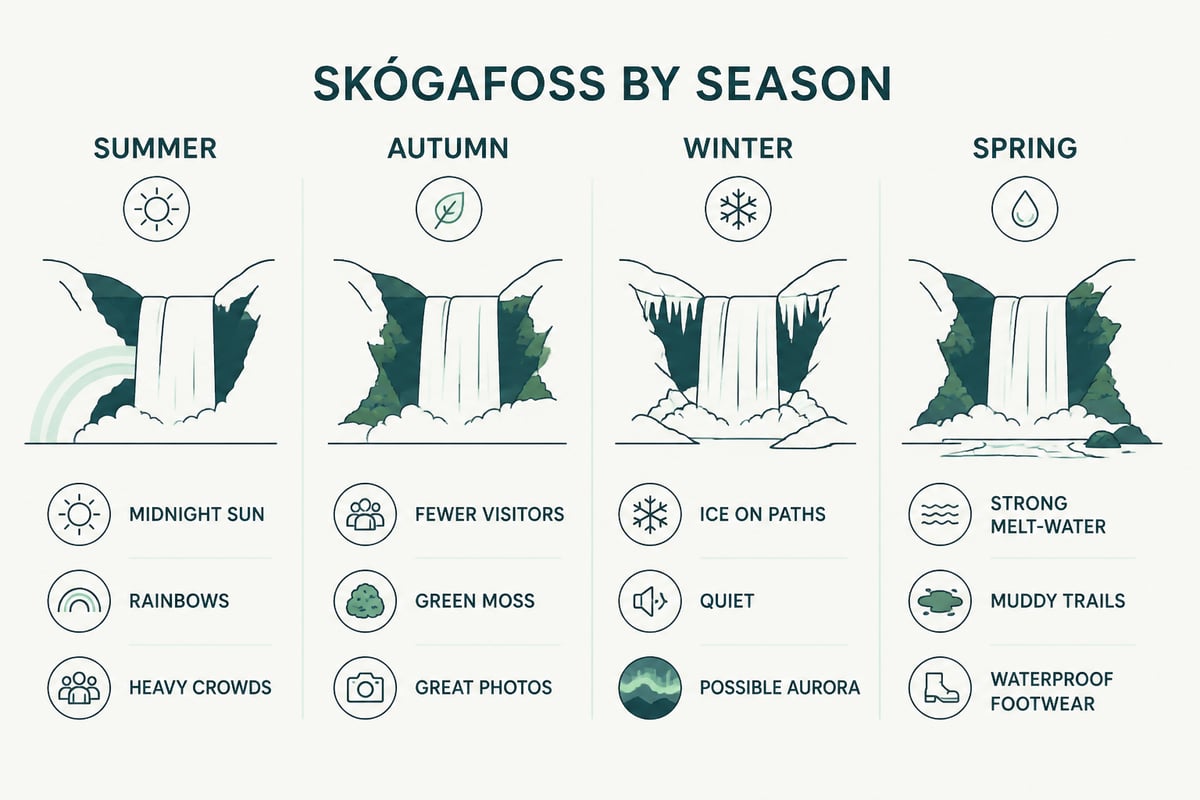
Seasonal differences are significant:
| Season | Daylight | Conditions at the falls | What to expect |
|---|---|---|---|
| Summer (June to August) | Very long, near-midnight sun | Mild, wet spray, full access | Rainbows on sunny days, heaviest crowds |
| Autumn (September to October) | Shortening quickly | Cool, greener moss, some ice later | Fewer visitors, dramatic skies |
| Winter (November to March) | Short days | Ice on paths and stairs, frozen edges | Quiet site, icicles, possible aurora overhead |
| Spring (April to May) | Lengthening fast | Melt-water makes the falls strong | Muddy trails, increasing visitors |
Spray means paths near the base are wet in every season, and in winter they can be glazed with ice. Traction aids for your boots are a sensible addition from November through March.
What Can You Do at Skógafoss?
You can walk to the base of the falls, climb the viewing staircase, take the upstream path past smaller waterfalls and use the site as the start of a long-distance hike. Most visitors spend 30 to 60 minutes, though the upstream walk can easily extend that.
Walk to the Base
A flat, gravelled path leads from the car park to the plunge pool. Expect a heavy mist, so a waterproof jacket is worth wearing even on a dry day. The closer you get, the more the sound and spray dominate, and the more the scale of the cliff becomes clear.
Climb the Stairs to the Top
A metal staircase runs up the cliff to a viewing platform above the falls. From the top you look down the Skógá River as it launches off the edge, and out across the coastal plain toward the Atlantic. The climb takes a steady pace and is one of the best ways to understand the geography of the site.
Follow the Upstream Trail
Beyond the platform, a path continues along the river. The Icelandic Touring Association notes that the Fimmvörðuháls hike passes many additional waterfalls along the Skógá River, so even a short out-and-back walk uphill shows you cascades that most day visitors never see. A 30-minute stroll upstream is a rewarding extension without any commitment to the full trail.
Visit the Skógar Museum
The regional museum in Skógar covers folk culture, farm life and the history of the area. It is a useful rainy-day alternative if the weather turns, and it connects well with the folklore tied to the falls.
How Hard Is the Fimmvörðuháls Hike From Skógafoss?
Fimmvörðuháls is a demanding mountain route, and the walk from Skógar to Þórsmörk is about 24 km, according to the Iceland Environment Agency. It crosses a high pass between the Eyjafjallajökull and Mýrdalsjökull glaciers and passes over the lava fields created by the 2010 eruption.
The Icelandic Touring Association gives these figures for the route:
- Distance: about 25 km, typically taking 1 to 2 days.
- Elevation: about 1,000 m of gain on the 12 km Skógar to Baldvinsskáli section.
- Skógar to Baldvinsskáli: estimated at 4 to 5 hours.
- Baldvinsskáli to Þórsmörk: estimated at 4 to 6 hours.
Season and Safety
The trail is typically open from June 25 to September 15, according to Ferðafélag Íslands. Snow, fog, strong winds and sudden storms can affect conditions even within that window, and visibility on the pass can drop fast. Carry a map, navigation, spare layers, food and water, and tell someone your plan.
If you are weighing this against other long routes, the Laugavegur hike guide describes the trail that most hikers connect to at Þórsmörk, and the best hikes in Iceland article gives wider context.
What Is the Most Beautiful Hike in Iceland?
That depends on what you value, but Fimmvörðuháls and Laugavegur are the two most frequently named. Fimmvörðuháls offers waterfalls, glacier views and fresh volcanic terrain in a single compact route, which is a large part of why it features in so many "best of" lists.
What Is the Hike to Kvernufoss and How Long Does It Take?
The walk to Kvernufoss is short and along a gentle, mostly flat path from the Skógar museum area. It is a good companion stop to Skógafoss for anyone who wants a quieter waterfall.
Kvernufoss drops into a narrow gorge, and a path lets you walk behind the curtain of water. The ground can be wet and slippery, so wear shoes with grip. Because most visitors stop only at the main falls, Kvernufoss is often nearly empty, which makes it a calm counterpoint to the busier site.
Where Are the Best Photo Spots at Skógafoss?
The best photo spots at Skógafoss are the base of the falls for scale, the staircase landings for elevated angles, and the river bank downstream for a wider view. Each gives a distinct result, and the light changes the outcome more than the position does.
Photography Tips
- Shoot from the river downstream. Standing back from the plunge pool lets you capture the full 60 m height with the green cliff edges framing the water.
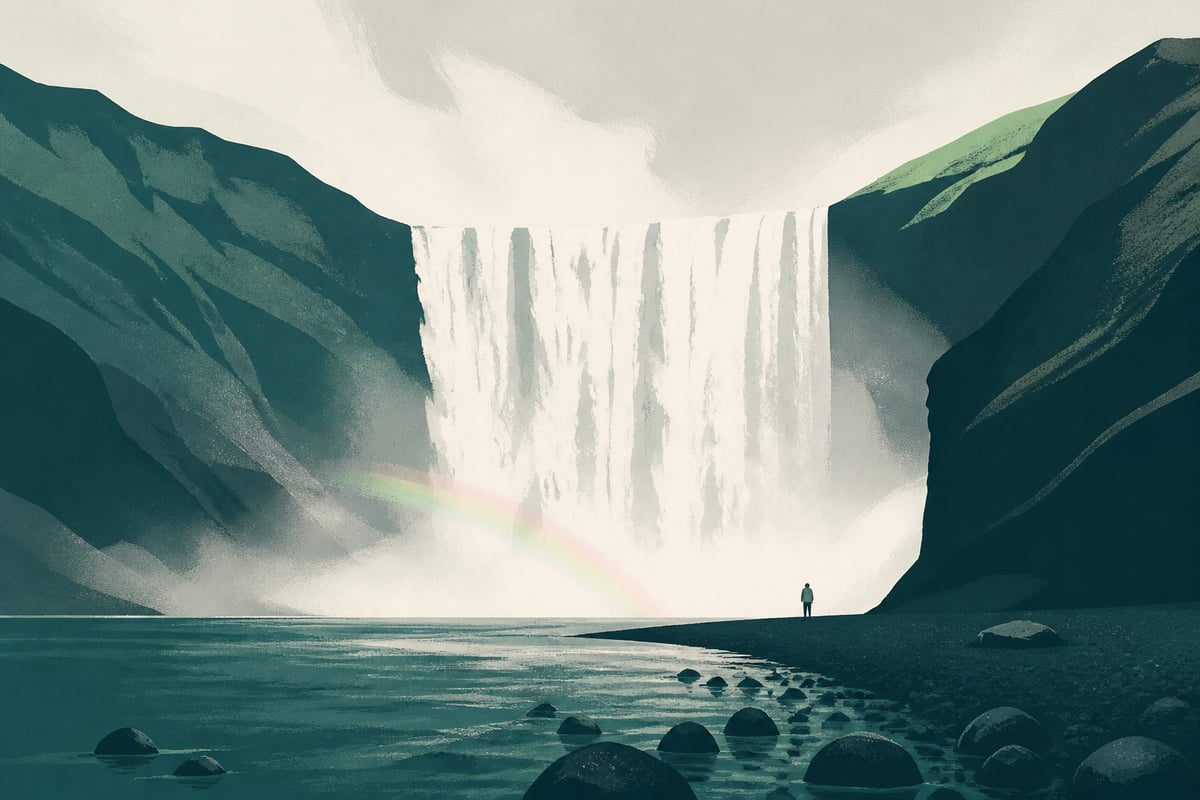
- Include a person for scale. A hiker or a visitor near the pool shows how large the falls are.
- Look for the rainbow. On sunny afternoons, the spray often forms one. Position yourself with the sun behind you.
- Protect your lens. Mist builds up quickly. Carry a microfibre cloth and a lens hood, and wipe between shots.
- Use the stairs. Mid-height landings give a high angle that compresses the falls against the plain beyond.
The Iceland Dream guide to Skógafoss discusses photography considerations, spray management, viewpoints and timing in more detail, and is useful for planning your light.
Aurora Photography Nearby
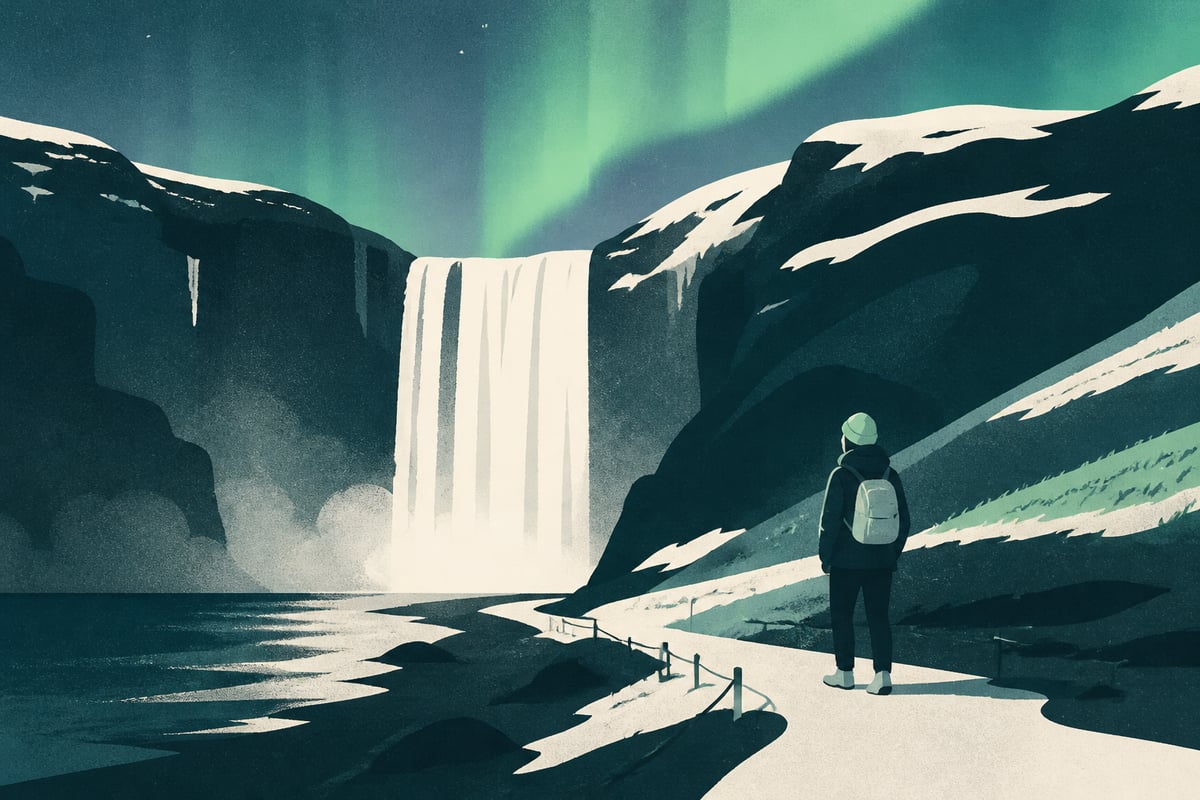
Winter visitors sometimes ask whether the aurora can be photographed over Skógafoss. It is possible on a clear, active night, but the falls are a long drive from Reykjavik and the site has limited lighting, so planning matters. For most travellers, a dedicated evening away from the South Coast crowds is a more reliable approach, which the best place for northern lights guide explains.
How Do You Combine Skógafoss With a Northern Lights Evening?
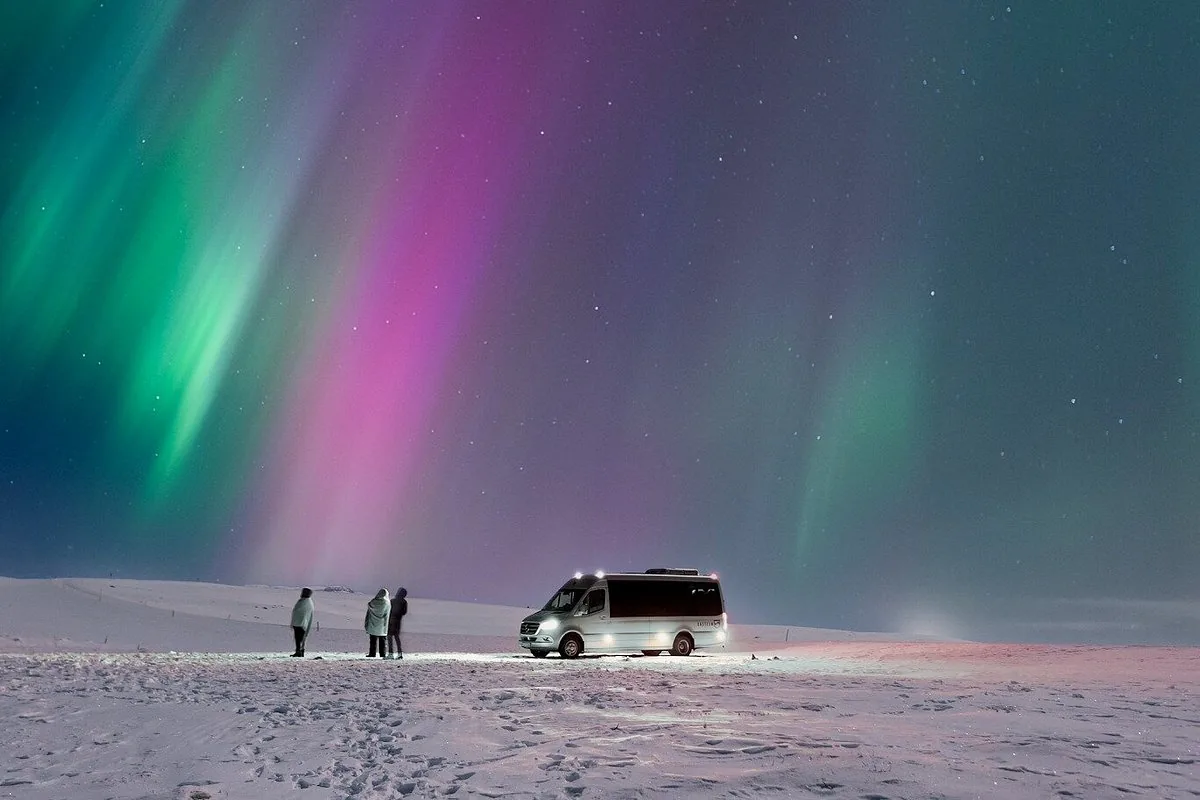
The simplest approach is to see Skógafoss during daylight on the South Coast, return to Reykjavik, then join a guided aurora tour that same evening or on another night of your stay. Doing both in one day makes for a long schedule, so many visitors separate them.
Smaller groups tend to suit couples and travellers who want a more personal evening, while the coach offers a lower-cost option.
What Should You Pack and Prepare for Skógafoss?
Pack waterproof outer layers, sturdy shoes with grip and a small bag you can keep dry. Spray, wind and changeable weather are the main factors at the falls, regardless of the season.
A short checklist:
- Waterproof jacket and trousers
- Footwear with a firm sole and good traction
- A warm mid-layer and a hat, even in summer
- A microfibre cloth for your camera or phone
- Water and a snack, since on-site food options are limited
- A charged phone and an offline map
Check road and weather updates the day you travel, particularly between October and April. Wind on the South Coast can be strong enough to make car doors difficult to open, so hold the door when stepping out.
How Much Time Do You Need at Skógafoss?
Allow around an hour for a standard visit that includes the base of the falls and the staircase. Add time for the upstream walk, and more if you visit Kvernufoss or the museum.
On a South Coast day trip, a realistic schedule looks like this:
- Leave Reykjavik early and stop at Seljalandsfoss.
- Arrive at Skógafoss and spend about an hour on site.
- Continue to Reynisfjara and Vík.
- Return to Reykjavik in the evening.
FAQ
What does Skógafoss mean in Icelandic?
Skógafoss means "forest waterfall" or "waterfall of the woods." The word skógar is the plural of skógur, meaning forest, and foss means waterfall. It refers to the woodland that once surrounded the village of Skógar.
Can you walk behind Skógafoss?
No, the main falls are too powerful and the base is too exposed to walk behind safely. Visitors who want that experience usually go to nearby Seljalandsfoss or to Kvernufoss, where a path passes behind the water.
Is Skógafoss free to visit?
Yes, there is no entry fee to view or walk to Skógafoss. Costs you may encounter include fuel, food and, in some seasons, parking arrangements at nearby facilities, so check current local information before you travel.