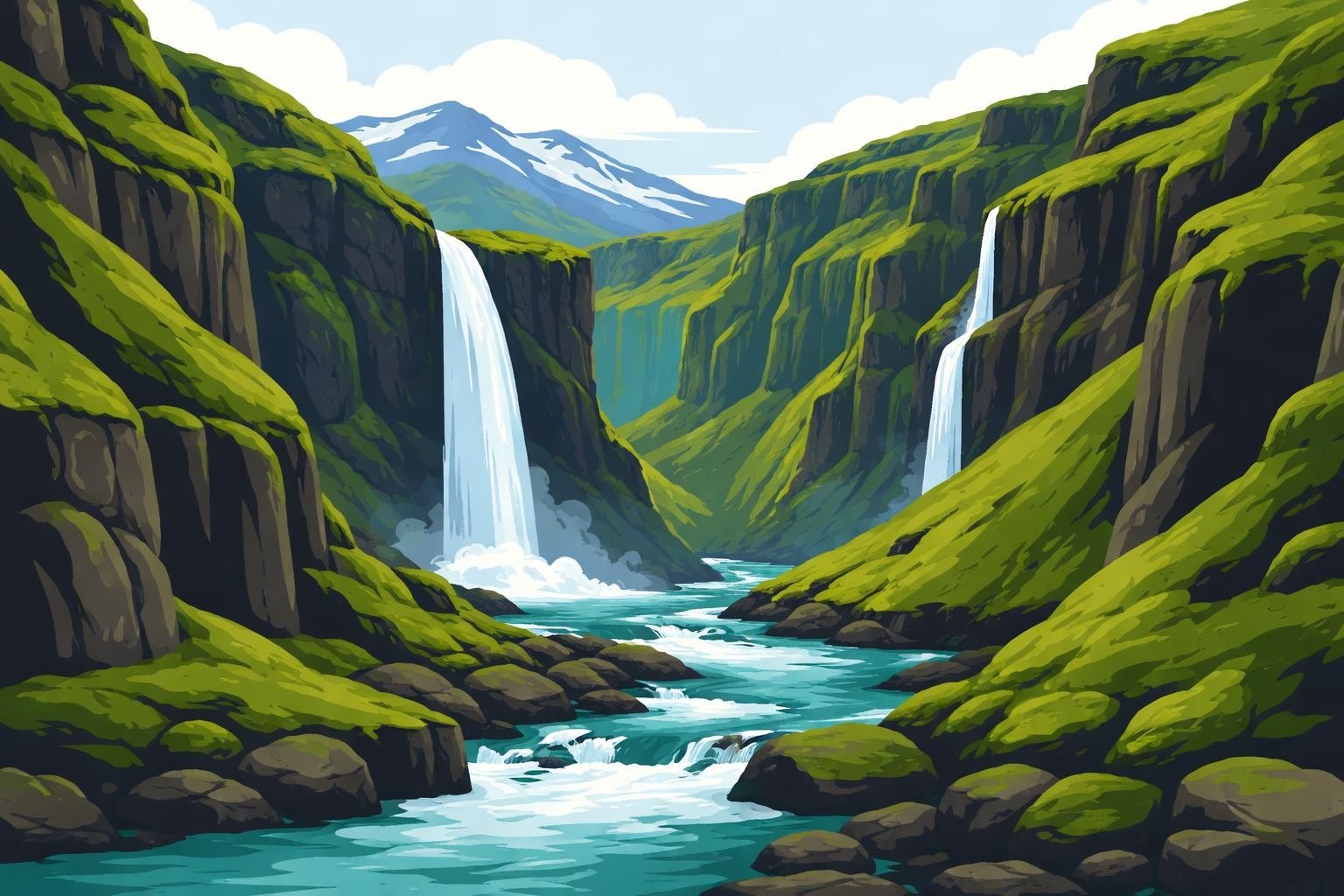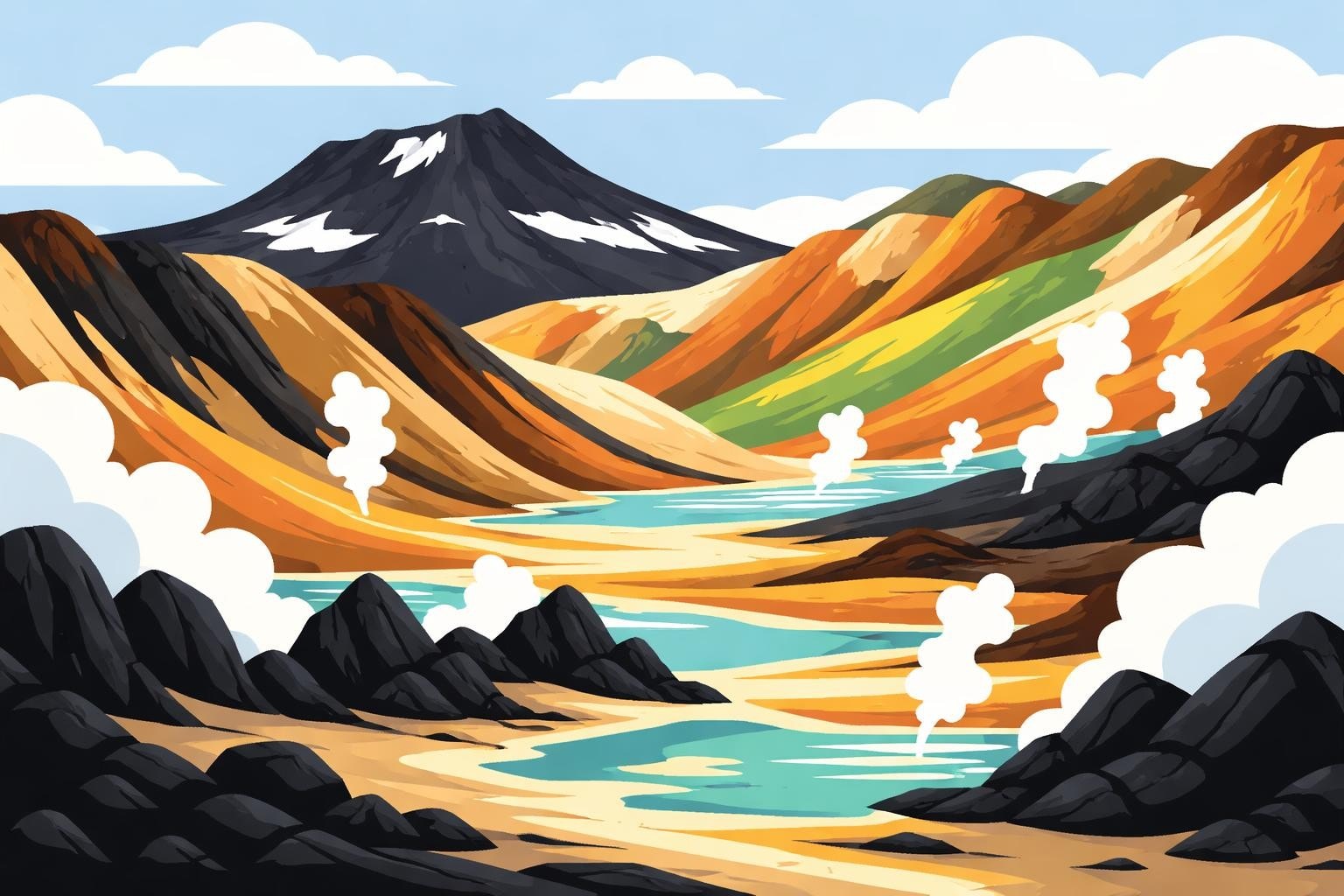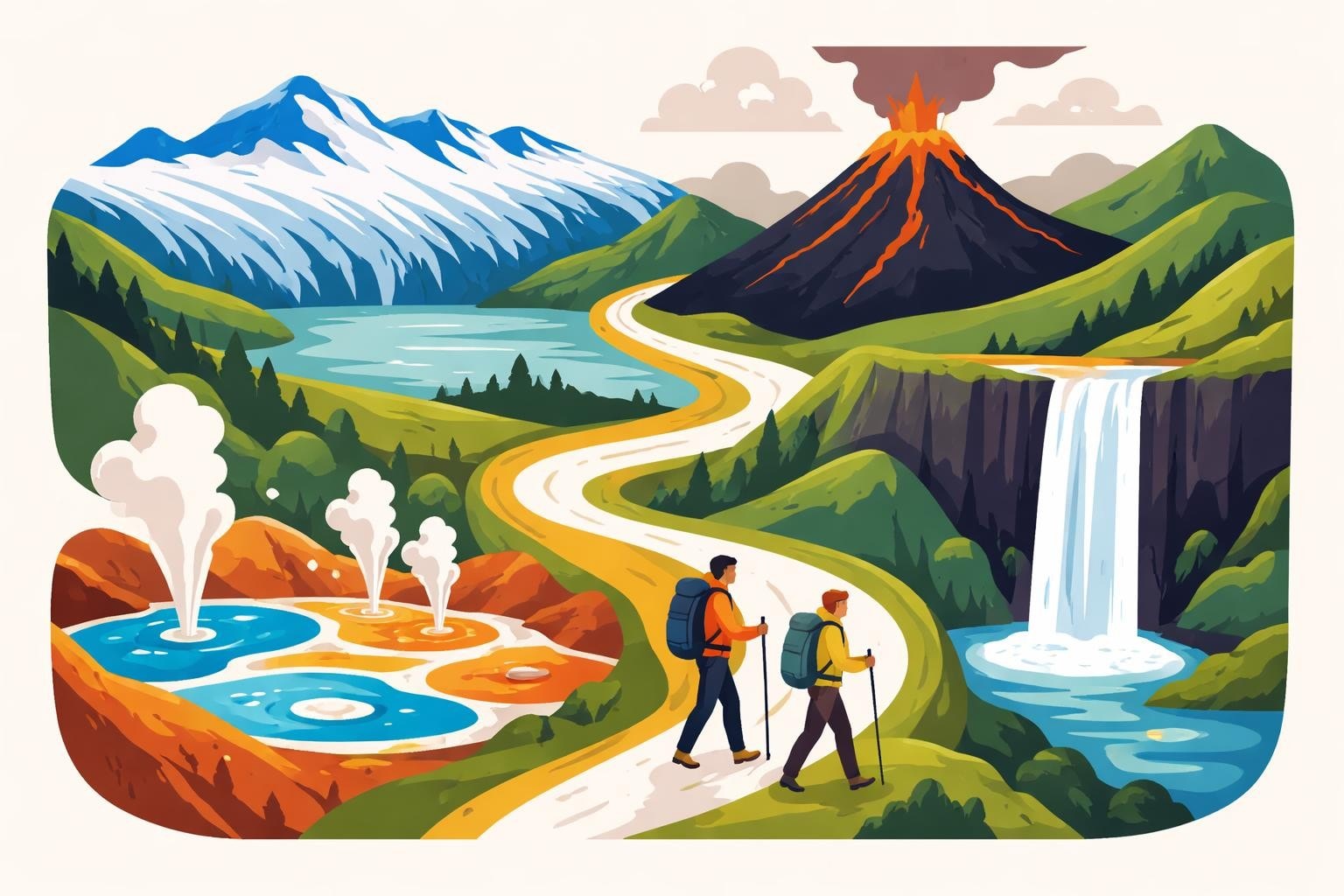
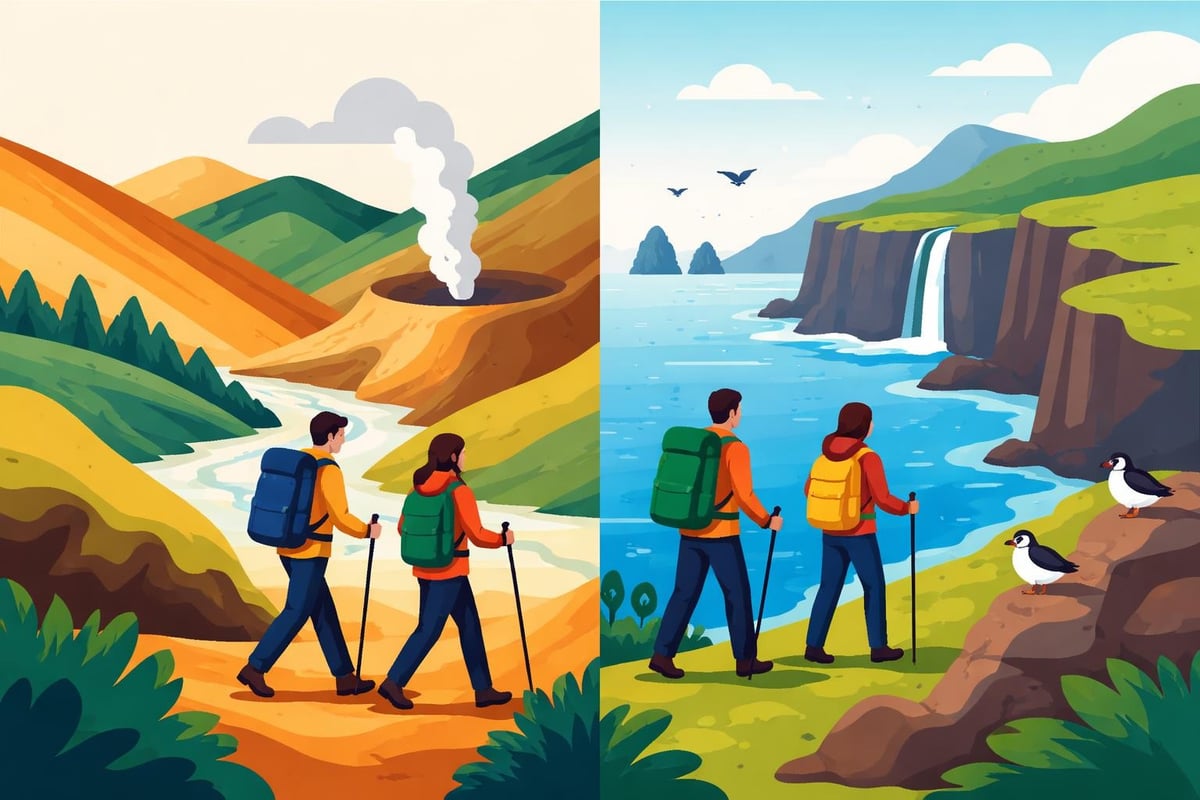
Iceland's dramatic landscape offers some of the world's most spectacular hiking experiences, combining volcanic terrain, cascading waterfalls, and otherworldly geothermal features. Whether you're planning a multi-day trek through the highlands or a shorter day hike near Reykjavík, the best hikes in Iceland deliver unforgettable encounters with raw nature. For visitors who want to experience Iceland's natural wonders year-round, pairing daytime hiking adventures with evening aurora hunting creates a complete Icelandic experience that showcases the island's beauty from dawn to darkness.
Essential Multi-Day Treks Through Iceland's Wilderness
Iceland's premier multi-day hikes traverse some of the planet's most unique landscapes, requiring proper preparation and respect for changing weather conditions.
Laugavegur Trail: Iceland's Premier Highland Route
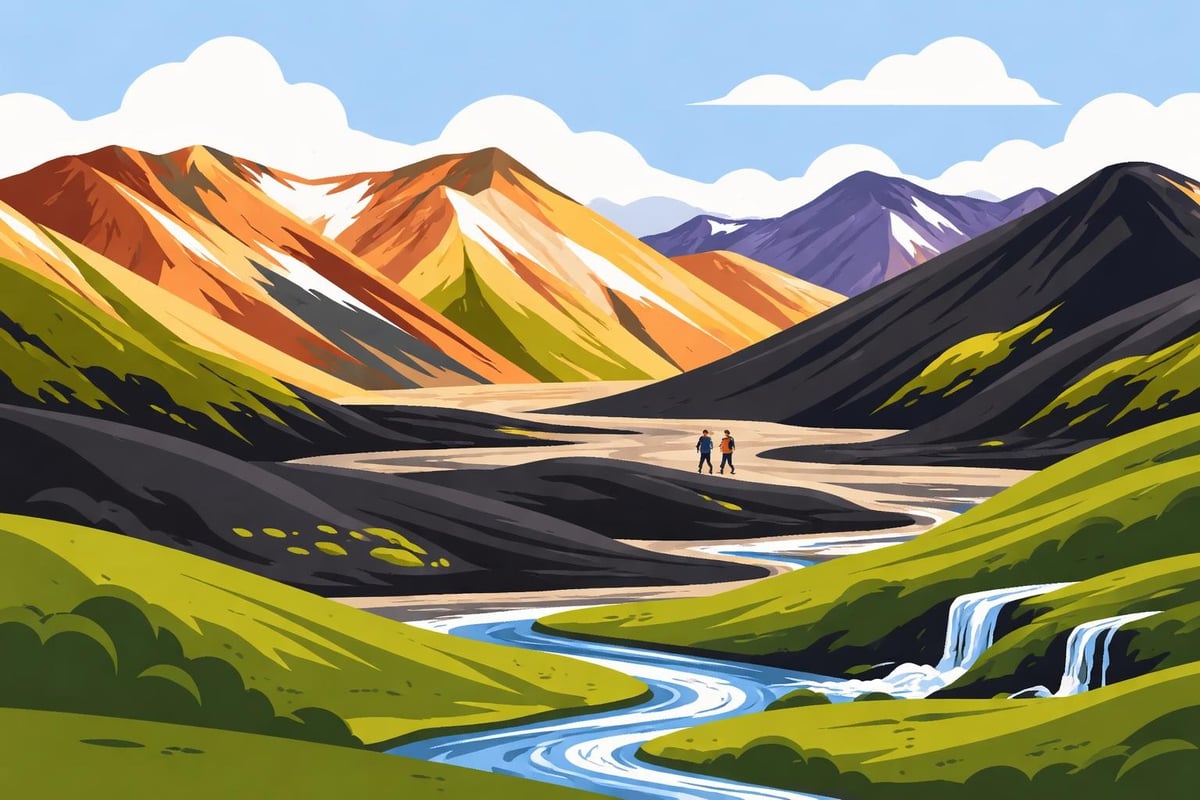
The Laugavegur Trail stands as Iceland's most celebrated multi-day hiking route, stretching 55 kilometers from Landmannalaugar to Þórsmörk. This trek typically requires four days to complete and showcases an astounding variety of terrain within a relatively compact distance.
What makes Laugavegur exceptional:
- Rhyolite mountains displaying vibrant reds, yellows, and greens
- Black sand deserts contrasting with emerald valleys
- Steaming geothermal areas and natural hot springs
- Glacial rivers and dramatic canyon crossings
- Mountain huts spaced at comfortable intervals
The trail operates from late June through early September, when snow has melted sufficiently for safe passage. Hikers must book mountain huts or camping spots months in advance, as this route ranks among the best hikes in Iceland for international visitors.
Weather shifts rapidly in the highlands, and hikers should prepare for everything from brilliant sunshine to horizontal rain within a single afternoon. Temperature variations between day and night can span 20 degrees Celsius, making proper layering essential.
Fimmvörðuháls: Between Two Glaciers
The Fimmvörðuháls trail connects Skógar to Þórsmörk, passing between the Eyjafjallajökull and Mýrdalsjökull glaciers. This 25-kilometer route can be completed as a challenging single-day hike or leisurely two-day journey.
| Trail Feature | Details |
|---|---|
| Distance | 25 kilometers |
| Elevation gain | 1,000 meters |
| Typical duration | 10-12 hours (one day) or 2 days |
| Season | June through September |
| Difficulty | Moderate to challenging |
The trail gained renewed interest after the 2010 Eyjafjallajökull eruption, and hikers now pass the Magni and Móði craters formed during that event. More than 20 waterfalls line the route, including spectacular cascades that plunge over ancient lava cliffs.
Many hikers combine Fimmvörðuháls with Laugavegur for an extended 6-7 day journey that represents one of the best hikes in Iceland for experienced trekkers. This combination provides comprehensive exposure to Iceland's volcanic geology and glacial landscapes.
Outstanding Day Hikes Throughout Iceland
Not every visitor has time for multi-day expeditions, but Iceland's day hikes deliver equally impressive natural encounters within a more accessible timeframe.
Landmannalaugar Day Hikes
Landmannalaugar serves as the starting point for Laugavegur but also offers exceptional day hiking opportunities through its geothermal wonderland.
The Bláhnjúkur summit hike climbs this distinctive blue-black volcano in approximately 3-4 hours round trip. The trail ascends 940 meters, rewarding hikers with panoramic views across the colorful rhyolite mountains and the vast Laugahraun lava field below.
Additional Landmannalaugar day hikes include:
- Brennisteinsalda (Sulfur Wave) loop: 4 kilometers, 2-3 hours
- Ljótipollur crater lake: 7 kilometers, 3-4 hours
- Grænagil canyon exploration: 6 kilometers, 3 hours
The region's natural hot spring provides a perfect post-hike reward, where visitors soak in warm geothermal waters surrounded by steaming vents and multicolored peaks.
Þórsmörk Valley Network
Þórsmörk offers sheltered hiking in a verdant valley surrounded by glaciers and dramatic peaks. The protected location creates a microclimate with less severe weather than surrounding areas, making it reliable for hiking even when conditions deteriorate elsewhere.
The Valahnúkur viewpoint hike climbs steeply for 2.5 kilometers, gaining 200 meters in elevation. Despite its brevity, this trail delivers outstanding views across three glaciers and multiple valley systems. The round trip takes approximately 2 hours.
Southern Iceland's Waterfall Trails
Southern Iceland concentrates numerous powerful waterfalls within easy reach of the Ring Road, making it perfect territory for visitors exploring the best hikes in Iceland as part of a broader road trip.
The Svartifoss trail in Skaftafell National Park leads 1.5 kilometers to a waterfall framed by dramatic black basalt columns. The round trip takes about 90 minutes and can be extended into longer loops exploring additional viewpoints and cascades.
Further east, the Hengifoss trail climbs 2.5 kilometers to Iceland's third-tallest waterfall, which plunges 128 meters over layered rock faces striped with red clay. The moderately challenging hike requires about 2.5 hours round trip and includes views of the smaller Litlanesfoss waterfall with its surrounding basalt columns.

Accessible Hikes Near Reykjavík
Visitors based in Iceland's capital don't need to venture far to experience quality hiking among dramatic scenery.
Esja Mountain Range
The Esja range dominates Reykjavík's northern skyline and provides the city's most popular hiking destination. Multiple trails ascend the mountain, with Þverfellshorn representing a common goal for casual hikers.
- Begin at the Mógilsá parking area
- Follow well-marked trails through lower slopes
- Reach Steinn (stone marker) at 780 meters
- Continue to summit at 914 meters if conditions permit
- Return via the same route
The hike to Steinn takes approximately 1.5-2 hours, while reaching the summit extends the journey to 3-4 hours round trip. The trails remain accessible year-round, though winter conditions require crampons and ice axes.
Reykjadalur Hot Spring Valley
This 7-kilometer round trip hike northeast of Reykjavík leads to a warm river where hikers can bathe in geothermal waters. The moderately challenging trail gains 200 meters of elevation and passes numerous steaming vents before reaching the bathing area.
Trail highlights:
- Active geothermal features throughout
- Gradual elevation gain suitable for most fitness levels
- Natural hot river with changing rooms
- Year-round accessibility
- 2-3 hour round trip duration
The combination of hiking and bathing makes this trail particularly popular during summer months, though visiting during shoulder seasons reduces crowding.
Glymur Waterfall
Until 2011, Glymur held the title of Iceland's tallest waterfall at 198 meters. The challenging 7-kilometer loop trail crosses rivers via log bridges and cable assists, requiring sure footing and confidence with heights.
The hike takes 3-4 hours and provides dramatic views into the canyon containing the waterfall. Portions of the trail follow narrow ledges with significant exposure, making it unsuitable for young children or those uncomfortable with heights.
Highland Routes for Experienced Hikers
Iceland's interior highlands remain snow-covered for much of the year, opening only from late June or early July through September. These remote regions offer some of the best hikes in Iceland for adventurous trekkers seeking solitude and pristine wilderness.
Askja Caldera and Víti Crater
The trek to Askja caldera in the remote Dyngjufjöll mountains crosses a barren volcanic desert before reaching the dramatic Víti explosion crater filled with milky-blue geothermal water. The 6-kilometer hike from the parking area takes about 3 hours round trip.
Accessing Askja requires a 4WD vehicle capable of fording rivers and navigating rough highland tracks. Many hikers explore this region through organized tours that handle challenging logistics.
Kerlingarfjöll Mountain Range
This lesser-known highland area features colorful rhyolite peaks, extensive geothermal areas, and excellent hiking opportunities. The terrain resembles Landmannalaugar but receives fewer visitors.
| Kerlingarfjöll Trail | Distance | Duration | Difficulty |
|---|---|---|---|
| Hveradalir hot springs | 3 km | 1.5 hours | Easy |
| Snækollur summit | 8 km | 4-5 hours | Moderate |
| Ridge traverse | 12 km | 6-7 hours | Challenging |
The mountain hut at Kerlingarfjöll provides accommodation and serves as a base for exploring the area's trails. Most routes navigate steep scree slopes requiring proper hiking boots and careful footing.
Coastal and Peninsula Hiking Opportunities
Iceland's coastline and peninsula regions offer distinct hiking experiences compared to interior routes, with ocean views and dramatic sea cliffs.
Hornstrandir Nature Reserve
This remote peninsula in the Westfjords contains Iceland's most pristine wilderness, accessible only by boat and completely uninhabited. The reserve protects Arctic fox populations and features towering sea cliffs.
Hiking in Hornstrandir requires complete self-sufficiency, as no services exist within the reserve. Most visitors spend 4-7 days backpacking through the region, camping wild among the cliffs and beaches.
Essential Hornstrandir considerations:
- No roads, bridges, or facilities
- Boat access only from Ísafjörður
- Extreme weather changes rapidly
- Navigation skills essential
- Complete camping gear required
The isolation and challenging conditions make this destination suitable only for experienced wilderness backpackers, but those prepared for the demands encounter truly untouched nature.
Snæfellsnes Peninsula Trails
Snæfellsnes offers concentrated variety, earning its reputation as "Iceland in miniature." The peninsula contains lava fields, black sand beaches, sea cliffs, and the iconic Snæfellsjökull glacier.
The Saxhóll crater provides an easy 15-minute climb up metal stairs to views across the Snæfellsnes lava field. More ambitious hikers tackle the 7-kilometer Rauðfeldsgjá gorge and waterfall trail, which requires scrambling into a narrow canyon.
Kirkjufell mountain, Iceland's most photographed peak, offers a steep 1.5-hour scramble to its 463-meter summit. The trail includes rope sections and exposed scrambling, requiring confidence and dry conditions.
Practical Preparation for Iceland's Best Trails
Successfully hiking Iceland's terrain requires preparation that accounts for the country's unique challenges and rapidly changing conditions.
Weather and Safety Considerations
Icelandic weather shifts with remarkable speed. A calm, sunny morning can transform into a fierce storm within hours, particularly in exposed highland areas. Checking forecasts before departure remains essential, but hikers must also prepare for conditions beyond predictions.
Wind poses particular challenges on ridge lines and exposed sections. Sustained winds exceeding 15 meters per second make hiking unpleasant and dangerous, while gusts above 25 meters per second can knock people off their feet.
River crossings demand respect and proper technique. Glacial meltwater flows fluctuate throughout the day, running lowest in early morning before increasing as afternoon sun melts additional ice. Unbuckle backpack waist belts before crossing, use trekking poles for stability, and never attempt crossings above knee depth.
Essential Gear and Equipment
Iceland's trails demand quality equipment suited to variable conditions. Even summer hikers should pack for winter weather possibilities.
Critical gear includes:
- Waterproof jacket and pants (not just water-resistant)
- Insulating layers including down or synthetic jacket
- Warm hat and gloves even in summer
- Sturdy hiking boots with ankle support
- Multiple pairs of wool or synthetic socks
- High-energy food and twice the water you expect to need
- Detailed maps and compass or GPS device
- Emergency shelter and first aid supplies
For visitors planning both hiking and aurora viewing, many find that exploring Iceland's trails during daytime hours creates the perfect complement to evening northern lights tours. After returning from morning and afternoon hikes, joining guided aurora tours provides opportunities to witness Iceland's natural wonders after dark while experts handle navigation and sky tracking.
Trail Conditions and Seasons
Most highland trails, including Laugavegur and routes in Landmannalaugar, remain inaccessible until late June or early July when snowmelt allows passage. These trails close again in September as winter weather returns to the interior.
Coastal and lowland trails near Reykjavík offer year-round access, though winter conditions require additional equipment and experience. Snow and ice transform familiar summer trails into technical winter routes requiring crampons, ice axes, and avalanche awareness.
Resources from experienced hiking guides provide valuable current information about trail conditions and accessibility throughout the season.
Navigation and Route Finding
Many of Iceland's best hikes follow marked trails with regular posts or cairns, but fog, snow, and featureless terrain can make following even marked routes challenging. The interior highlands particularly demand strong navigation skills.
Carrying detailed topographic maps alongside GPS devices provides redundancy. Mobile phone coverage exists near populated areas but disappears quickly in remote regions. Downloaded offline maps through specialized hiking apps allow route tracking even without cellular service.
Informing someone of your hiking plans and expected return time represents basic safety protocol, particularly for remote trails. Iceland's volunteer rescue teams respond to dozens of calls annually, many involving hikers who became disoriented or injured on what appeared to be straightforward trails.
Combining Hiking with Iceland's Other Natural Wonders
The best hikes in Iceland often provide access to multiple natural phenomena beyond the trails themselves, creating comprehensive experiences of the island's geological diversity.
Geothermal Features Along Hiking Routes
Many trails pass through or near active geothermal areas where Earth's heat reaches the surface. Landmannalaugar, Kerlingarfjöll, and numerous other hiking destinations feature steaming vents, boiling mud pots, and naturally heated pools.
These geothermal areas require caution despite their beauty. Ground that appears solid may conceal scalding water just beneath the surface. Staying on marked trails and established paths prevents dangerous accidents in these fragile environments.
Glacier Views and Ice Cave Access
Several excellent hiking routes provide close encounters with Iceland's glaciers. Trails in Skaftafell National Park lead to viewpoints overlooking outlet glaciers flowing from Vatnajökull, Europe's largest ice cap.
Winter months transform some glacier margins into ice caves accessible through guided tours. While not hiking in the traditional sense, exploring these blue ice formations provides another dimension to Iceland's natural wonders that pairs perfectly with summer hiking expeditions during return visits.
Wildlife Encounters on the Trail
Iceland's limited terrestrial wildlife means hikers won't encounter bears, wolves, or other large predators. Arctic foxes represent the only native land mammal, occasionally spotted in remote areas like Hornstrandir.
Birdlife flourishes during summer months, particularly along coastal cliffs and near wetlands. Puffins nest in burrows along sea cliffs from May through August, while Arctic terns aggressively defend nesting territories with dive-bombing attacks on passing hikers. Giving nesting sites wide berth avoids stressful encounters for both birds and humans.
Reindeer inhabit eastern Iceland, introduced from Norway in the 18th century. These semi-wild herds sometimes cross hiking trails in the eastern highlands, though they typically maintain distance from humans.
Off-Season Hiking Opportunities
While summer delivers optimal conditions for most of Iceland's best hikes, shoulder seasons and winter offer unique experiences for properly equipped hikers.
Autumn Colors and Fewer Crowds
September brings autumn colors to Iceland's vegetation, with dwarf birches and other plants turning brilliant yellows and reds. Trail traffic decreases dramatically after mid-August as peak tourist season ends, providing quieter experiences on popular routes.
Weather remains relatively moderate through September, though snow can fall at higher elevations by month's end. Many highland roads close in mid-September, limiting access to interior trails.
Winter Trail Conditions
Winter transforms accessible trails near Reykjavík into different experiences entirely. Snow and ice cover familiar routes, requiring crampons and winter hiking experience. Daylight hours shrink to just 4-5 hours around the winter solstice, limiting hiking windows.
The reward for winter hiking comes during evening hours, when northern lights viewing opportunities peak across Iceland's dark skies. Hikers who time visits for February through March can enjoy increasingly longer daylight for trail time while maintaining excellent aurora viewing chances after sunset.
Spring Awakening
April and May bring rapidly increasing daylight and awakening landscapes. Snow persists at higher elevations while lowland trails become passable. Bird migrations return Iceland's feathered residents, filling cliffs with activity.
Highland roads and trails remain closed through May, but coastal and lowland routes offer excellent conditions. The combination of moderate temperatures, extended daylight, and minimal crowds makes spring an underrated season for experiencing the best hikes in Iceland.
Iceland's hiking trails showcase the raw beauty of volcanic landscapes, glacial valleys, and coastal cliffs unlike anywhere else on Earth. From multi-day highland treks to accessible day hikes near Reykjavík, the country offers routes suited to every experience level and timeframe. After exploring Iceland's trails by day, extend your adventure into the evening hours with Reykjavik Northern Lights, where expert guides use live sky routing and local knowledge to maximize your chances of witnessing the aurora borealis, completing your comprehensive Icelandic experience with nature's most spectacular light show.