Norse is an adjective and a noun that refers to the people, language, culture and mythology of medieval Scandinavia, especially Norway, and by extension the Scandinavian settlers of Iceland and the North Atlantic. The word comes from Old Norse and is most often seen in phrases such as Norse mythology, Norse gods and the Old Norse language. If you are planning a trip to Iceland, you will meet the term constantly, because the island was settled by Norse people and still preserves their language and stories in a living form.
What does Norse mean?
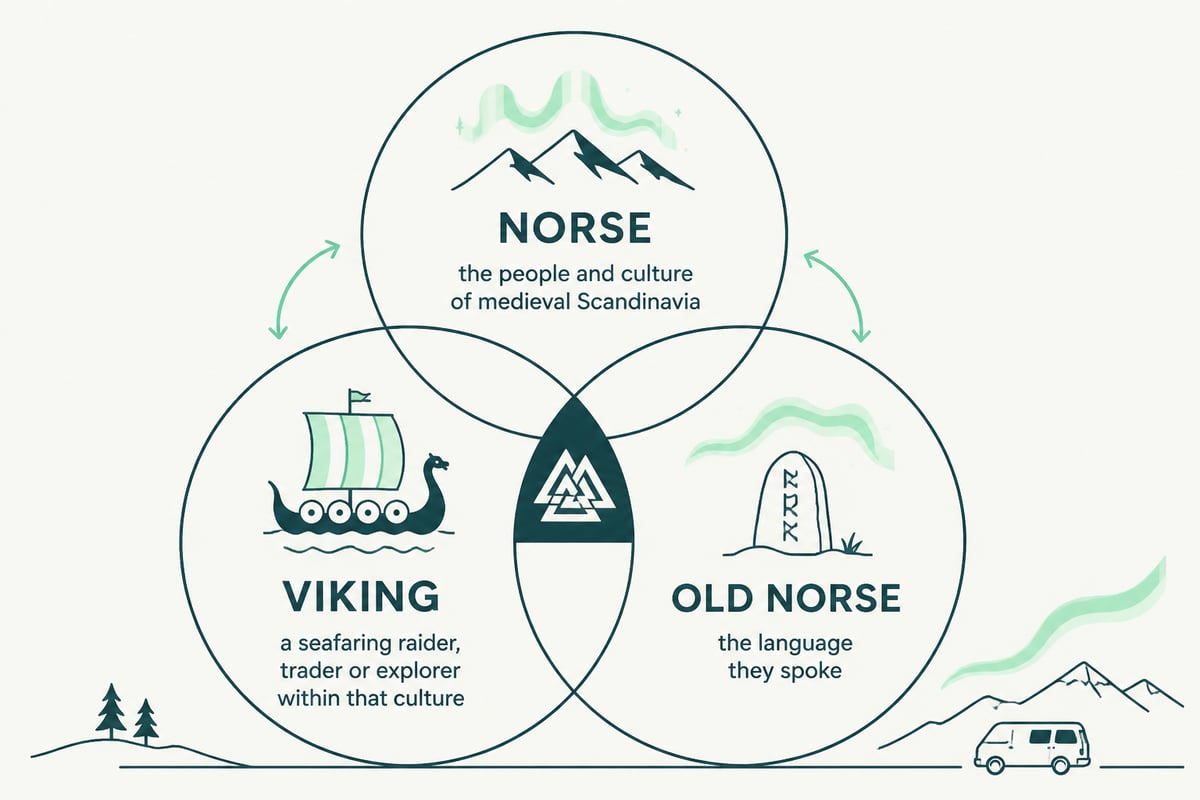
Norse means "of or relating to medieval Scandinavia, its people, its language or its culture." As a noun, it can also refer to the people themselves, as in "the Norse sailed west to Iceland." As an adjective, it modifies things: Norse sagas, Norse runes, Norse settlements.
The term is broader than "Viking," and the two are not interchangeable. Viking describes an activity: going overseas to raid, trade or explore. Most Norse people were farmers, craftspeople, traders and fishers who never took part in a raid. A Norse farmer in Iceland in the 11th century lived inside Norse culture without ever being a Viking in the strict sense.
Dictionaries also list a narrower meaning. Strictly, Norse can refer to Norway or the Norwegians, and in some older usage to the western branch of the Scandinavian languages. In everyday modern English, though, the broader meaning dominates.
Where does the word Norse come from?
The word Norse entered English in the 16th century, most likely through Dutch, and traces back to a root meaning "northern" or "northerner." That root is connected to the word for north in the Germanic languages, and it points to Norway, literally the "northern way" along the coast.
English speakers adopted the word to label things from the Scandinavian north that had no neat equivalent. Scholars later extended it to the medieval language and literature, giving us "Old Norse," a term that now covers the shared tongue of Scandinavian settlers from roughly the Viking Age onward.
The term is therefore a modern label. People in the Viking Age did not call themselves Norse in English. They identified by region, family and allegiance, as Danes, Norwegians, Swedes or Icelanders, or simply by their home district.
What is a Norse Viking?
A Norse Viking is a Scandinavian person of the Viking Age who took part in seafaring expeditions for raiding, trading, exploration or settlement. The two words combine two ideas: Norse describes the culture they came from, and Viking describes what they were doing.
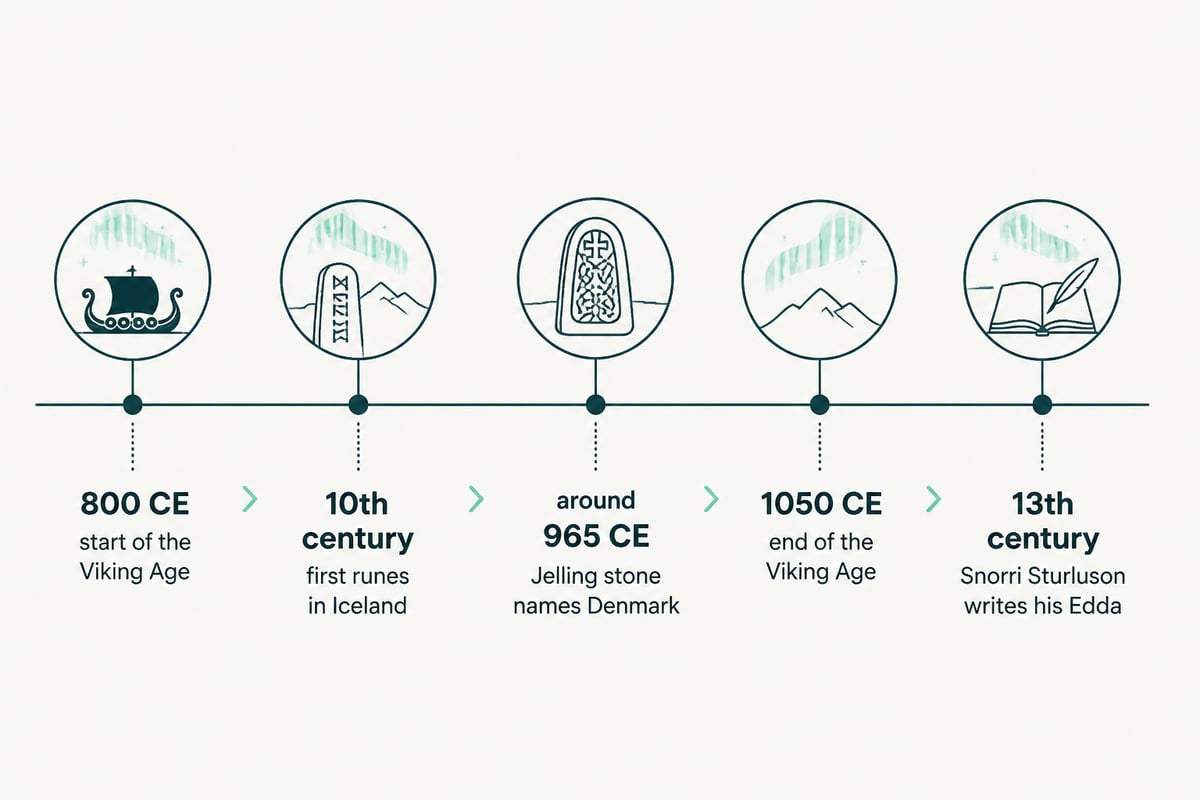
The National Museum of Denmark dates the Viking Age from 800 to 1050 CE. Within that window, expeditions varied widely. Some were violent raids, others were trading voyages, and many were migrations by families seeking land. The museum's overview of the different types of Viking expeditions shows how far the range extended, from raids to trade and the ships and international connections behind them.
Trade mattered as much as raiding. At the beginning of the Viking Age, the first proper trading towns developed in Scandinavia, often in coastal locations near natural harbours or fjords, according to the National Museum of Denmark. That detail is a useful corrective to the idea that the Norse were only warriors.
How is Norse used today?
Norse is used today in four main ways: for the language, for mythology, for archaeology and history, and as a brand or entertainment label. Each usage keeps the same core meaning of "relating to medieval Scandinavia" while pointing at a different subject.
- Language: Old Norse is the medieval Scandinavian language, the ancestor of modern Icelandic, Faroese, Norwegian, Swedish and Danish.
- Mythology: Norse mythology covers the gods, giants and cosmology of the pre-Christian Scandinavian world.
- History and archaeology: Norse settlements, Norse burial customs and Norse trade networks are standard terms in academic writing.
- Popular culture: Games, television series and companies borrow the word because it evokes the north, the sea and heroic tradition.
Be aware that a search for the word can also return businesses and entertainment titles that simply use the name. When you want the cultural meaning, adding a second term such as mythology, language or history narrows the results quickly.
What is Norse mythology?
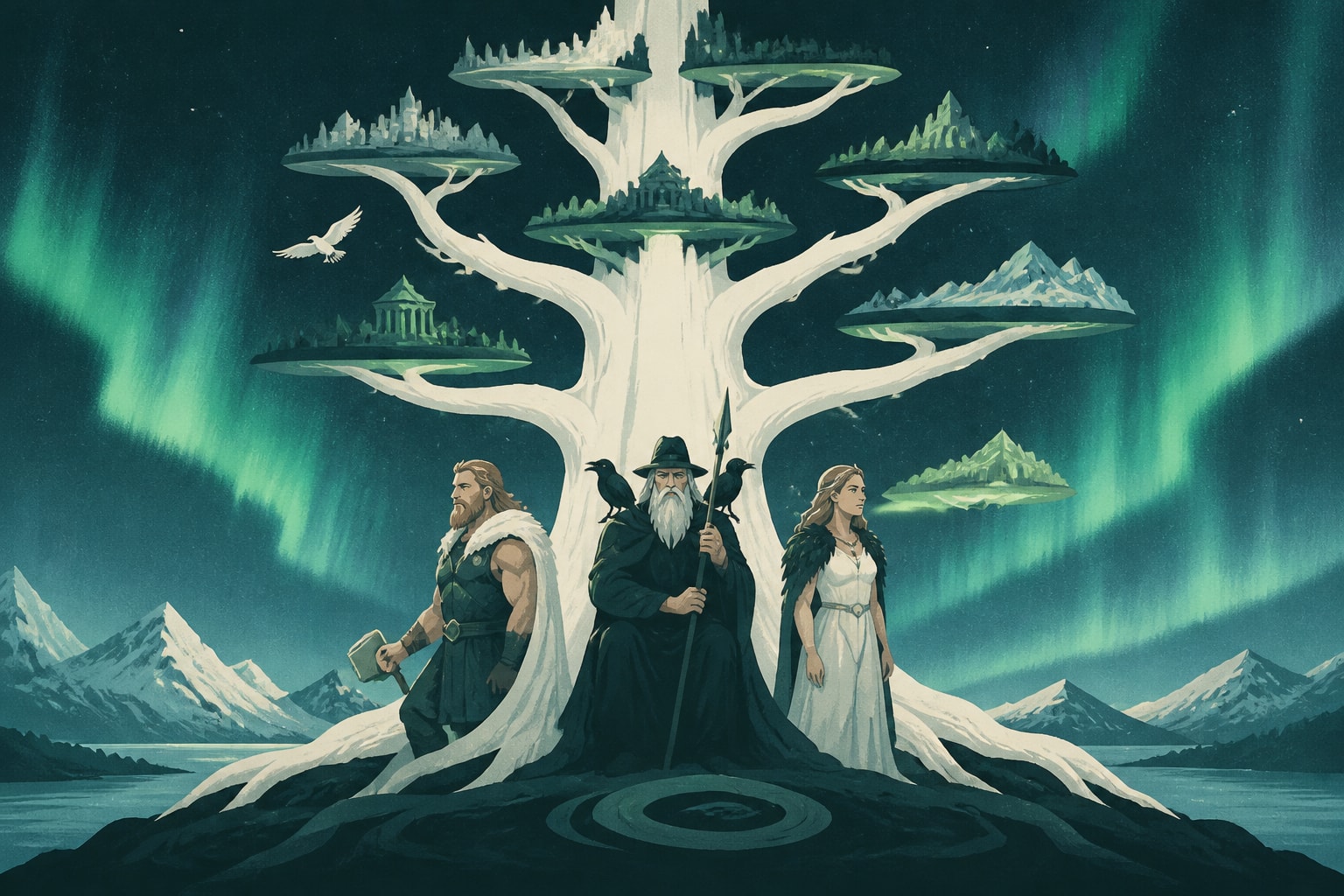
Norse mythology is the body of pre-Christian stories about gods, giants, humans and the fate of the cosmos, told by the Scandinavian peoples and preserved mainly in Icelandic manuscripts. It includes figures such as Odin, Thor, Freyja and Loki, and events such as Ragnarok, the foretold destruction and rebirth of the world.
Our knowledge rests on a small number of written sources. The Swedish History Museum identifies the Poetic Edda and Snorri Sturluson's Edda as two frequently used sources, and notes that Snorri lived and wrote in the 13th century. That means the stories were written down generations after the conversion to Christianity, and scholars treat them with care for that reason.
Iceland is where many of these stories became part of the landscape for visitors. If you want to read more about individual figures, our guides to Odin, Thor and Loki cover the characters, while the overview of the Norse gods shows how the pantheon fits together.
Do they still speak Norse?
No one speaks Old Norse as a native language today, but its closest living descendant is Icelandic. Icelandic changed less than its Scandinavian relatives because of the island's isolation, so modern Icelanders can read medieval saga texts with comparatively little difficulty.
The other Scandinavian languages, Norwegian, Swedish and Danish, share the same ancestry but drifted further from the medieval form. Faroese, spoken on the Faroe Islands, is also a close relative.
Writing tells part of the story. The National Museum of Iceland records that the oldest runes found in Iceland date to the 10th century, which places the use of the runic alphabet at the very start of settlement. In Denmark, the Jelling rune stone is a landmark: the National Museum of Denmark says Denmark is named for the first time there, on Harald Bluetooth's stone, around 965 CE.
How Norse culture reached Iceland
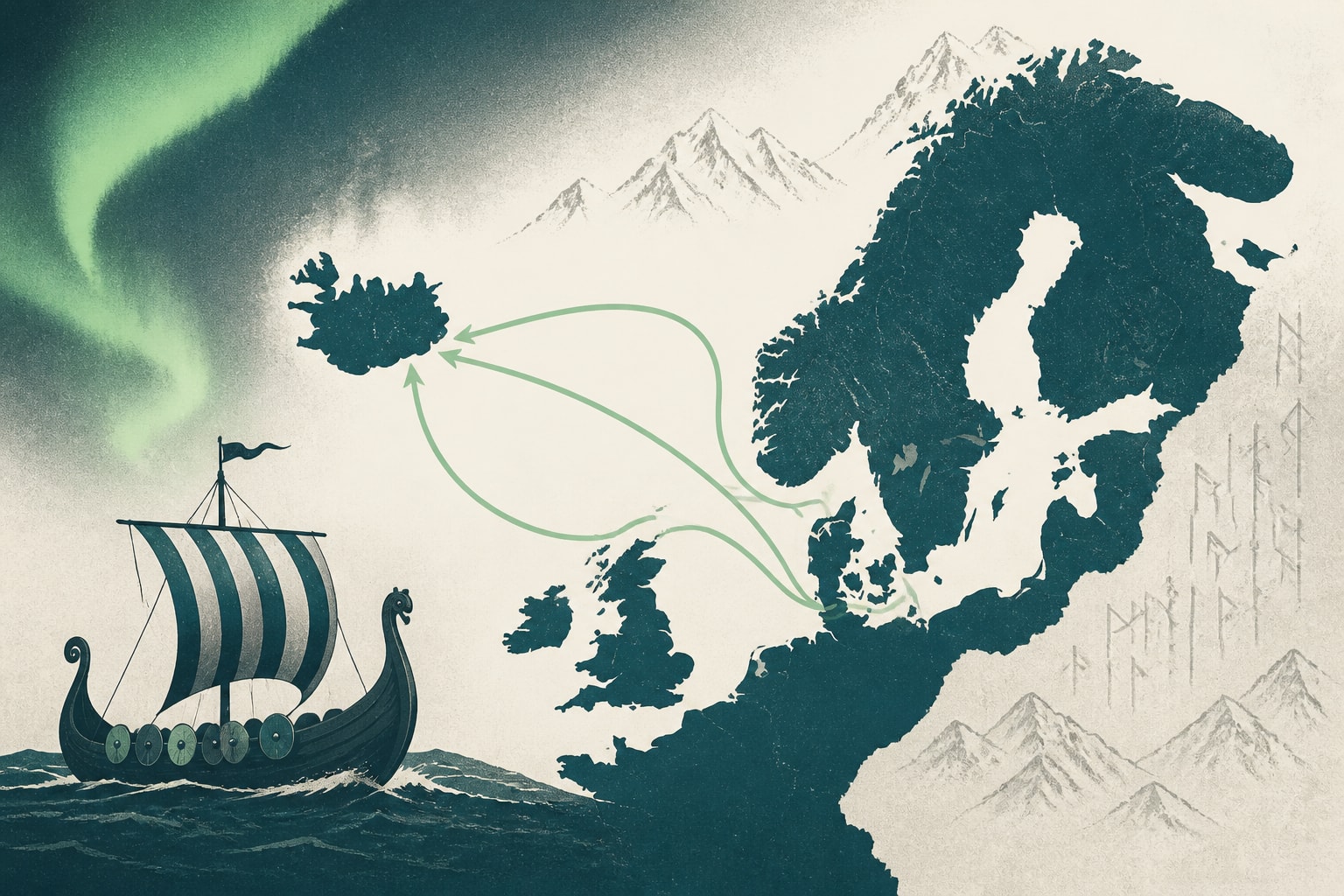
Norse culture reached Iceland through settlement, as families from Norway and the Norse colonies in the British Isles sailed to an uninhabited island and brought their language, laws and beliefs with them. Because Iceland had no earlier population, the Norse tradition there developed almost unbroken.
This settlement is the reason Icelandic place names, personal names and even surnames carry Norse roots. A traveler who hears a guide explain that a hill, a waterfall or a farm takes its name from a Norse word is hearing a thousand-year-old language still at work.
The history also explains why Icelanders preserved the mythology so carefully. The manuscripts that hold the Eddas and sagas are Icelandic, and the written tradition made the island the primary archive of the Norse world. For a closer look at how the old stories echo in daily Icelandic life, the guide to the Icelandic phrase etta reddast shows how Icelandic attitudes carry on a long cultural thread.
Who are the descendants of the Norse?
The descendants of the Norse are, above all, the modern peoples of Scandinavia and Iceland, along with communities across the British Isles, Normandy and the North Atlantic that absorbed Norse settlers. No single group is "the" Norse today, because the culture spread and merged with local populations over a thousand years.
Icelanders and Faroese are often the clearest cultural heirs, since they kept the language and the narrative tradition most intact. Norwegians, Swedes and Danes trace their heritage to the same medieval world. In other regions, such as northern England, Scotland, Ireland and northern France, Norse ancestry blended into existing communities and survives in place names, dialect words and family histories.
Norse names and places you will see in Iceland
Visitors in Iceland encounter Norse heritage in names, landscapes and stories more than in museums alone. Many of the country's best-known sites carry a mythological or saga connection, and local guides often tell these stories on the road.
A few examples worth knowing:
- The rainbow bridge: Bifrost is the burning bridge between the human world and the home of the gods, and it is a frequent point of comparison when travelers first see an arc of color or light in the sky.
- The great wolf: Fenrir is the monstrous wolf bound by the gods, a figure central to the story of Ragnarok.
- The hall of the slain: Valhalla, covered in the guide to Valhalla, is the hall where chosen warriors feast until the final battle.
- Trolls and hidden beings: Stories of trolls in Iceland show how older beliefs shaped folklore long after the conversion.
These references give context to a winter evening outdoors, which is where many visitors first feel the old stories come alive.
How the Norse relate to the northern lights
The Norse did not leave a single agreed explanation for the aurora, and no surviving saga treats the northern lights as a defined myth. What exists is a rich vocabulary of sky imagery in the mythology, from the bridge Bifrost to the sparks and fires of the cosmos, and later visitors often connect those images to what they see overhead.
That connection makes a guided aurora evening in Iceland a natural place to hear Norse stories. On a clear night, with the sky shifting between green and violet, a guide's retelling of Bifrost or Ragnarok has real context. The legends do not explain the aurora scientifically, but they frame why people in northern latitudes have always looked up and told stories.
Related terms to know
Several terms sit close to Norse, and keeping them separate avoids confusion when you read or travel.
| Term | Meaning |
|---|---|
| Old Norse | The medieval Scandinavian language and its literature |
| Viking | A person on a seaborne raid, trade or exploration voyage |
| Scandinavian | Relating to modern Scandinavia and its peoples |
| Nordic | Relating to the modern northern European countries, including Iceland and Finland |
| Saga | A prose narrative of heroes and families, mostly Icelandic |
| Edda | A collection of Old Norse mythological and poetic material |
| Rune | A character of the early Germanic alphabets used by the Norse |
"Nordic" is the modern regional term and includes Finland, whose language is not Germanic, so it is not a synonym for Norse. "Scandinavian" is narrower again in strict use. Norse is the historical and cultural label for the medieval world these terms grew out of.
FAQ
How many aircraft does Norse have?
That question refers to an airline that shares the name, not to the cultural meaning of the word. For current fleet numbers, check the airline's own website, because the figure changes over time.
Is Norse the same as Nordic?
No. Norse refers to the medieval Scandinavian world and its language and culture, while Nordic refers to the modern countries of Northern Europe, including Finland and Iceland. The two overlap historically but are used in different contexts.
Can you read Old Norse sagas today?
Yes, and many sagas are available in English translation. Icelandic readers can approach the original texts with some effort, because modern Icelandic preserves much of the medieval grammar and vocabulary.