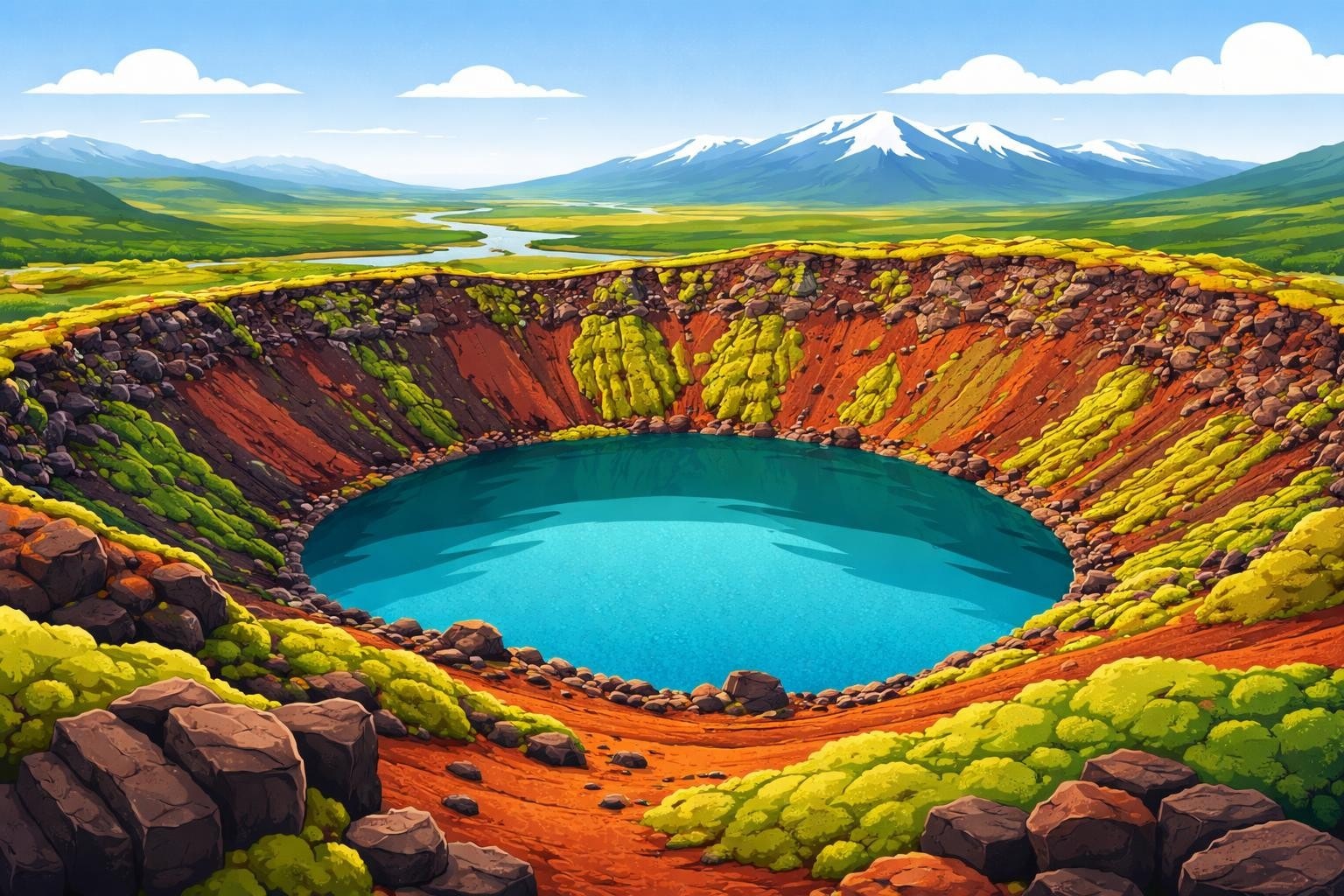
Iceland's volcanic landscape offers countless natural wonders, but few captivate visitors quite like Kerið Crater. This striking geological formation, located along the famous Golden Circle route, presents a visual masterpiece where vibrant red volcanic rock slopes embrace a serene blue-green lake. For travelers exploring Iceland's diverse terrain, particularly those combining day trips with evening northern lights adventures, Kerið represents both a geological marvel and a photographer's paradise. Understanding what makes this crater unique enhances any Iceland itinerary.
The Geological Story Behind Kerið
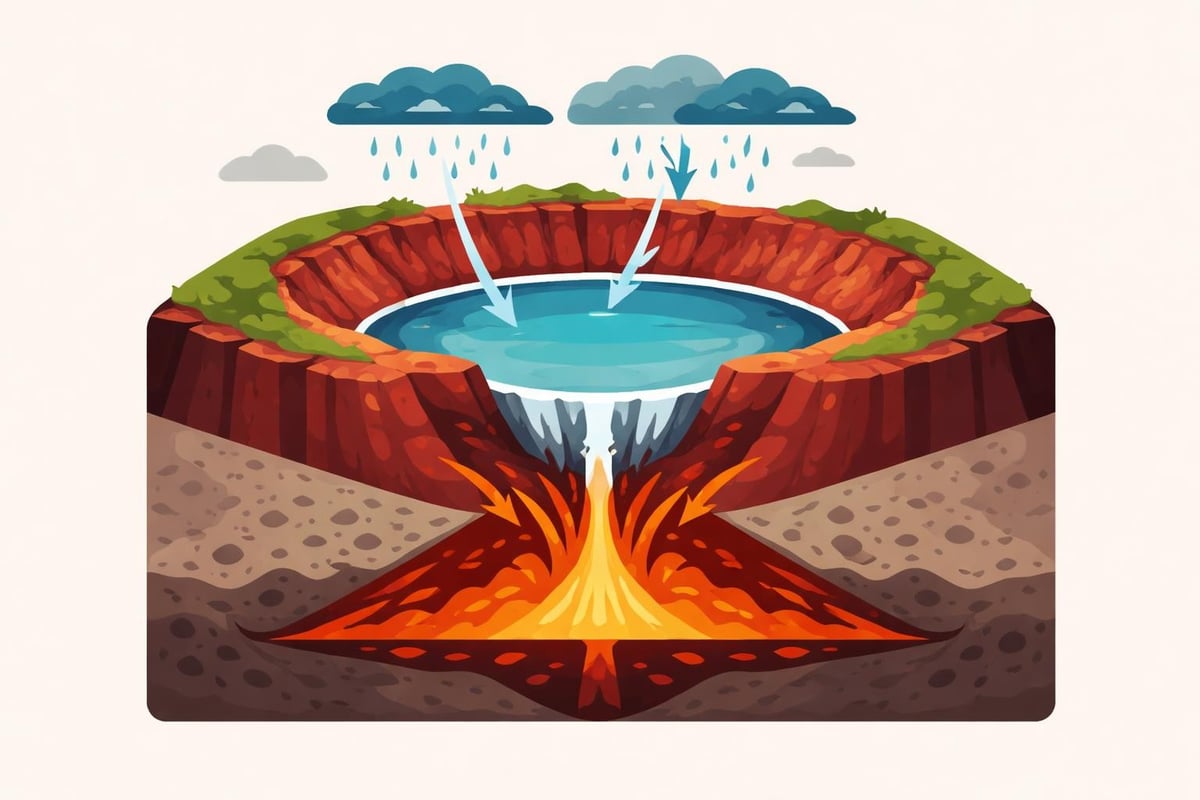
Kerið Crater stands as testament to Iceland's volcanic past, formed approximately 6,500 years ago during a period of significant geological activity. Unlike many craters created through explosive eruptions, Kerið's formation tells a different story. Scientists classify it as a maar or explosion crater, though some geological evidence suggests it may have formed when a cone volcano depleted its magma reserve, causing the empty chamber to collapse inward.
The crater measures approximately 55 meters deep, with a diameter stretching 170 meters at its widest point. These dimensions create a nearly perfect bowl shape that has become one of Iceland's most recognizable landmarks.
Understanding Volcanic Maar Formation
The distinctive characteristics of Kerið set it apart from typical volcanic formations:
- Collapse mechanism: Rather than ejecting material outward, the cone likely collapsed into its own magma chamber
- Intact caldera walls: The preservation of steep slopes indicates minimal explosive force
- Lake formation: Groundwater filled the depression, creating the striking aquamarine pool
- Mineral composition: The red and orange hues result from iron-rich volcanic rock oxidation
The volcanic rock surrounding Kerið contains high concentrations of iron compounds, which oxidize over time to produce the remarkable spectrum of red, orange, and rust colors visible today.
What Makes Kerið Visually Stunning
The crater's appeal lies in its dramatic color contrasts and accessible viewing opportunities. Standing at the rim, visitors encounter a panoramic view where volcanic red slopes plunge toward water that shifts from deep azure to bright turquoise depending on lighting conditions and season.
The vibrant coloring creates an almost surreal landscape, particularly when morning or evening light intensifies the mineral-rich rock's natural pigmentation. During summer months, green moss and vegetation cling to portions of the crater wall, adding another layer to the color palette.
Seasonal Variations at Kerið
| Season | Water Appearance | Vegetation | Photography Conditions |
|---|---|---|---|
| Winter | Deep blue, partially frozen | Dormant, brown tones | Crisp light, potential snow coverage |
| Spring | Bright turquoise | Emerging green moss | Dynamic clouds, dramatic skies |
| Summer | Variable blue-green | Lush moss patches | Extended daylight, softer shadows |
| Autumn | Rich blue | Golden-brown vegetation | Enhanced red rock contrast |
Weather conditions significantly impact the visual experience. Cloud cover can mute colors, while direct sunlight brings out the full spectrum of reds and blues.
Visiting Kerið: Practical Information
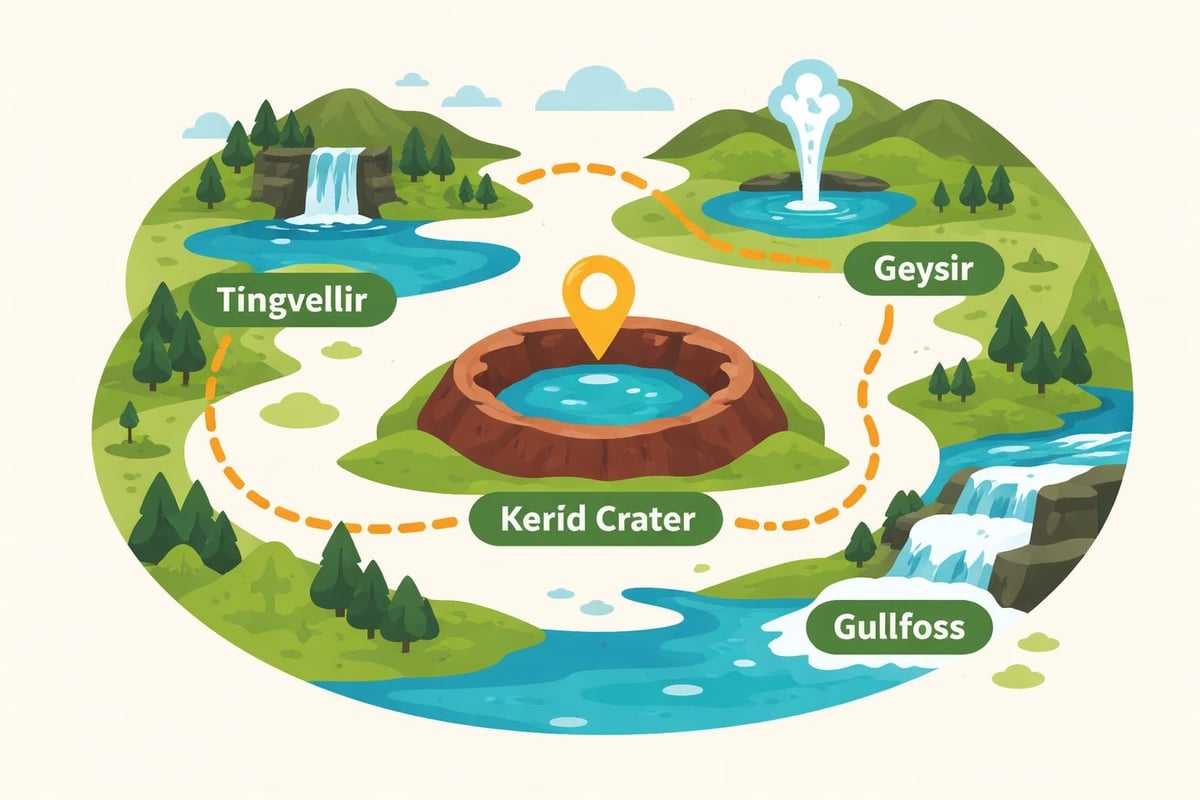
Located approximately 15 kilometers north of Selfoss along Route 35, Kerið sits conveniently on the traditional Golden Circle route that many travelers follow. This positioning makes it an ideal addition to day trips that also include Þingvellir National Park, Geysir geothermal area, and Gullfoss waterfall.
Access to the crater requires a modest entrance fee, which goes toward site maintenance and preservation. The facility includes a small parking area, basic restrooms, and maintained pathways.
Walking the Rim and Descending to the Lake
Two primary exploration options await visitors:
- Rim walk: A 360-degree path circles the crater top, offering changing perspectives
- Lake descent: Stairs lead down to the water's edge for close-up views
- Complete circuit: Combining both experiences takes approximately 30-45 minutes
- Photography stops: Multiple vantage points provide distinct compositional opportunities
The walking paths are generally well-maintained, though conditions vary seasonally. Winter ice can make surfaces slippery, while summer offers easier footing but potentially more crowded conditions.
Those with mobility considerations should note that the rim walk involves uneven terrain, and the descent to the lake requires navigating stairs. The effort rewards visitors with unique perspectives impossible to achieve from the rim alone.
Historical and Cultural Significance
Beyond its geological importance, Kerið holds cultural relevance in Iceland's modern history. The crater has served as a venue for unique events, including musical performances that take advantage of the natural amphitheater acoustics created by the surrounding rock walls.
The crater's nickname "The Eye of the World" reflects both its distinctive appearance from above and its significance within Iceland's volcanic landscape. This poetic designation appears in various cultural references and tourism materials.
Kerið in the Volcanic Zone Context
The crater exists within the Western Volcanic Zone, a geologically active region that extends across southwestern Iceland. Understanding this broader context helps visitors appreciate how Kerið represents just one feature in an extensive volcanic system.
Several factors distinguish Kerið from other craters in Iceland:
- Accessibility: Paved road access and maintained facilities
- Preservation state: Minimal erosion maintains the original form
- Water presence: The permanent lake adds visual interest
- Visitor infrastructure: Developed pathways enable safe exploration
Many travelers combine their Kerið visit with trips to nearby geothermal attractions, creating comprehensive itineraries that showcase Iceland's volcanic diversity. Those interested in experiencing more geological wonders might also explore Raufarhólshellir lava tunnel or visit the Secret Lagoon for geothermal bathing.
Photography Tips for Capturing Kerið
The crater presents exceptional photography opportunities, though timing and technique significantly impact results. Professional and amateur photographers alike benefit from understanding optimal conditions and perspectives.
Best lighting conditions occur during:
- Early morning hours when soft light illuminates the eastern crater wall
- Late afternoon when the sun angle enhances color saturation
- Overcast days that provide even lighting without harsh shadows
- Winter months when low sun angles create dramatic long shadows
Camera positioning determines compositional success. The rim offers sweeping panoramas, while the lake level provides intimate details of water and rock interactions.
Essential Camera Settings and Equipment
Photographers should consider these technical aspects:
| Challenge | Solution | Equipment |
|---|---|---|
| Wide crater span | Ultra-wide lens (16-24mm) | Wide-angle zoom |
| Color accuracy | Polarizing filter | Circular polarizer |
| Water reflections | Graduated neutral density filter | GND filter set |
| Depth of field | Aperture f/8-f/11 | Tripod for stability |
The vibrant colors can challenge camera sensors, sometimes appearing oversaturated in images. Shooting in RAW format provides flexibility during post-processing to achieve natural-looking results while maintaining the crater's inherent drama.
Combining Kerið with Northern Lights Tours
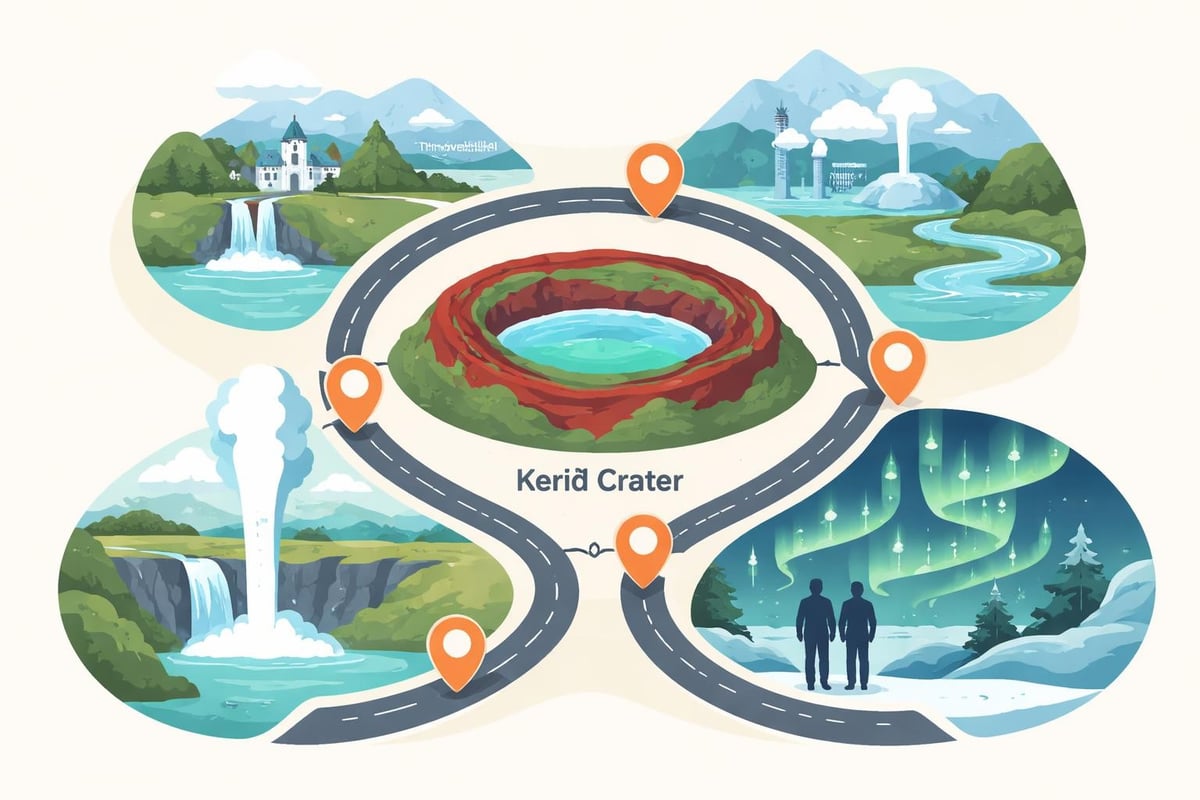
Many visitors to Iceland plan daytime sightseeing around evening aurora hunting opportunities. Kerið's location makes it particularly convenient for those staying in the Reykjavik area who want to maximize both daylight hours and dark-sky experiences.
A typical combination itinerary might include morning departure for the Golden Circle, visiting Kerið during midday or afternoon, then positioning for evening northern lights viewing. This approach capitalizes on Iceland's compact geography and the accessibility of attractions along well-maintained routes.
Planning comprehensive tours requires understanding seasonal daylight variations. Winter months offer limited daytime hours but excellent aurora viewing potential, while summer provides extended sightseeing time but minimal darkness for northern lights.
Strategic Planning for Combined Experiences
Consider these timing factors when incorporating Kerið into aurora-focused trips:
- September-October: Balanced daylight and aurora season beginning
- November-February: Short days ideal for early crater visits before evening tours
- March-April: Extended twilight creates dramatic crater photography while maintaining aurora potential
The drive from Kerið to prime northern lights viewing areas typically takes 45-90 minutes depending on destination, allowing comfortable transitions between activities. Those interested in exploring more of Iceland's natural wonders might also consider visiting Skógafoss waterfall or the Westfjords region during extended trips.
Weather Considerations and What to Wear
Iceland's unpredictable weather affects the Kerið experience significantly. Conditions can shift rapidly, transforming a sunny crater visit into a windswept challenge within minutes. Preparation ensures comfort regardless of weather changes.
Essential clothing layers include:
- Waterproof outer shell jacket with hood
- Insulating mid-layer (fleece or down)
- Moisture-wicking base layer
- Wind-resistant pants
- Sturdy hiking boots with ankle support
- Warm hat and gloves (even in summer)
Wind represents perhaps the greatest weather challenge at Kerið. The crater's exposed location offers minimal natural windbreaks, and gusts can intensify at the rim where there are no obstacles to moderate airflow.
Handling Different Weather Scenarios
Weather conditions create distinct experiences at the crater. Rain enhances color saturation in the volcanic rock but may limit photography opportunities. Snow transforms the landscape into a winter wonderland while potentially obscuring pathways. Summer sunshine provides ideal visibility but can create harsh shadows for photography.
Checking weather forecasts before departure helps visitors prepare appropriately, though conditions at Kerið may differ from Reykjavik predictions due to microclimates and elevation factors.
Comparing Kerið to Other Icelandic Craters
Iceland contains numerous volcanic craters, each with unique characteristics. Understanding how Kerið compares helps visitors prioritize their limited sightseeing time and appreciate what makes each formation special.
Notable Icelandic craters and their distinguishing features:
- Hverfjall: Massive tephra cone crater near Lake Mývatn, significantly larger than Kerið
- Víti: Explosion crater at Askja with warm geothermal water
- Grábrók: Accessible crater with stairway to rim, no lake present
- Eldborg: Symmetrical scoria cone in Snæfellsnes peninsula
Kerið's combination of accessibility, visual drama, and convenient location distinguishes it from these alternatives. While other craters may offer larger dimensions or more remote wilderness experiences, few match Kerið's balance of accessibility and aesthetic appeal.
The geological diversity across Iceland means that each volcanic feature tells a unique story about the island's formation and ongoing tectonic activity.
Environmental Preservation and Responsible Tourism
As visitor numbers to Kerið continue increasing, environmental stewardship becomes increasingly important. The fragile volcanic ecosystem surrounding the crater requires careful management to prevent degradation while maintaining public access.
Visitors contribute to preservation by:
- Staying on designated pathways and avoiding shortcuts
- Removing all trash and personal items
- Respecting barriers and warning signs
- Avoiding disturbance to vegetation and wildlife
- Following capacity guidelines during peak seasons
The entrance fee system supports ongoing maintenance and environmental monitoring. These funds enable pathway repairs, erosion control measures, and facility improvements that protect the site while enhancing visitor experience.
The Future of Kerið Tourism
Managing sustainable tourism at Kerið presents ongoing challenges. Balancing accessibility with preservation requires continuous assessment and adaptation. Current management approaches focus on infrastructure improvements that concentrate foot traffic on reinforced pathways while allowing natural areas to recover.
Iceland's broader commitment to environmental protection extends to all natural attractions, with Kerið serving as a model for how popular sites can accommodate visitors while maintaining ecological integrity. Those interested in Iceland's approach to sustainable tourism might also explore how other sites like Landmannalaugar manage visitor impact.
Kerið in Different Seasons: A Comparison
Seasonal changes dramatically alter the Kerið experience, with each period offering distinct advantages and challenges for visitors. Understanding these variations helps travelers choose optimal timing based on personal preferences and priorities.
Winter Wonder at Kerið (November-March)
Winter transforms the crater into an ethereal landscape where frost coats the red rock and ice formations develop along the lake edges. Snow accumulation can partially fill the crater, creating striking contrasts between white coverage and exposed volcanic rock.
Advantages include fewer crowds, dramatic winter light, and potential for aurora viewing during the same evening as daytime visits. Challenges encompass limited daylight hours, potentially hazardous footing, and weather-related access restrictions.
Summer Vibrancy (June-August)
Summer brings extended daylight, lush moss growth, and optimal accessibility. The midnight sun phenomenon means visitors can explore Kerið during traditionally off-hours when lighting creates unique photographic opportunities.
Crowds peak during summer months, particularly during midday when tour buses converge. Early morning or late evening visits during summer offer the same accessibility with fewer people competing for photography positions.
Shoulder Season Balance (April-May, September-October)
These transitional periods often provide the most balanced experience. Weather remains relatively mild, crowds thin compared to summer peaks, and lighting conditions offer exceptional photography potential without summer's harsh midday sun.
Aurora season begins in late August or early September, allowing visitors to combine Kerið exploration with evening northern lights pursuits. This timing represents perhaps the optimal balance for travelers seeking comprehensive Iceland experiences.
Self-Drive Versus Guided Tours to Kerið
Visitors face a choice between independent exploration via rental car or joining organized tours. Each approach offers distinct advantages depending on travel style, time constraints, and personal preferences.
Self-drive benefits:
- Flexible timing and duration at the crater
- Ability to visit during optimal lighting conditions
- Freedom to explore at personal pace
- Opportunity for spontaneous itinerary adjustments
Guided tour advantages:
- Expert commentary on geological and cultural significance
- No navigation or parking concerns
- Combination with other Golden Circle attractions
- Social interaction with fellow travelers
Those planning self-drive visits should confirm rental vehicle capabilities, particularly during winter when road conditions may require four-wheel drive. The crater's location along Route 35 provides straightforward access from Reykjavik, with clear signage directing visitors to the parking area.
For travelers prioritizing evening aurora experiences, self-drive offers flexibility to transition from daytime sightseeing to optimal northern lights locations without adhering to tour schedules. However, guided options eliminate stress around navigation and timing, particularly valuable for first-time Iceland visitors.
Kerið Crater exemplifies Iceland's volcanic heritage, offering accessible beauty that enhances any exploration of the Golden Circle region. Whether visiting during a day trip or incorporating the crater into broader Iceland adventures, this geological wonder provides memorable experiences through its striking colors and dramatic formations. After discovering Kerið and Iceland's daytime attractions, consider experiencing the magic of the aurora borealis with Reykjavik Northern Lights, where expert guides and carefully planned routes maximize your chances of witnessing the northern lights dancing across Iceland's pristine night skies.