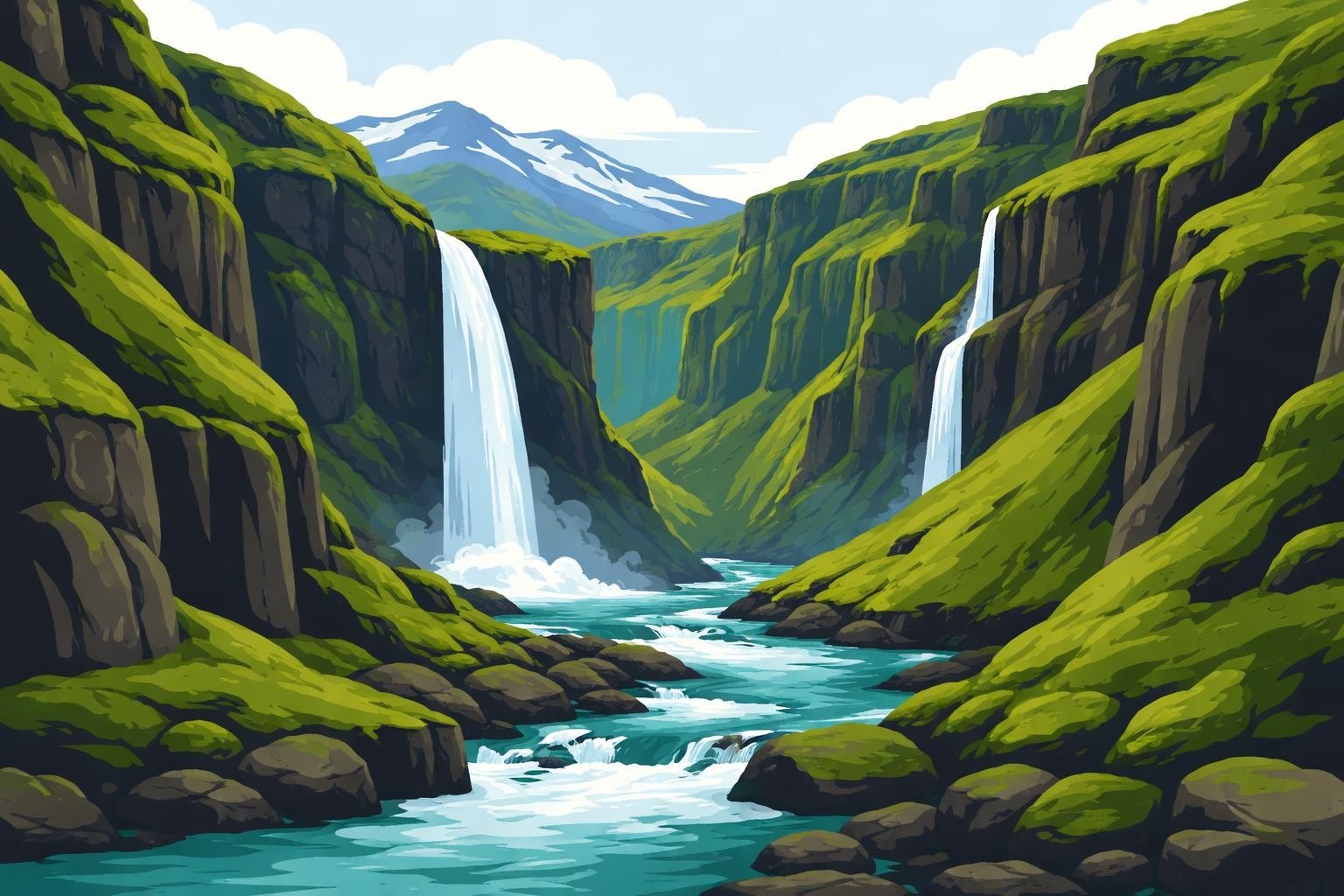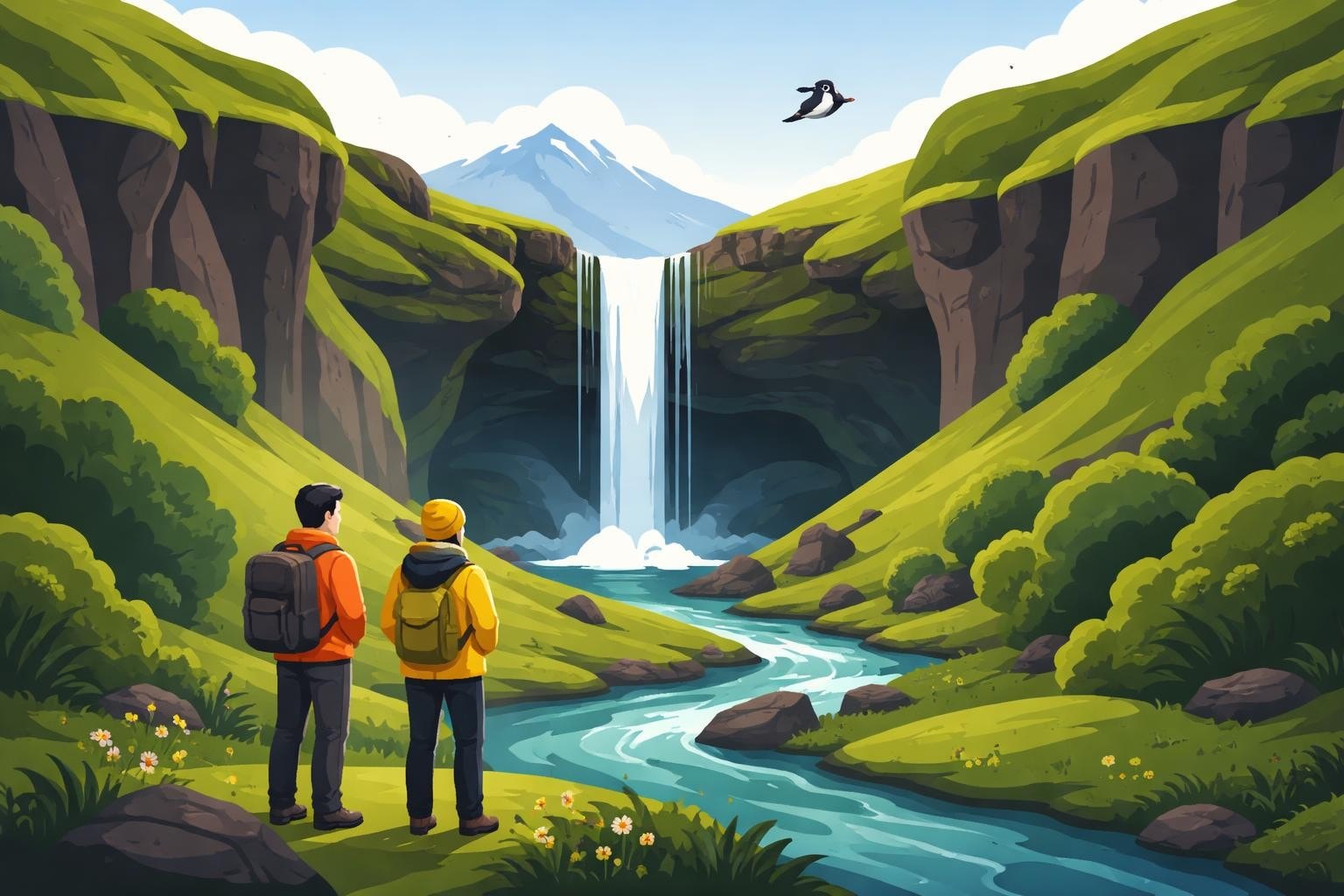
Nestled in the lush gorge near one of Iceland's most famous waterfalls lies a secret cascade that most tourists never discover. Kvernufoss stands as a testament to Iceland's abundance of natural wonders, offering visitors an intimate experience with nature that contrasts sharply with crowded tourist hotspots. This 98-foot waterfall cascades down moss-covered cliffs into a serene pool, creating a sanctuary where you can walk behind the falling water and experience the raw power of Icelandic nature up close. For travelers seeking to complement their northern lights tours with daytime adventures, this hidden gem provides an ideal destination that showcases Iceland's diverse landscape.
Understanding Kvernufoss and Its Location
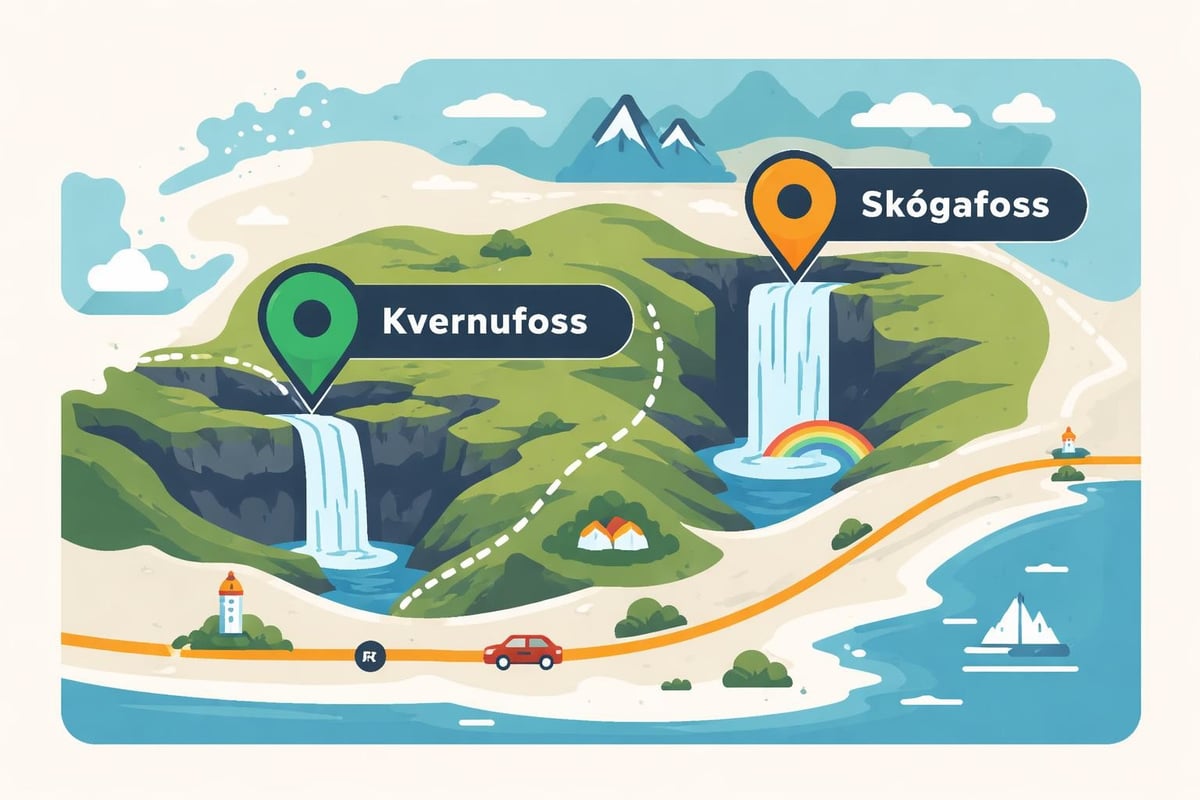
Kvernufoss sits in South Iceland, just a short walk from the renowned Skógafoss waterfall. According to Wikipedia's comprehensive overview, this waterfall remains remarkably undiscovered despite its proximity to one of the country's most visited natural attractions.
The waterfall derives its name from an old mill that once operated nearby. "Kverna" translates to mill in Icelandic, and "foss" means waterfall, creating a name that reflects the area's historical significance. This naming convention follows Iceland's tradition of descriptive place names that tell stories about the landscape and human activity.
Geographic Context and Accessibility
Located approximately 150 kilometers from Reykjavik, Kvernufoss occupies a strategic position along Iceland's South Coast. The waterfall flows from the Kverná River, which originates from the Mýrdalsjökull glacier system.
Key location details include:
- Distance from Skógafoss: 500 meters
- Elevation: Approximately 30 meters (98 feet)
- Coordinates: 63°31'48.0"N 19°30'36.0"W
- Nearest town: Skógar
The waterfall's accessibility makes it an excellent addition to South Coast itineraries. Unlike remote waterfalls that require extensive hiking, Kvernufoss rewards visitors with a relatively easy 10-15 minute walk from the parking area.
The Hiking Experience to Kvernufoss
The journey to Kvernufoss begins at a small parking area just off Route 1, Iceland's Ring Road. Outdoor Project details the hiking experience, emphasizing the trail's gentle nature and stunning surroundings.
The path winds through a narrow gorge with steep walls covered in vibrant moss and hardy vegetation. During summer months, wildflowers dot the landscape, while winter transforms the area into a frozen wonderland where ice formations create additional visual drama.
Trail Characteristics and What to Expect
| Trail Feature | Description |
|---|---|
| Distance | 500-600 meters one way |
| Difficulty | Easy to moderate |
| Elevation Gain | Minimal (approximately 20 meters) |
| Trail Surface | Natural path, can be muddy |
| Time Required | 20-30 minutes round trip |
| Accessibility | Not wheelchair accessible |
The trail can become slippery, particularly after rain or during winter months. Proper footwear with good traction proves essential for safe navigation. The path narrows as you approach the waterfall, with the gorge walls creating a natural amphitheater effect that amplifies the sound of cascading water.
Weather conditions significantly impact the experience. SmartRippers provides detailed seasonal considerations, noting that summer offers easier access while winter presents stunning ice formations.
Walking Behind the Waterfall
One of Kvernufoss's most distinctive features is the opportunity to walk completely behind the cascade. This characteristic sets it apart from many Icelandic waterfalls and creates an unforgettable sensory experience.
The alcove behind the waterfall provides shelter while offering unique perspectives. Sunlight filtering through the water creates prismatic effects, and the thunderous sound of water hitting the pool below resonates throughout the space.
Safety Considerations
Important safety points when walking behind Kvernufoss:
- Expect to get wet from spray and mist, even if you don't touch the water
- Watch for slippery rocks covered in moss and algae
- Protect electronic devices from moisture damage
- Wear waterproof clothing regardless of weather conditions
- Exercise caution during high water flow periods
The space behind the waterfall can accommodate multiple people, but during peak tourist season (June through August), you might need to wait for others to complete their visit. Early morning or late evening visits typically offer more solitude.
Photography Opportunities at Kvernufoss
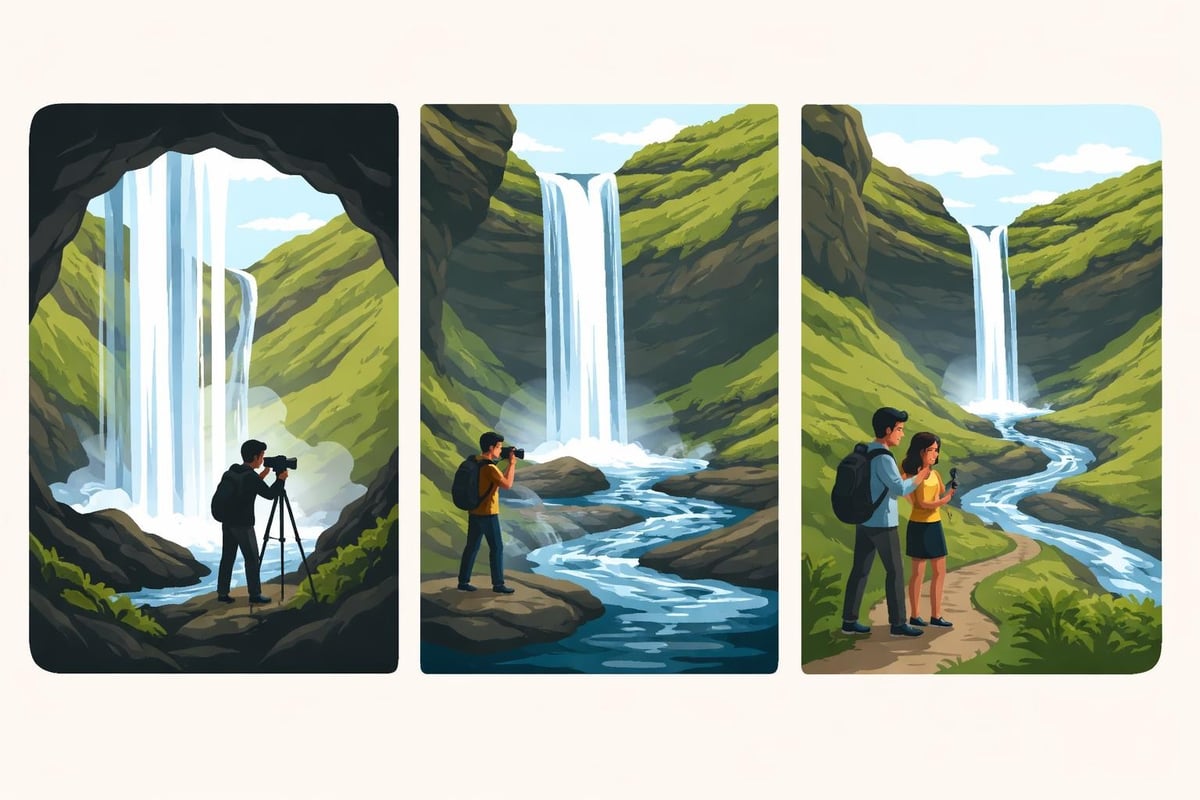
Photographers find Kvernufoss particularly rewarding due to its varied compositions and dramatic lighting conditions. The narrow gorge creates directional light that changes throughout the day, offering different moods and atmospheres.
The waterfall's height and the ability to position yourself behind it enable unique perspectives. Wide-angle lenses capture the full scene, including the gorge walls and surrounding vegetation, while longer focal lengths isolate the cascade itself.
Optimal Photography Conditions
Morning light enters the gorge at specific angles, creating side-lighting that emphasizes texture in the moss-covered walls. European Waterfalls highlights unique features that make this location especially photogenic.
Technical considerations for photographing Kvernufoss:
- Shutter speed: 1/4 to 2 seconds for silky water effect
- ISO: Keep low (100-400) to maintain image quality
- Aperture: f/8 to f/16 for depth of field
- Filters: Polarizing filter reduces glare, neutral density extends exposures
- Protection: Lens cloth essential for water droplets
Sunset photography presents challenges due to the gorge's orientation, but the soft light creates atmospheric conditions ideal for moody compositions. Winter offers opportunities for photographing ice formations, though shorter daylight hours limit shooting time.
Integrating Kvernufoss into South Coast Itineraries
Travelers exploring Iceland's South Coast find Kvernufoss perfectly positioned for multi-attraction days. Its proximity to Skógafoss means you can visit both waterfalls without significant additional travel time.
The waterfall works well within broader South Coast touring strategies. Many visitors combine it with other attractions like Reynisfjara black sand beach, Seljalandsfoss waterfall, and the charming village of Vík. Similar to how travelers explore other Iceland waterfalls, Kvernufoss deserves dedicated time rather than being rushed.
Sample Itinerary Integration
Half-day South Coast waterfall tour:
- Depart from accommodation (allow 2-3 hours driving from Reykjavik)
- Visit Seljalandsfoss (1 hour including walk behind falls)
- Drive to Skógar area (30 minutes)
- Hike to Kvernufoss (45 minutes total)
- Visit Skógafoss (30-45 minutes)
- Lunch in Skógar village
- Continue to additional South Coast destinations or return
This schedule provides flexibility for photography stops and spontaneous exploration. The relatively short distances between attractions make the South Coast ideal for travelers who want to maximize their sightseeing without excessive driving.
Seasonal Variations and Best Visiting Times
Kvernufoss transforms dramatically across Iceland's seasons, each offering distinct advantages and challenges. Understanding seasonal variations helps visitors plan optimal experiences.
Spring (April-May)
Spring brings increased water flow from snowmelt, making Kvernufoss particularly powerful and dramatic. The cascade reaches its maximum volume, creating thunderous sound and heavy spray. Vegetation begins emerging, with early green tones contrasting against dark volcanic rock.
Temperature ranges from 0-10°C (32-50°F), requiring layered clothing. Daylight extends rapidly, with sunset approaching 22:00 by late May.
Summer (June-August)
Peak tourist season brings crowds to nearby Skógafoss, but Kvernufoss maintains its peaceful atmosphere. Iceland.org emphasizes its status as a quieter alternative during busy months.
| Summer Advantages | Summer Challenges |
|---|---|
| Midnight sun provides extended photography hours | Occasional tour groups |
| Lush vegetation at maximum growth | Parking can fill quickly |
| Warmest temperatures (10-15°C) | More tourists overall in area |
| Best trail conditions | Potential for midges |
Autumn (September-October)
Autumn offers arguably the most photogenic conditions. Lower tourist numbers combine with dramatic weather patterns that create moody atmospheric conditions. Water levels remain moderate, and autumn colors appear in the limited vegetation.
Early season northern lights become visible, allowing dedicated travelers to combine waterfall visits with evening aurora hunting tours.
Winter (November-March)
Winter transforms Kvernufoss into an ice palace. Freezing temperatures create massive icicles along the gorge walls and ice formations around the waterfall's base. The alcove behind the cascade often features ice columns and frozen spray formations.
Winter visiting requires:
- Microspikes or crampons for icy trail sections
- Extreme caution on slippery surfaces
- Waterproof and insulated clothing
- Headlamp for short daylight hours
- Checking weather and road conditions
The parking area and trail may not be maintained during winter, requiring assessment of accessibility before attempting the hike.
Comparing Kvernufoss to Other Icelandic Waterfalls
Iceland boasts hundreds of named waterfalls, each with unique characteristics. Kvernufoss occupies a special niche as an accessible yet uncrowded destination that offers behind-the-falls access.
Compared to nearby Skógafoss, Kvernufoss receives a fraction of the visitors despite being equally impressive in its own right. While Skógafoss impresses with width and power, Kvernufoss enchants with intimacy and serenity. GoCampers explores the name origin and dimensions, providing context for understanding its scale relative to other cascades.
Comparative Analysis
Kvernufoss versus major South Coast waterfalls:
- Seljalandsfoss: Both allow walking behind, but Seljalandsfoss sees 10x more visitors
- Skógafoss: More powerful and wider, but lacks the intimate gorge setting
- Gljúfrabúi: Similarly hidden, but requires wading through water to access
- Svartifoss: Requires longer hike, features basalt columns instead of moss
The combination of accessibility, unique features, and low crowds positions Kvernufoss as an ideal destination for travelers seeking authentic experiences beyond tourist hotspots. For those planning comprehensive Iceland adventures similar to Golden Circle routes, adding Kvernufoss provides depth to South Coast exploration.
Practical Visitor Information
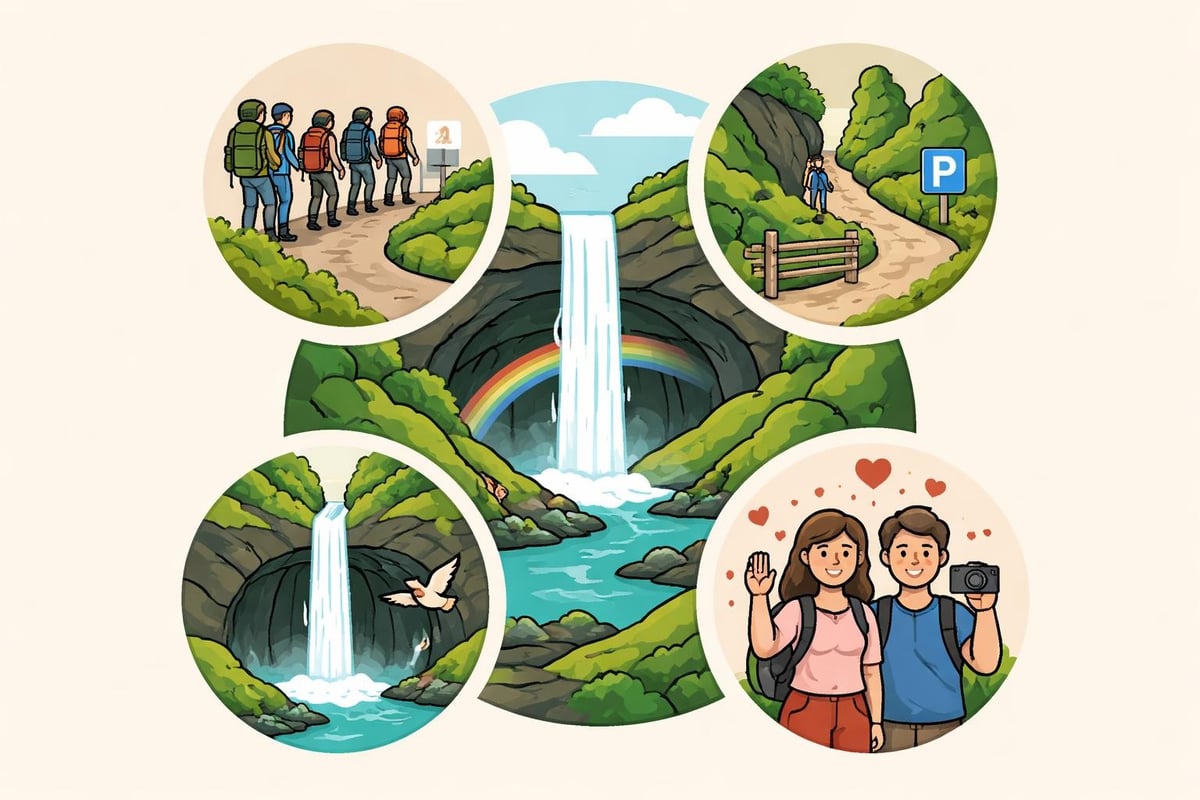
Planning a successful Kvernufoss visit requires attention to several practical considerations. Guide to Iceland provides comprehensive information covering various aspects of visiting this waterfall.
Getting There
From Reykjavik, follow Route 1 eastward along the South Coast. The drive takes approximately 2 hours under normal conditions. Look for a small parking area on the left (north) side of the road, just before reaching Skógar and Skógafoss.
GPS coordinates for parking: 63.531111, -19.510000
The parking area is small and unmarked, easily missed if driving too quickly. A small sign indicates the trail to Kvernufoss, though it's less prominent than signs for major attractions.
Facilities and Services
Unlike major tourist sites, Kvernufoss offers minimal facilities:
- No restrooms at the trailhead or waterfall
- No food services nearby (available in Skógar village)
- Limited cell phone coverage depending on carrier
- No entrance fee or visitor center
The nearest services are in Skógar, approximately 1 kilometer away, where you'll find restaurants, a folk museum, and restroom facilities.
What to Bring
Essential items for visiting Kvernufoss:
- Waterproof jacket and pants
- Sturdy hiking boots with good traction
- Camera with weather protection
- Water and snacks
- Microspikes or crampons (winter)
- Daypack for carrying gear
- Extra layers for changing weather
Weather in South Iceland changes rapidly. Conditions can shift from calm to windy rain within minutes, making preparation essential regardless of forecast.
Environmental Considerations and Responsible Tourism
As Kvernufoss gains recognition, protecting its pristine environment becomes increasingly important. The waterfall's relatively untouched state reflects both its recent discovery and responsible visitor behavior.
Leave No Trace Principles
Practicing environmental stewardship at Kvernufoss:
- Stay on established trails to prevent erosion
- Pack out all trash including food waste
- Respect vegetation by avoiding stepping on moss
- Keep noise levels down to preserve tranquility
- Don't disturb wildlife or nesting birds
The moss covering the gorge walls represents decades or centuries of growth. A single footstep can destroy years of development, leaving visible damage that takes generations to heal.
Photography Ethics
While capturing Kvernufoss's beauty provides cherished memories, consider the impact of photography practices. Avoid using drones without proper permits, as they disturb wildlife and other visitors. Don't move rocks, vegetation, or natural elements to create better compositions.
Social media has increased visitation to previously unknown locations. If sharing images online, consider whether promoting exact locations serves conservation interests. FunIceland provides conservation-minded information that balances accessibility with protection.
Weather Patterns and Their Impact
Iceland's weather significantly influences Kvernufoss experiences. The South Coast receives substantial precipitation, feeding the waterfall system while creating challenging conditions for visitors.
Average annual rainfall in the Skógar area exceeds 2,000mm, making waterproof gear essential year-round. Wind conditions can be extreme, particularly during winter storms when gusts exceed 30 meters per second.
Reading Weather Forecasts
Icelandic weather forecasts provide detailed information through the Icelandic Met Office. Check forecasts immediately before visiting, as conditions change rapidly. Pay particular attention to:
Wind speed and direction: Strong winds make the trail uncomfortable and photography difficult Precipitation: Heavy rain increases water flow and makes rocks slippery Temperature: Affects ice formation and clothing requirements Visibility: Fog can obscure the waterfall and create navigation challenges
Winter weather requires special attention. Blizzard conditions make visiting dangerous, and roads can close without notice. Always have backup plans when traveling in Iceland during winter months.
Connecting Natural Beauty with Northern Lights Experiences
For visitors to Iceland pursuing multiple natural phenomena, combining waterfall exploration with northern lights viewing creates comprehensive experiences. The same dark, clear nights ideal for aurora viewing often follow days with dramatic weather that enhances waterfall photography.
Many travelers structure their Iceland visits around evening northern lights tours, using daylight hours for attractions like Kvernufoss. The South Coast's position makes it accessible for day trips from Reykjavik, allowing return before aurora hunting begins.
Multi-Day South Coast Adventures
Serious explorers often dedicate multiple days to South Coast exploration, staying in Vík or Kirkjubæjarklaustur. This approach allows relaxed waterfall visits during daylight and optimal positioning for northern lights viewing after dark.
Adventure tours in Iceland frequently combine natural attractions, creating comprehensive experiences that showcase the country's diverse offerings. Kvernufoss fits perfectly into these multi-faceted itineraries, providing intimate natural encounters that complement grand landscapes.
Historical and Cultural Context
While Kvernufoss lacks the extensive folklore associated with some Icelandic waterfalls, its connection to historical milling operations provides cultural significance. The old mill served local farming communities, grinding grain in an era before modern technology transformed rural Iceland.
Iceland's waterfall folklore often features hidden people, elves, and spirits. The secluded nature of Kvernufoss and its hidden gorge setting align with traditional stories of secret places where supernatural beings dwell. Though no specific legends attach to this waterfall, its atmosphere evokes the mysterious quality that permeates Icelandic nature stories.
Modern Discovery and Tourism Development
South.is provides official tourism information that reflects recent efforts to document and share lesser-known attractions. Kvernufoss exemplifies Iceland's abundance of natural wonders, where even intensively toured regions contain hidden gems awaiting discovery.
The waterfall's growing recognition demonstrates how social media and travel blogs have transformed tourism patterns. Destinations once known only to locals now attract international visitors seeking experiences beyond mainstream attractions.
Final Considerations for Your Visit
Visiting Kvernufoss requires minimal planning but rewards careful preparation. The waterfall's accessibility makes it suitable for most fitness levels, while its unique features create memorable experiences that rival more famous destinations.
Timing your visit for early morning or late evening typically ensures solitude, particularly during summer's extended daylight. Weekend visits during peak season bring more Icelandic domestic tourists, while weekdays remain quieter.
Consider weather not just for comfort but for photographic opportunities. Overcast days create even lighting ideal for photography, while sunny weather produces dramatic light beams in the gorge. Each condition offers distinct advantages.
The waterfall pairs naturally with other South Coast attractions, creating full days of exploration. Rather than rushing between sites, allocate sufficient time to appreciate each location's unique characteristics. Quality experiences at fewer locations often prove more satisfying than hurried visits to many destinations.
Kvernufoss represents the essence of Iceland's natural abundance, where hidden treasures await discovery just steps from well-trodden paths. This accessible yet serene waterfall provides intimate encounters with raw nature that create lasting memories for travelers willing to venture slightly off the beaten track. After experiencing Iceland's daytime wonders, let Reykjavik Northern Lights guide you through equally magical evening adventures, where expert local guides use live sky routing and warm hospitality to maximize your chances of witnessing the spectacular aurora borealis dancing across Arctic skies.