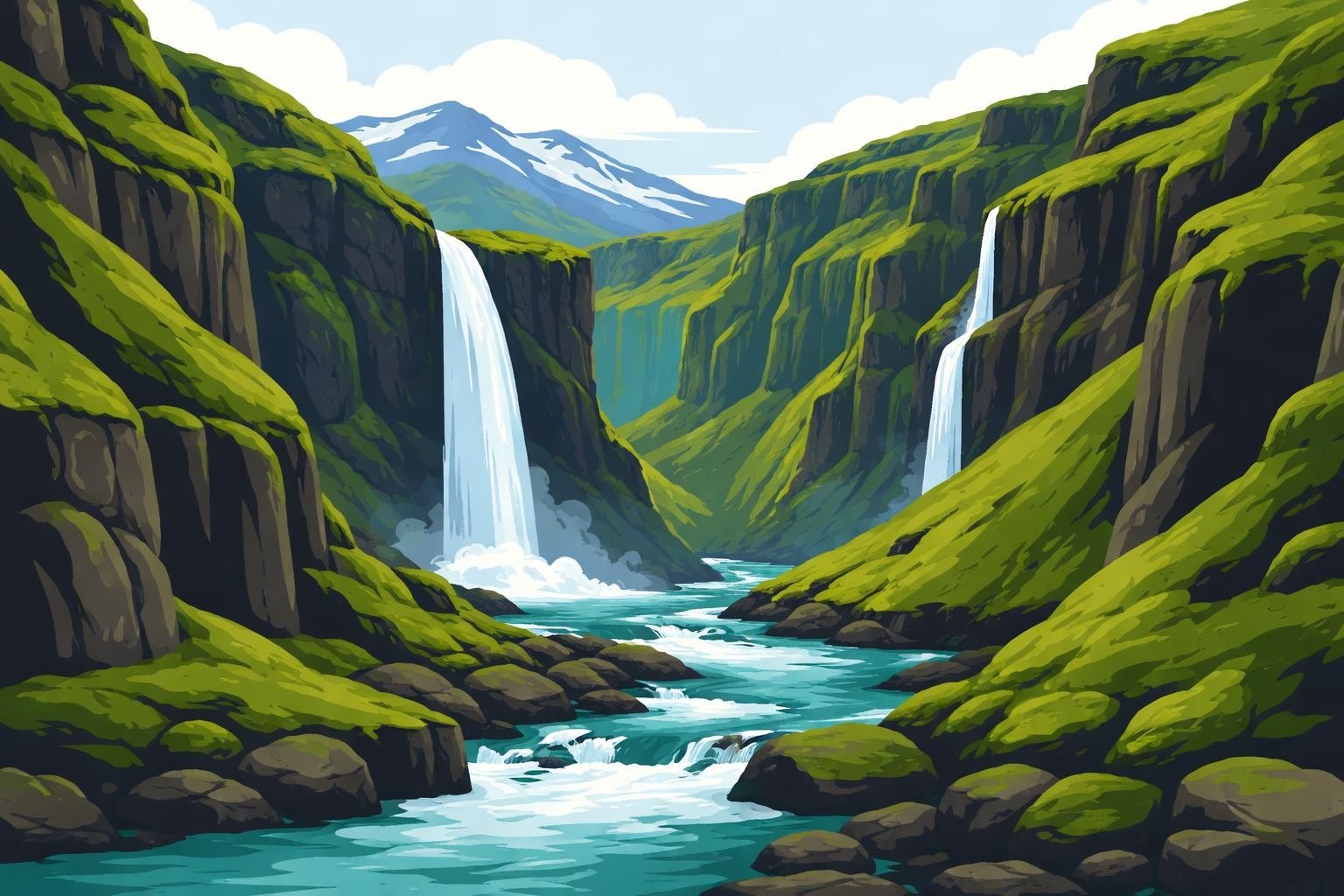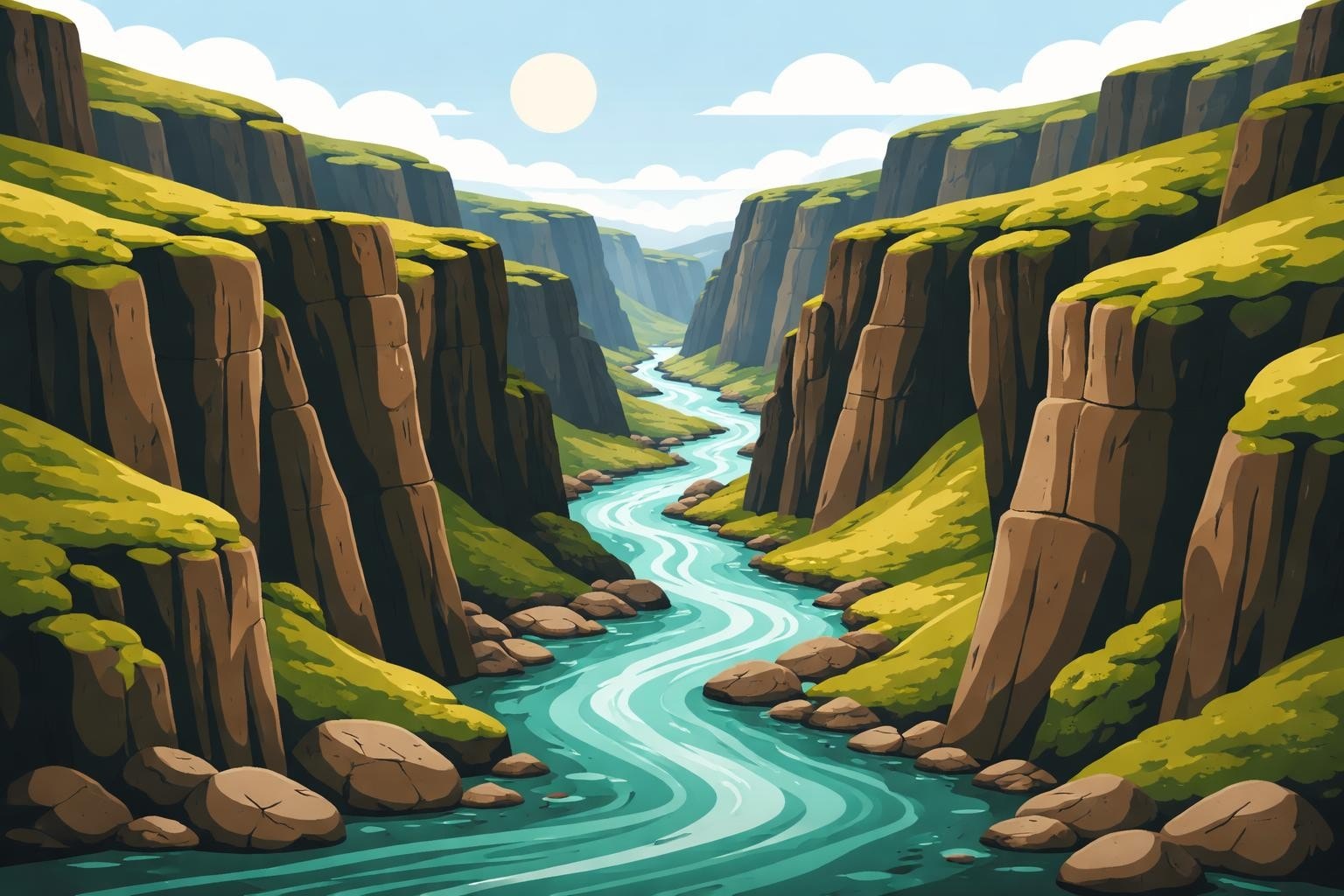
Iceland's southeastern highlands conceal one of nature's most spectacular creations: a serpentine canyon carved through ancient basalt over thousands of years. Fjaðrárgljúfur stands as a testament to the relentless power of glacial meltwater, creating a geological masterpiece that draws photographers, hikers, and nature enthusiasts from around the world. This remarkable formation near Kirkjubæjarklaustur offers visitors a glimpse into Iceland's volcanic past while presenting unique challenges for conservation in an era of increasing tourism. Understanding this natural wonder's history, geology, and current protection measures helps travelers appreciate its significance beyond mere aesthetics.
Geological Origins and Formation
The story of fjaðrárgljúfur begins approximately 9,000 years ago during the final stages of the last Ice Age. As massive glaciers retreated across Iceland's landscape, they released tremendous volumes of meltwater that carved through the volcanic bedrock. The geological formation of Fjaðrárgljúfur reveals layers of palagonite, a volcanic rock formed when molten basalt came into contact with ice or water during ancient eruptions.
The Fjaðrá river continues its patient work today, flowing through the canyon floor and gradually deepening this natural sculpture. The canyon stretches approximately 2 kilometers in length and reaches depths of up to 100 meters, with walls that twist and turn in serpentine patterns. This winding formation creates countless viewpoints where visitors can observe the interplay of water, rock, and vegetation.
Understanding the Rock Layers
The canyon walls display distinct horizontal striations that tell the geological history of this region. Each layer represents a different volcanic event, with various colors indicating different mineral compositions and oxidation states. The darker layers consist of dense basalt, while lighter sections reveal palagonite tuff formed during explosive interactions between lava and ice.
Key geological features include:
- Columnar basalt formations created by cooling lava
- Eroded alcoves where softer rock has weathered away
- Natural viewing platforms formed by harder rock layers
- Moss-covered ledges supported by the canyon's microclimate
- Glacial polish on certain rock surfaces from ancient ice movement
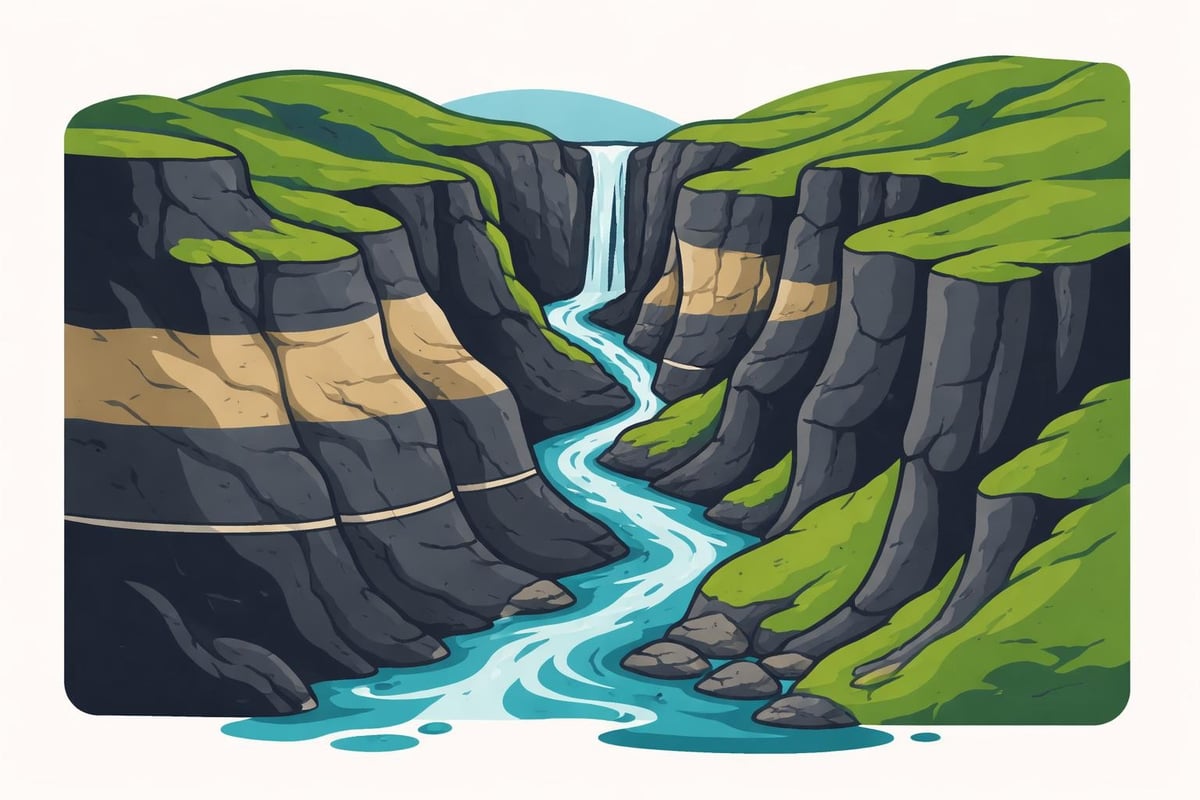
The unique microclimate within fjaðrárgljúfur supports vegetation that wouldn't typically survive in Iceland's harsh highland environment. Sheltered from winds and benefiting from moisture retention, the canyon walls host mosses, lichens, and hardy grasses that add vibrant greens to the dramatic landscape.
Visiting Fjaðrárgljúfur: Practical Information
Located approximately 6 kilometers west of Kirkjubæjarklaustur along Route 1, the canyon requires a short detour onto Route 206. This accessibility has made fjaðrárgljúfur increasingly popular, though this popularity has come with environmental consequences that led to temporary closures and new management strategies.
The parking area sits at the canyon's southern end, where an information board provides context about the formation and current regulations. From here, a well-maintained walking path follows the western rim, offering multiple viewpoints across approximately 2 kilometers. Visiting Fjaðrárgljúfur requires proper preparation, especially during winter months when ice and snow can make paths treacherous.
Seasonal Considerations
| Season | Access | Conditions | Advantages | Challenges |
|---|---|---|---|---|
| Summer (June-Aug) | Full access | Dry, stable paths | Long daylight, green vegetation | Crowds, midges |
| Fall (Sep-Oct) | Full access | Variable weather | Autumn colors, fewer tourists | Shorter days, rain |
| Winter (Nov-Mar) | Limited/Closed | Ice, snow | Dramatic snow contrast | Dangerous conditions, darkness |
| Spring (Apr-May) | Restricted | Muddy, thawing | Waterfall flow peaks | Trail damage risk |
Visitors planning to explore fjaðrárgljúfur should allocate at least 1-2 hours for the round-trip walk along the rim trail. The path requires moderate fitness levels, though no technical hiking skills are necessary. Proper footwear with good grip becomes essential, as sections can be slippery even in dry conditions.
Those combining their visit with other southeastern Iceland attractions might consider exploring during the evening hours when chasing the aurora borealis. The canyon area offers minimal light pollution, making it an excellent spot for northern lights tours during winter months, though always check access restrictions first.
Conservation Challenges and Protection Measures
The dramatic rise in tourism to fjaðrárgljúfur, particularly following its appearance in popular media in 2015, created significant environmental stress on this fragile ecosystem. Visitor numbers increased exponentially, with many tourists venturing off designated paths to capture unique photographs or explore the canyon floor. This behavior caused severe erosion to vegetation and soil that had developed over thousands of years.
In response to the degradation, Fjaðrárgljúfur was declared a nature reserve and underwent temporary closures during vulnerable periods. These closures, particularly during spring thaw when the ground is most susceptible to damage, allow the landscape to recover while protecting it from further harm.
Current Regulations and Visitor Guidelines
Mandatory rules for all visitors:
- Stay on marked trails at all times
- Do not descend into the canyon or walk on the canyon floor
- Respect seasonal closures posted at the parking area
- Pack out all waste and leave no trace
- Keep drones at appropriate distances per Icelandic aviation regulations
- Avoid walking on vegetation or disturbing wildlife
The protective measures implemented at fjaðrárgljúfur serve as a model for managing other fragile Icelandic natural sites experiencing tourism pressure. Rangers patrol during peak seasons, and educational materials emphasize the importance of responsible tourism. These efforts aim to preserve the canyon for future generations while still allowing current visitors to experience its magnificence.
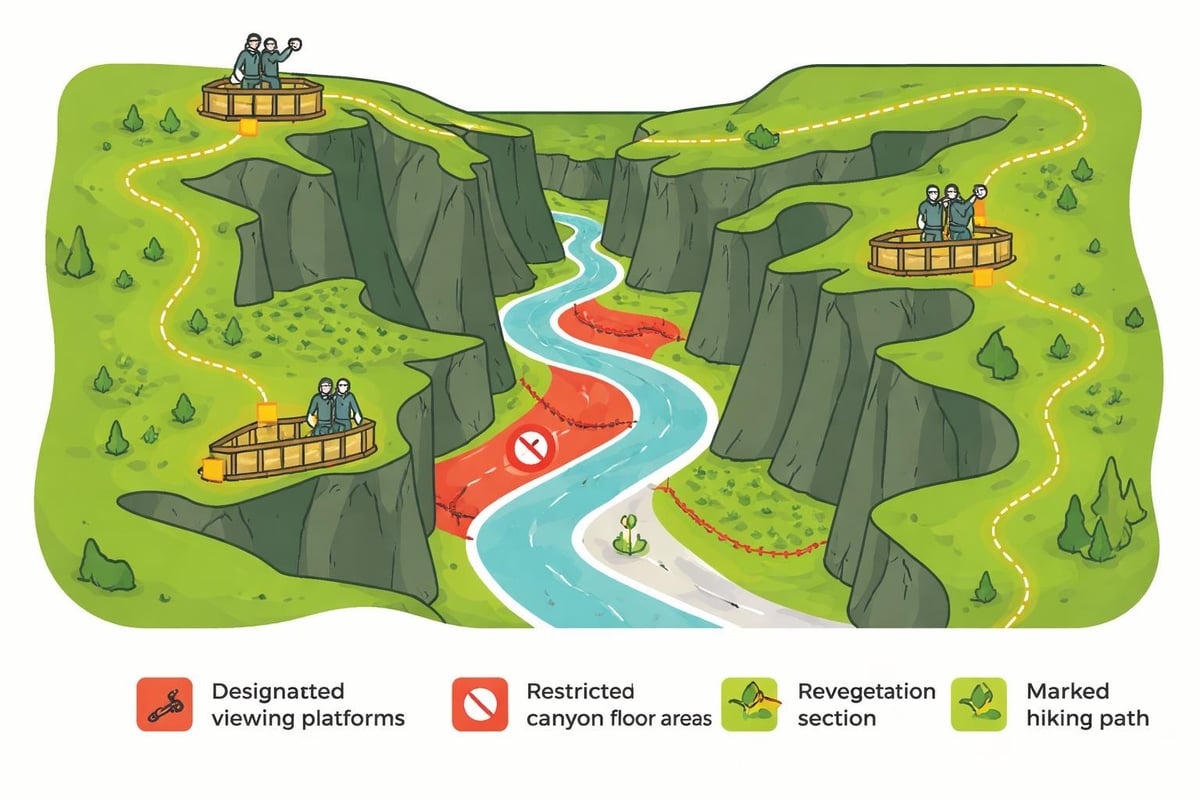
Similar to other natural wonders along Iceland's Ring Road, fjaðrárgljúfur demonstrates how Iceland balances tourism revenue with environmental stewardship. The lessons learned here influence management decisions at other popular destinations throughout the country.
Photography and the Visual Appeal
The serpentine curves of fjaðrárgljúfur create endless compositional opportunities for photographers. The canyon's winding path draws the eye through the frame, while the varying depths and shadow patterns change throughout the day. Professional and amateur photographers alike praise Fjaðrárgljúfur as a photography location, noting how different lighting conditions transform the scene completely.
Morning light illuminates the eastern canyon walls while leaving the western side in shadow, creating dramatic contrast. Midday sun penetrates deeper into the canyon, revealing details on the canyon floor and the Fjaðrá river's path. Evening light produces warm tones on the volcanic rock, particularly stunning during golden hour before sunset.
Optimal Photography Times and Techniques
Photographers seeking the most dramatic images of fjaðrárgljúfur should consider these factors:
- Early morning: Misty conditions often create atmospheric depth and mystery
- Overcast days: Even lighting reduces harsh shadows and highlights texture
- After rain: Wet rocks display enhanced colors and increased waterfall flow
- Late afternoon: Directional light emphasizes the three-dimensional canyon walls
- Blue hour: Extended twilight during summer creates soft, ethereal lighting
The canyon's scale presents challenges for conveying depth in photographs. Including people at viewpoints provides valuable scale reference, demonstrating the massive proportions that can otherwise appear compressed in two-dimensional images. Wide-angle lenses capture the sweeping curves, while telephoto lenses isolate interesting geological details and patterns.
Combining Fjaðrárgljúfur with Regional Attractions
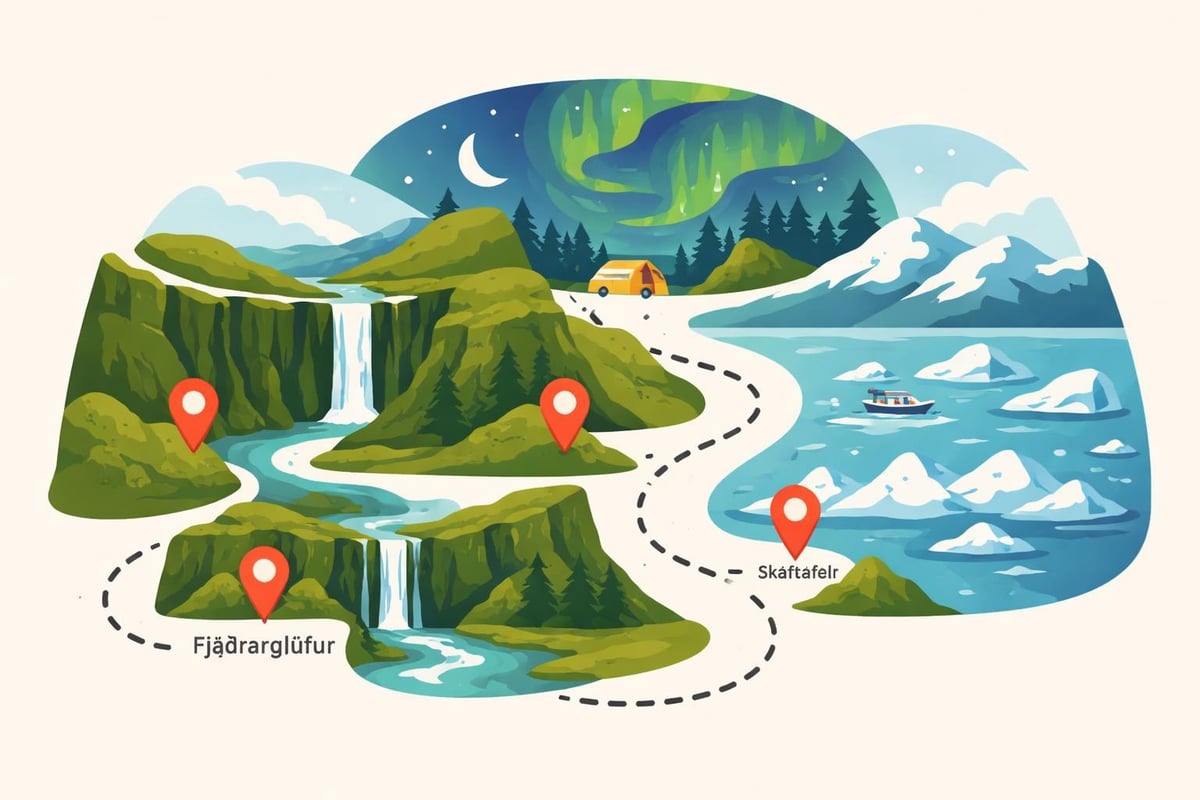
The southeastern region of Iceland offers numerous natural wonders within reasonable driving distance of fjaðrárgljúfur. Travelers typically include the canyon as part of a multi-day journey along the south coast or as a stop on a complete Ring Road circumnavigation. Strategic planning allows visitors to maximize their time while respecting environmental considerations at each location.
Kirkjubæjarklaustur, the nearest settlement, provides accommodation, dining, and fuel options. This small community serves as an excellent base for exploring the region, including Skaftafell National Park, Svartifoss waterfall, and the Skeiðarársandur glacial plain. The town itself features historical sites and local museums that provide cultural context for the surrounding landscapes.
Nearby attractions within 100 kilometers:
- Skaftafell Nature Reserve and glacier hiking opportunities
- Svínafellsjökull glacier tongue
- Jökulsárlón glacier lagoon and Diamond Beach
- Vatnajökull National Park visitor centers
- Dverghamrar basalt columns
- Foss á Síðu waterfall
Those interested in exploring multiple canyons might also visit Stuðlagil Canyon, which features distinctive basalt columns and turquoise glacial water. Each canyon offers unique characteristics, and comparing different formations enhances understanding of Iceland's diverse volcanic geology.
Winter visitors to fjaðrárgljúfur should note that while the canyon itself may be closed or inaccessible, the surrounding region offers excellent opportunities for aurora viewing. The combination of geological exploration during daylight hours and aurora hunting after dark creates a comprehensive Icelandic experience, though always prioritizing safety and adhering to local regulations.
Cultural Significance and Local Perspective
For residents of Kirkjubæjarklaustur and surrounding areas, fjaðrárgljúfur represents both pride and concern. The canyon has attracted international attention to their region, bringing economic benefits through tourism while simultaneously threatening the natural heritage they cherish. Local tourism initiatives emphasize sustainable practices and encourage visitors to explore beyond the most famous sites.
The name "fjaðrárgljúfur" itself reflects Icelandic naming traditions, combining "Fjaðrá" (the river's name, meaning "feather river") with "gljúfur" (canyon or gorge). This descriptive naming system characterizes Icelandic geography, where place names often indicate physical features, historical events, or folklore connections.
Educational Opportunities
Understanding fjaðrárgljúfur extends beyond appreciating its visual beauty. The canyon serves as an outdoor classroom for geology, ecology, conservation, and sustainable tourism. Educational programs bring Icelandic students to study erosion patterns, volcanic formations, and environmental management strategies.
For international visitors, the canyon demonstrates Iceland's ongoing volcanic activity and glacial processes that continue shaping the landscape. The visible layers in the canyon walls represent a timeline of eruptions, each contributing to the island's growth and transformation over millions of years.
Planning Your Visit Responsibly
Successful visits to fjaðrárgljúfur require advance planning, respect for regulations, and realistic expectations about conditions and access. Check current status before making the detour, as seasonal closures protect the environment during vulnerable periods. The official Icelandic tourism websites and local information centers provide up-to-date access information.
Essential items for visiting:
- Waterproof hiking boots with excellent traction
- Weather-appropriate layered clothing
- Water and snacks (no facilities on-site)
- Camera equipment with protective cases
- Map or GPS device with downloaded offline maps
- Emergency contact information and charged phone
Weather in southeastern Iceland changes rapidly, and conditions at fjaðrárgljúfur can differ significantly from coastal areas. Wind frequently sweeps across the exposed canyon rim, making windproof outer layers essential even during summer. Winter visits require additional precautions, including checking road conditions, daylight hours, and having emergency supplies in vehicles.
The parking area at fjaðrárgljúfur accommodates standard vehicles, though motorhomes and larger vehicles should park considerately to allow space for other visitors. No entrance fee currently applies, though this could change as management strategies evolve to fund conservation and maintenance efforts.
Travelers incorporating fjaðrárgljúfur into broader Iceland adventures often combine south coast geological wonders with cultural experiences in Reykjavik. The capital city offers numerous dining options and accommodation that serve as convenient starting points for multi-day tours. Those planning extended stays might consider the best hotels in Reykjavik as base camps for organizing excursions.
The Future of Fjaðrárgljúfur
Conservation efforts at fjaðrárgljúfur continue evolving as managers assess the effectiveness of current regulations and adapt to changing visitor patterns. The nature reserve designation provides legal protection and funding mechanisms for ongoing maintenance, education, and enforcement. Future developments may include enhanced infrastructure, such as improved viewing platforms that minimize environmental impact while providing safer access.
Technology plays an increasingly important role in managing visitor numbers and behavior. Digital monitoring systems track foot traffic patterns, helping identify problem areas requiring intervention or additional protection. Social media monitoring allows managers to respond quickly to viral content that might drive unsustainable visitor surges.
The balance between accessibility and preservation remains delicate. While some advocate for stricter limitations on visitor numbers, others argue that educated visitors who understand the canyon's significance become advocates for its protection. Ongoing dialogue between tourism operators, environmental organizations, local communities, and government agencies shapes policies that aim to serve all stakeholders.
| Stakeholder | Primary Interest | Conservation Role |
|---|---|---|
| Local residents | Economic benefits, heritage protection | Community monitoring, education |
| Tourism operators | Sustainable business practices | Visitor education, regulation compliance |
| Environmental groups | Ecosystem preservation | Scientific research, advocacy |
| Government agencies | Policy development, enforcement | Regulation creation, funding allocation |
| Visitors | Access, experience quality | Responsible behavior, support for conservation |
Looking forward, fjaðrárgljúfur exemplifies the challenges and opportunities facing Iceland's natural attractions. Success here provides blueprints for protecting other vulnerable sites while maintaining the tourism industry that supports Iceland's economy. The canyon's future depends on continued cooperation among all parties committed to preserving this remarkable landscape.
For those planning adventure tours in Iceland, fjaðrárgljúfur represents just one component of the country's extraordinary geological diversity. From glacier hiking to exploring ice caves, Iceland offers countless opportunities to witness natural processes that shaped our planet. Each experience builds appreciation for the forces that continue transforming Earth's surface, with fjaðrárgljúfur serving as a particularly accessible and visually striking example of these processes in action.
Fjaðrárgljúfur stands as one of Iceland's most compelling natural formations, offering visitors a window into the geological forces that shaped this volcanic island. The canyon's preservation depends on continued responsible tourism and respect for the fragile ecosystem that developed over millennia. Whether you're seeking dramatic landscapes for photography, geological education, or simply experiencing Iceland's raw natural beauty, consider combining your visit with an unforgettable aurora borealis experience through Reykjavik Northern Lights, where expert guides help you discover Iceland's wonders while respecting the environment that makes them possible.