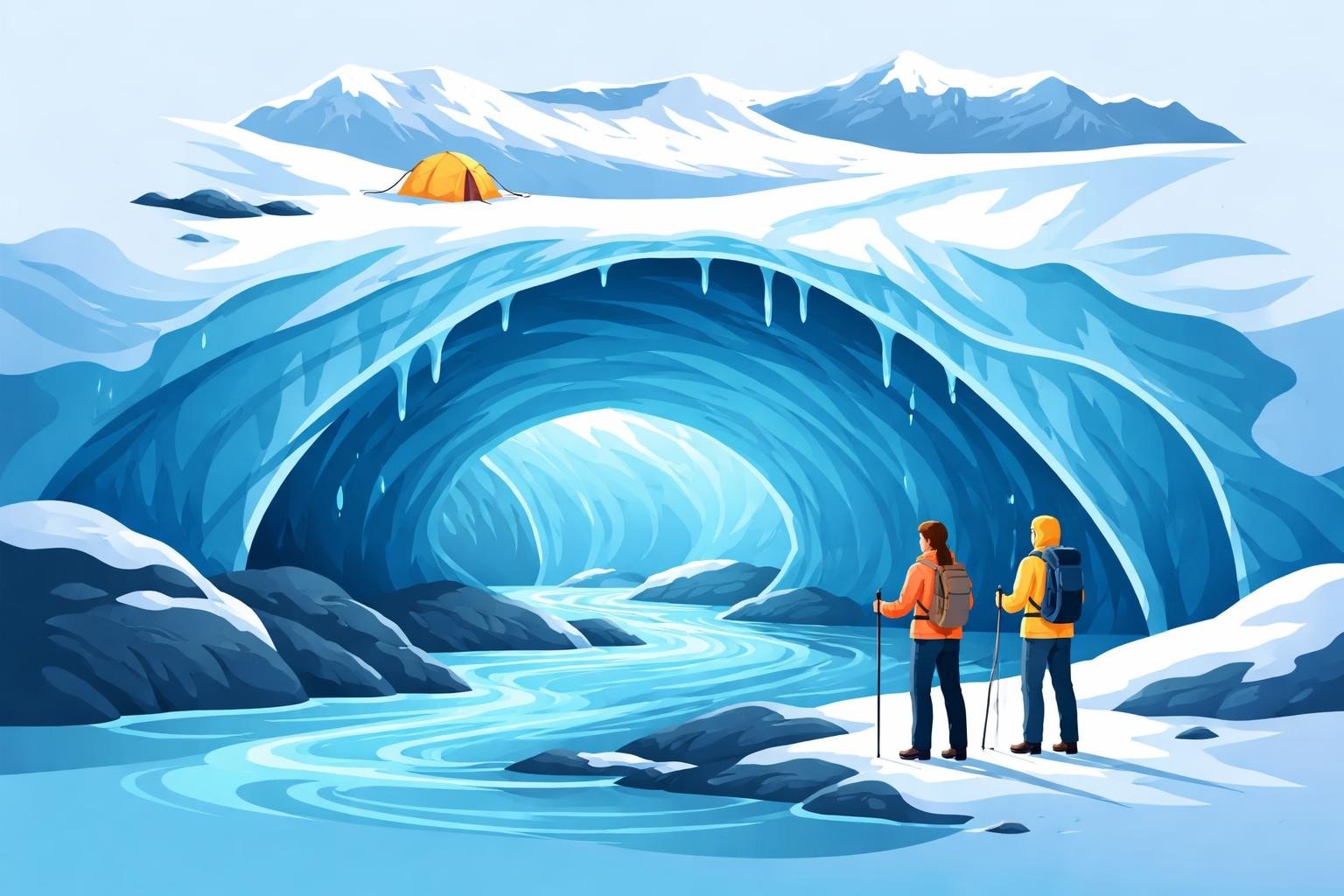
Iceland's winter landscape offers travelers an extraordinary phenomenon that combines natural science, adventure, and visual spectacle. Ice caves form within glaciers and frozen landscapes, creating temporary chambers of brilliant blue ice that attract thousands of visitors each year. These geological formations represent one of nature's most ephemeral artworks, appearing during winter months when temperatures stabilize and disappearing as warmer seasons arrive. For visitors seeking unique Icelandic experiences beyond aurora viewing, exploring these crystalline structures provides an unforgettable adventure into the heart of ancient ice.
Understanding Ice Cave Formation and Types
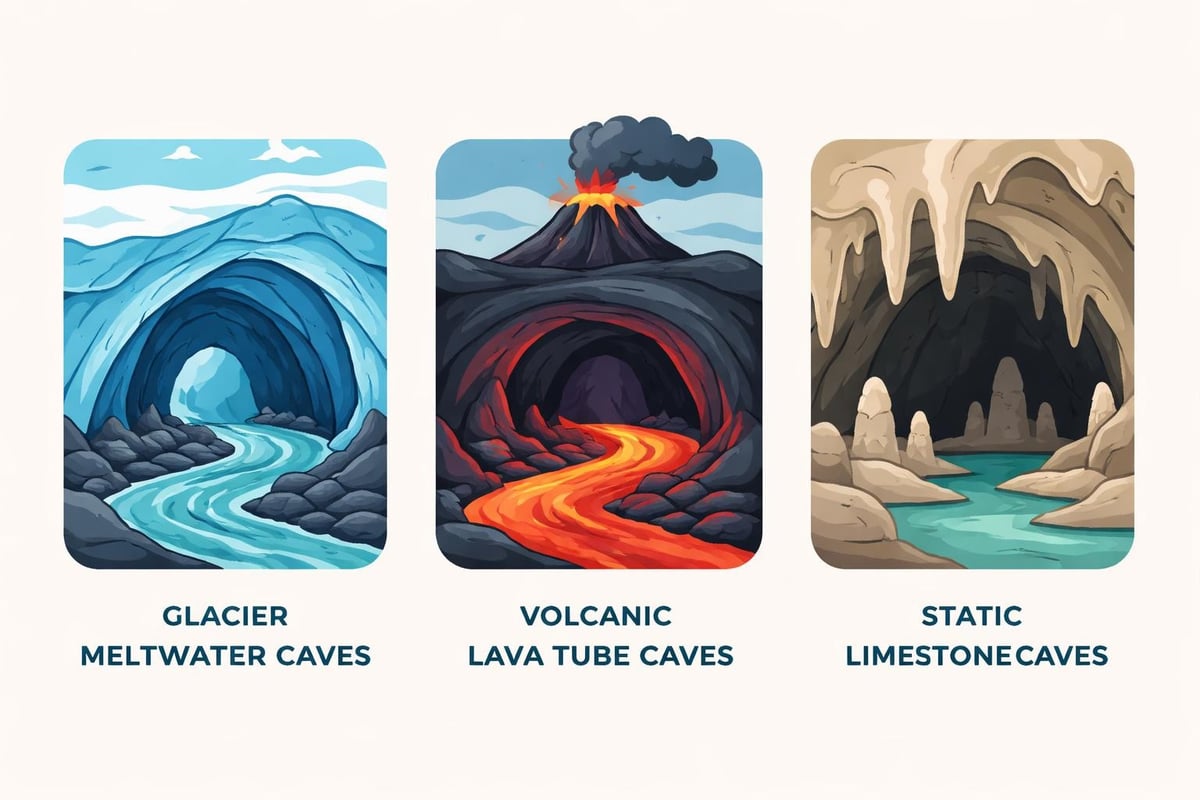
Ice caves develop through several distinct processes, each creating unique characteristics within the frozen chambers. Glacier ice caves form when meltwater carves tunnels through ice masses during summer months, which then freeze solid enough for safe entry during winter. The rushing water creates smooth, sculpted walls that reveal layers of compressed ice accumulated over centuries.
Volcanic ice caves present a different formation mechanism entirely. These caves exist within lava tubes where cold air becomes trapped, allowing ice to persist year-round despite geothermal activity nearby. The Narusawa Ice Cave in Japan demonstrates this phenomenon, maintaining ice formations throughout all seasons.
Static ice caves differ from their glacier counterparts by remaining stable for extended periods. The Eisriesenwelt in Austria represents the world's largest ice cave system, spanning over 42 kilometers of mapped passages where winter winds freeze moisture into spectacular ice formations that persist through summer months.
Iceland's Unique Glacier Cave Systems
Iceland hosts some of the planet's most accessible and visually striking ice caves, primarily within Vatnajökull glacier, Europe's largest ice cap. These formations typically open for exploration between November and March, when freezing temperatures stabilize the structures and minimize collapse risks.
The caves' signature blue color results from compressed ice that has had air bubbles squeezed out over hundreds of years. This dense ice absorbs all light wavelengths except blue, which passes through and reflects back to create an otherworldly azure glow. Different sections within the same cave can display varying shades from deep sapphire to pale turquoise, depending on ice density and light conditions.
| Cave Characteristic | Description | Visitor Impact |
|---|---|---|
| Color Intensity | Depends on ice compression and density | Best photography in midday light |
| Structural Stability | Changes daily with temperature fluctuations | Requires expert guides for safety |
| Accessibility | Limited to winter months only | Short viewing season |
| Size Variation | Caves grow and shrink annually | Different experience each year |
Safety Considerations for Ice Cave Exploration
Entering ice caves requires proper preparation, equipment, and professional guidance. Unlike permanent cave systems, glacier ice caves constantly change as ice shifts, melts, and refreezes. What appears stable one day may develop dangerous cracks or collapse zones within hours.
Professional tour operators conduct daily safety assessments before allowing visitors inside. They evaluate ice thickness, check for unstable sections, and monitor weather conditions that could affect structural integrity. These precautions become especially critical during Iceland's unpredictable winter weather, where temperature swings can rapidly alter cave conditions.
Essential Equipment and Proper Attire
Visitors exploring ice caves need specialized equipment to navigate safely across glacier surfaces and within frozen chambers:
- Crampons for traction on slippery ice surfaces
- Helmets to protect against falling ice chunks
- Headlamps for illuminating darker cave sections
- Warm, waterproof clothing in multiple layers
- Sturdy hiking boots compatible with crampon attachments
Tour operators typically provide technical equipment, but participants must bring appropriate clothing. Temperatures inside ice caves hover around freezing, while wind chill outside can drop significantly lower. Many visitors combine their cave exploration with adventure tours in Iceland that showcase multiple natural phenomena.
Geographic Distribution of Notable Ice Caves
While Iceland dominates discussions about accessible glacier ice caves, these formations exist across numerous locations worldwide. Each region offers distinct characteristics based on local geology, climate patterns, and ice composition.
The Schellenberg Ice Cave in Germany provides Central Europe's only accessible ice cave experience, featuring permanent ice formations within a limestone cave system. Unlike glacier caves, these formations develop from freezing moisture rather than glacier melt.
North America hosts several remarkable examples, including the Booming Ice Chasm in Alberta, known for unique acoustic properties created by ice formations. The Apostle Islands ice caves in Wisconsin form along Lake Superior's shoreline when extreme winter conditions freeze wave action into elaborate ice curtains and columns.
Volcanic Ice Cave Phenomena
Volcanic landscapes create unexpected conditions for ice preservation. The Grotta del Gelo on Mount Etna demonstrates how lava tubes can maintain frozen conditions despite volcanic heat. Cold air becomes trapped within these underground chambers, creating microclimates where ice persists year-round.
Iceland's volcanic geology contributes to its exceptional ice cave formations. The combination of active geothermal systems and extensive glacier coverage creates dynamic conditions where ice and fire exist in proximity. Visitors often explore both volcanic landscapes and glacier formations during comprehensive tours, experiencing the full range of Iceland's geological diversity.
Seasonal Patterns and Accessibility Windows
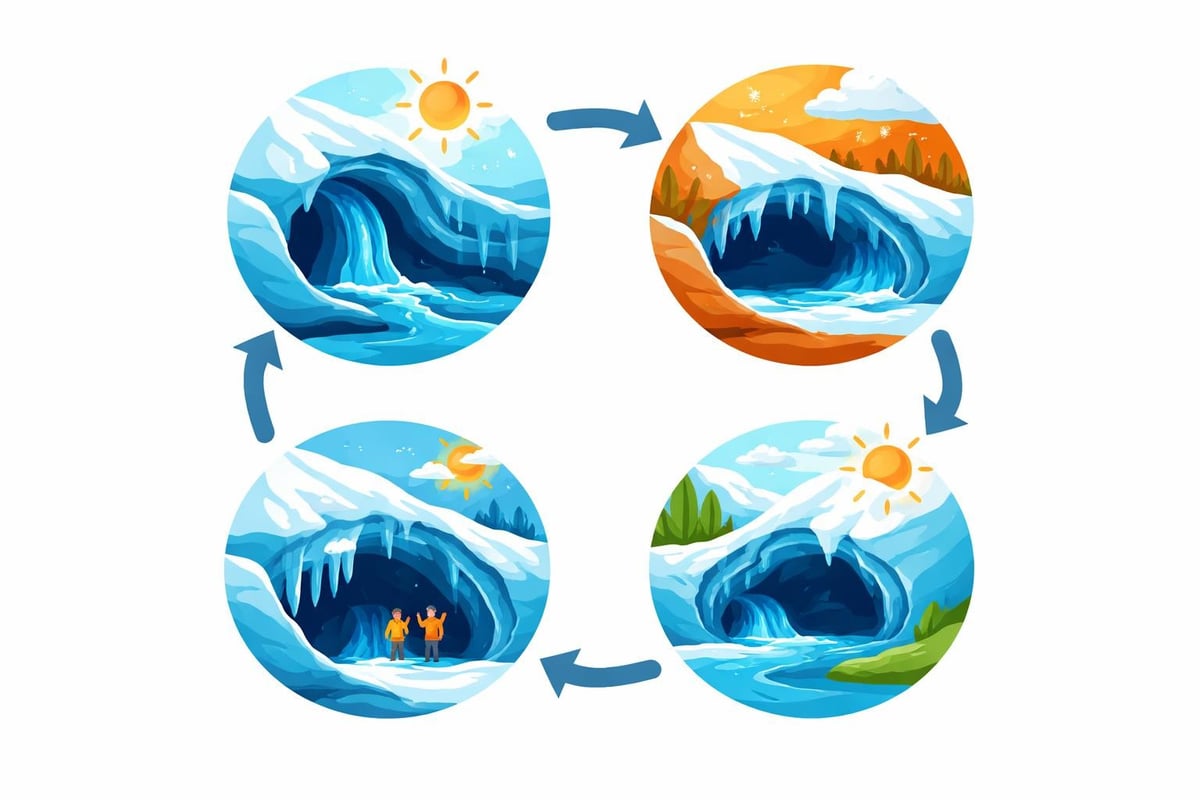
Ice cave accessibility follows predictable seasonal patterns tied to temperature cycles and glacier behavior. Summer months bring warmth that destabilizes glacier caves, causing ice to soften and meltwater to flow through chambers. This creates hazardous conditions unsuitable for exploration.
Winter stabilization typically begins in November as temperatures drop consistently below freezing. Meltwater channels freeze solid, creating stable passages through glacier ice. Professional guides begin assessing caves in late October, determining which formations are safe for the upcoming season.
| Month | Cave Condition | Visitor Access | Risk Level |
|---|---|---|---|
| November | Early freezing | Limited access | Moderate |
| December-February | Fully frozen | Peak season | Low with guides |
| March | Beginning thaw | Declining access | Moderate |
| April-October | Unstable/melted | Closed | Extreme |
The prime viewing window extends from December through February, when caves reach maximum stability and visual appeal. Ice appears most vibrant during this period, with minimal water seepage and solid structural integrity. Many visitors coordinate their ice cave exploration with northern lights tours in Iceland, maximizing their winter experience.
Photography and Visual Documentation Challenges
Capturing ice caves' ethereal beauty presents unique photographic challenges. The extreme color saturation, limited lighting conditions, and confined spaces require specific techniques and equipment to produce quality images.
Natural light entering through cave openings creates dramatic lighting contrasts, with brilliant blue ice illuminated against darker depths. Photographers often shoot during midday when sunlight penetrates deepest into cave systems, though cloudy days can provide more even illumination for capturing ice texture and detail.
Technical Considerations for Cave Photography
Wide-angle lenses prove essential for capturing cave interiors within confined spaces. Tripods help stabilize cameras in low-light conditions, though moving quickly may be necessary as groups rotate through popular viewing spots. Understanding white balance becomes critical, as automatic settings often struggle with the intense blue color cast.
Professional tour operators allow time for photography while maintaining group safety and schedule adherence. Some specialized tours cater specifically to photographers, providing extended access during optimal lighting conditions. These experiences complement other outdoor adventures like glacier hiking in Iceland, where participants learn about ice formation while exploring dramatic landscapes.
Environmental Impact and Conservation Concerns
Climate change significantly affects ice cave formation, accessibility, and longevity. Rising temperatures accelerate glacier retreat, altering the size and structure of caves that form within ice masses. Some formations that existed for decades have disappeared entirely, while others have shortened their safe viewing seasons.
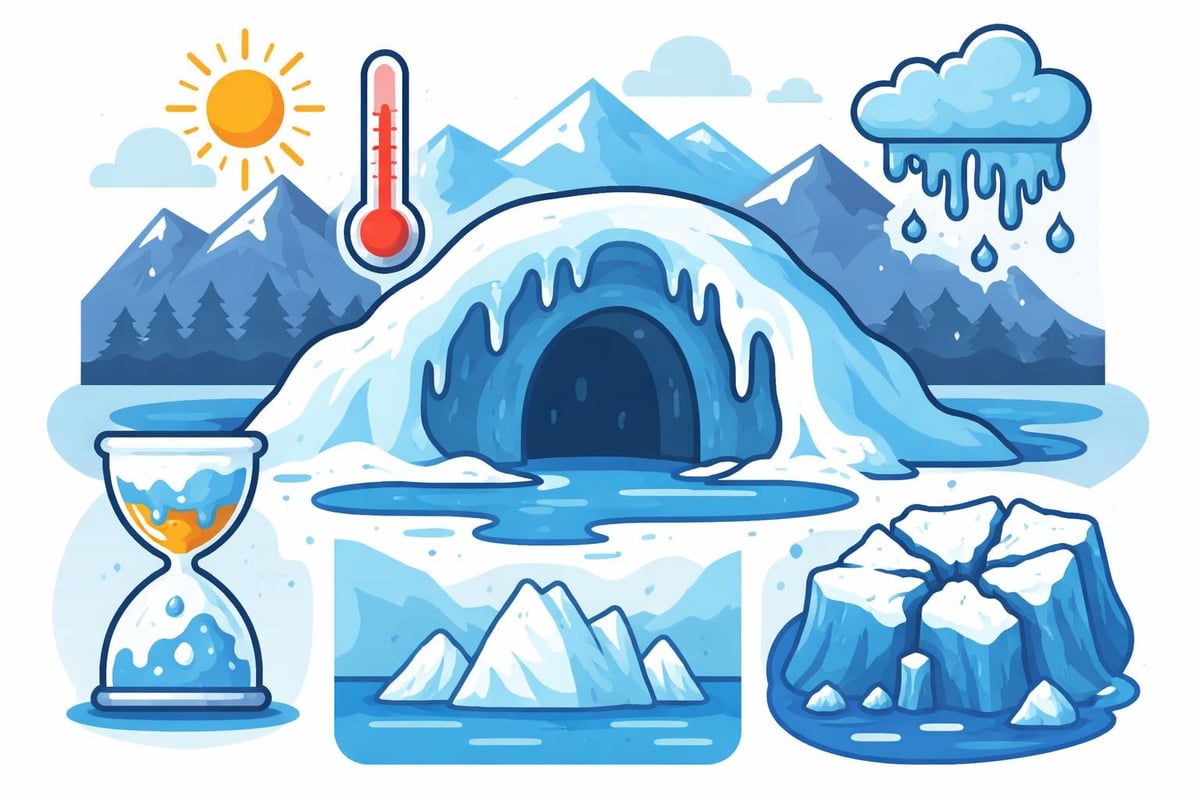
Scientists monitoring Vatnajökull and other Icelandic glaciers document measurable changes annually. Glacier thickness decreases, altering meltwater patterns that carve new cave systems. While this creates opportunities for discovering fresh formations, it also represents ongoing environmental transformation with long-term consequences.
Sustainable tourism practices become increasingly important as visitor numbers grow. Tour operators limit group sizes, restrict access to fragile areas, and educate participants about environmental responsibility. These measures help preserve ice caves while allowing people to experience these natural wonders.
Cultural Significance and Local Traditions
Ice caves hold special meaning within Icelandic culture and folklore. Historical records document local knowledge of glacier formations dating back centuries, though modern tourism has only recently made these sites widely accessible. Stories passed through generations often attributed magical properties to ice formations, connecting them with tales about trolls in Iceland and other mythological beings.
The caves' transient nature reinforces broader Icelandic perspectives on impermanence and natural power. Each winter brings new formations while erasing previous years' creations, embodying the constant change that defines Iceland's landscape. This philosophy extends to other natural phenomena, including the aurora borealis that draws visitors year-round.
Integration with Modern Tourism
Contemporary ice cave tourism balances accessibility with preservation, allowing visitors to experience these formations while minimizing environmental impact. Professional guides share geological knowledge, safety protocols, and cultural context that enriches the experience beyond simple sightseeing.
Many operators combine ice cave visits with other winter activities, creating comprehensive experiences that showcase Iceland's diverse attractions. Travelers might explore caves in the morning before embarking on evening aurora hunts, or combine glacier exploration with visits to geothermal areas and volcanic landscapes featured along routes like the Ring Road in Iceland.
Planning Your Ice Cave Experience
Successful ice cave visits require advance planning and realistic expectations about weather, physical demands, and timing constraints. Tours typically depart from regional hubs near glacier access points, with transportation included from major population centers.
Physical fitness requirements vary by tour operator and specific cave location. Most experiences involve moderate hiking across uneven glacier surfaces before entering caves. Visitors should honestly assess their capabilities and choose appropriate tour difficulty levels.
Booking considerations include:
- Reserve several months ahead for peak winter dates
- Confirm tour cancellation policies for weather-related closures
- Verify included equipment and required personal items
- Understand meeting points and transportation logistics
- Check age restrictions and physical requirements
Weather conditions ultimately determine cave accessibility, even with confirmed reservations. Tour operators prioritize safety over schedule adherence, canceling or rerouting trips when conditions deteriorate. Flexible travel schedules accommodate potential weather delays while ensuring visitor safety.
Comparing Ice Caves with Other Natural Phenomena
Ice caves represent one element within Iceland's broader portfolio of natural attractions. While visually distinct, they share characteristics with other geological features that demonstrate natural forces shaping landscapes over time.
The dynamic nature of ice caves parallels glacier hiking experiences, where visitors witness active ice movement and formation processes. Both activities require professional guidance and specialized equipment, offering intimate encounters with ancient ice. Similarly, volcano hiking in Iceland reveals landscape creation through different mechanisms, with fire rather than ice as the primary force.
| Natural Feature | Formation Time | Accessibility Season | Guided Requirement |
|---|---|---|---|
| Ice Caves | Annual cycles | Winter only | Mandatory |
| Glaciers | Centuries | Year-round | Recommended |
| Volcanic Sites | Varies widely | Year-round | Varies |
| Northern Lights | Nightly | September-April | Optional |
The ephemeral quality distinguishing ice caves from more permanent geological features creates urgency for visitors. Unlike waterfalls or mountains that persist relatively unchanged across generations, each winter's ice cave formations are unique and temporary. This transience makes the experience particularly meaningful, knowing that next year's caves will differ substantially from those visible today.
Regional Variations in Cave Characteristics
Different glaciers produce ice caves with distinct characteristics based on ice composition, meltwater patterns, and geological context. Vatnajökull's caves tend toward intense blue coloration due to extreme ice compression, while smaller glaciers may produce caves with more varied textures and patterns.
Cave size varies dramatically between locations and seasons. Some formations create vast chambers capable of accommodating dozens of visitors simultaneously, while others form narrow passages requiring single-file movement. Tour descriptions typically specify size expectations, helping visitors choose experiences matching their comfort levels with confined spaces.
The surrounding landscape context also influences the cave experience. Caves accessible near coastal areas offer different environmental conditions than those requiring deep glacier penetration. Proximity to other attractions allows tour operators to create varied itineraries that showcase multiple aspects of Icelandic nature within single outings.