Iceland's natural wonders draw travelers from across the globe, and few geological formations capture the imagination quite like Svartifoss. Located within Skaftafell Nature Reserve in Vatnajökull National Park, this remarkable waterfall presents a striking display of nature's architectural precision. The dark basalt columns that frame the cascading water have inspired Icelandic designers for decades, creating a bridge between geological phenomena and human creativity. For visitors planning Iceland adventures that include aurora chasing, understanding the country's distinctive landscapes adds depth to the overall experience of this volcanic island.
The Geological Marvel of Iceland's Black Falls
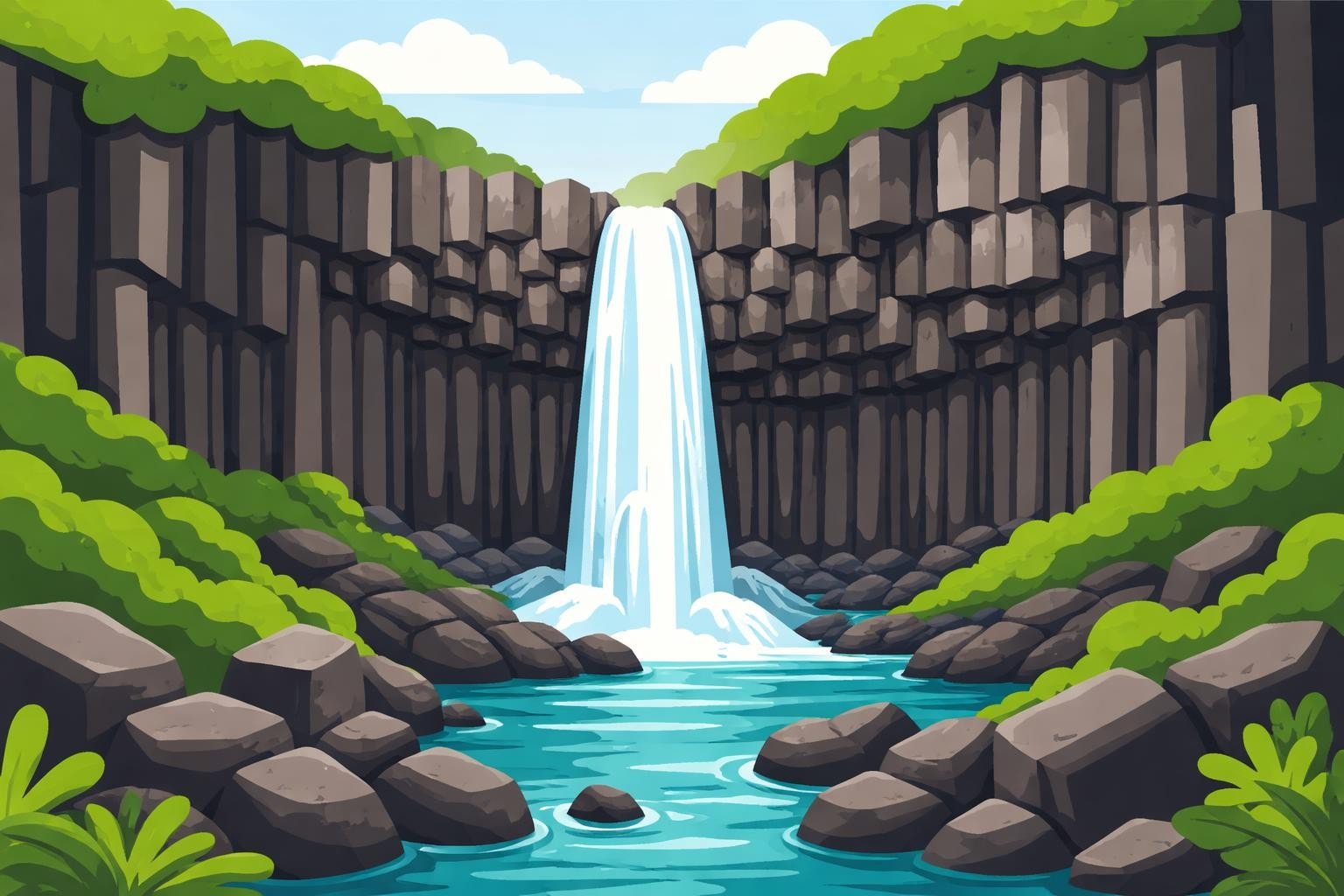
Svartifoss earns its name from the Icelandic words "svart" (black) and "foss" (waterfall), referring to the dark basalt columns that create its distinctive appearance. These hexagonal formations developed through a specific cooling process that occurred thousands of years ago when lava flows encountered precise temperature conditions.
The geological formation of Svartifoss represents a textbook example of columnar jointing. When thick lava flows cooled slowly and evenly, the rock contracted and fractured into remarkably uniform hexagonal shapes. This same process created similar formations worldwide, including Giant's Causeway in Northern Ireland and Devils Postpile in California.
Understanding Basalt Column Formation
The physics behind these formations reveals nature's mathematical precision:
- Cooling lava contracts uniformly in all directions
- Stress points form at equal distances throughout the cooling mass
- Hexagons provide the most efficient geometry for relieving this stress
- Columns extend perpendicular to the cooling surface
- The slower the cooling process, the larger the column diameter
Temperature regulation during the cooling phase determines column size and definition. The Svartifoss columns display remarkable consistency, suggesting the lava cooled under stable environmental conditions over an extended period.
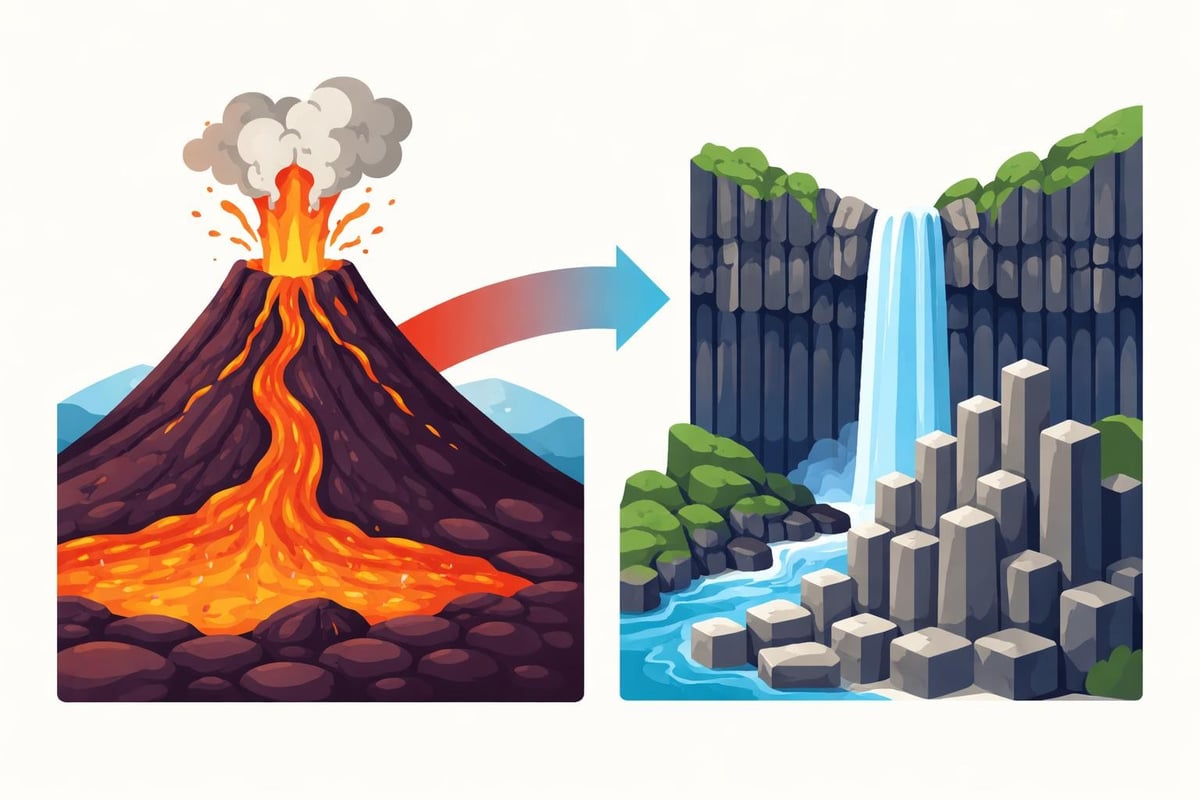
| Formation Stage | Process | Result |
|---|---|---|
| Initial Flow | Lava spreads across landscape | Thick, even layer formation |
| Early Cooling | Surface temperature drops | Outer crust solidifies first |
| Contraction | Internal stress develops | Fracture networks begin |
| Column Development | Uniform stress relief | Hexagonal patterns emerge |
| Complete Solidification | Full temperature equalization | Permanent columnar structure |
Accessing Svartifoss Through Skaftafell
The journey to Svartifoss requires a moderate hike through Skaftafell, offering visitors multiple trail options depending on fitness level and available time. The official hiking routes to Svartifoss range from straightforward approaches to extended circuits that incorporate additional waterfalls and viewpoints.
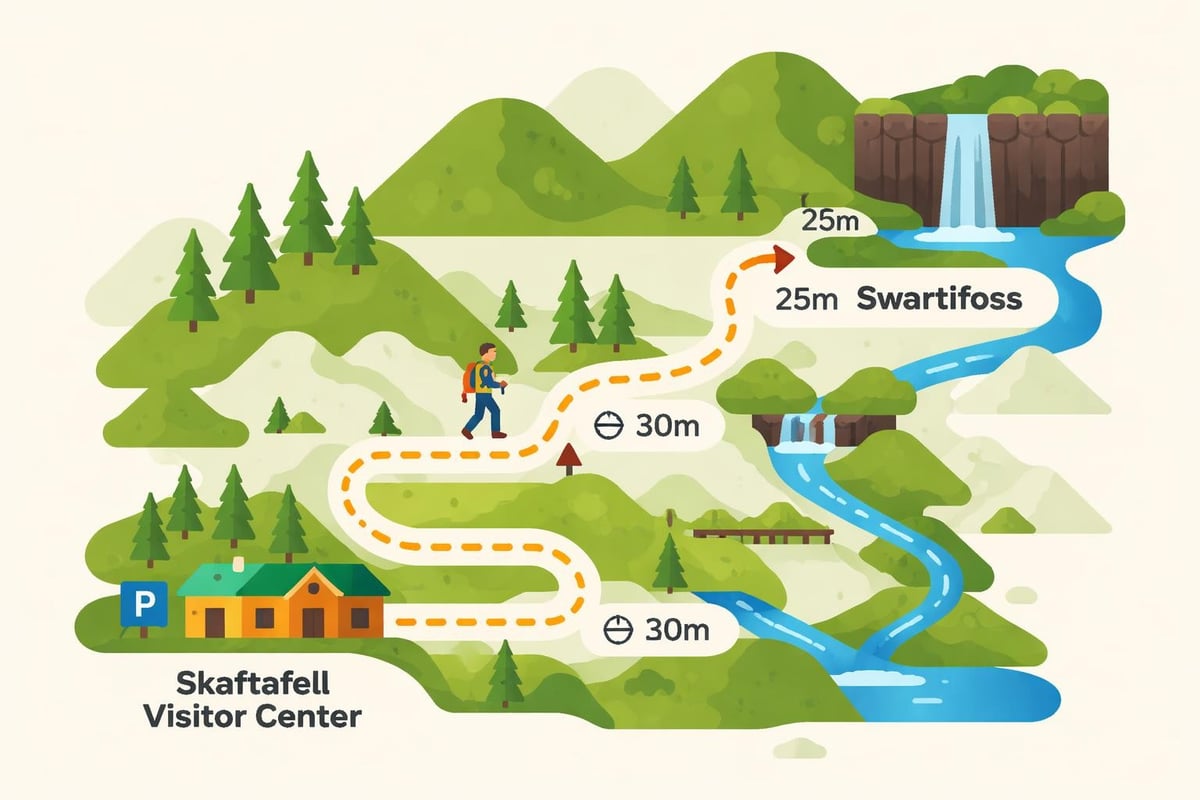
The standard route measures approximately 1.5 kilometers one-way, gaining roughly 150 meters in elevation. Most hikers complete the round-trip journey in 60 to 90 minutes, though photography enthusiasts often extend their visit to several hours.
Starting from the Skaftafell Visitor Center, the trail ascends through birch woodlands before emerging into more exposed terrain. The path quality remains excellent throughout, with well-maintained steps and bridges facilitating the climb.
Trail Considerations and Seasonal Variations
Summer months (June through August) provide the most accessible conditions, with dry trails and extended daylight hours. Winter visits present additional challenges:
- Snow and ice coverage require proper footwear with traction devices
- Reduced daylight limits hiking windows to midday hours
- Weather variability demands layered clothing and waterproof gear
- Trail markings become obscured under snow accumulation
- Parking availability decreases due to snow removal priorities
The hiking trail conditions vary significantly across seasons, making preparation essential for safe visits. Those exploring Iceland during winter for northern lights tours should allocate extra time and exercise caution on potentially icy sections.
Architectural Inspiration and Cultural Impact
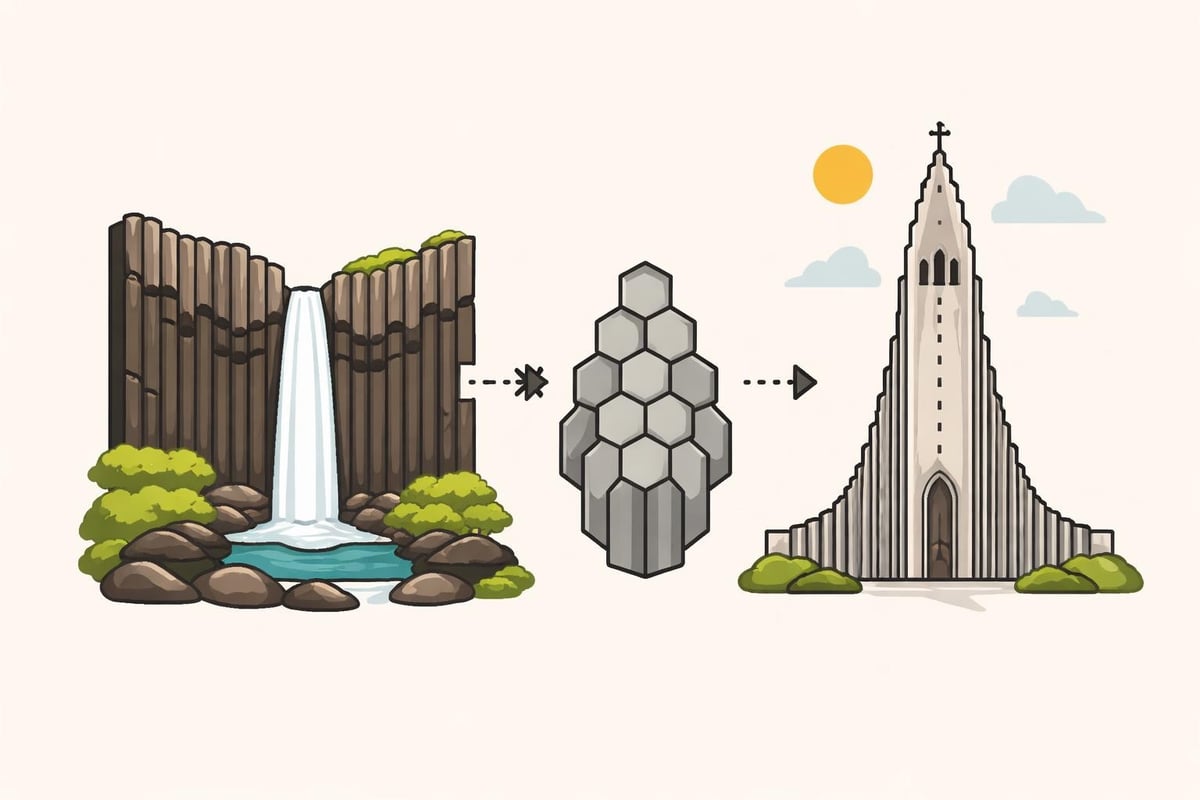
Perhaps no Icelandic waterfall has influenced modern design more profoundly than Svartifoss. The geometric perfection of its basalt columns captured the attention of architect Guðjón Samúelsson when designing Hallgrímskirkja, Reykjavík's iconic Lutheran church completed in 1986.
The architectural influence of Svartifoss extends beyond religious structures. The National Theatre of Iceland, the Church at Akureyri, and numerous private buildings incorporate similar columnar motifs, creating a distinctively Icelandic architectural language that honors the country's geological heritage.
From Natural Formation to Design Element
Modern Icelandic designers continue drawing inspiration from Svartifoss across multiple disciplines:
- Building facades mimicking vertical column arrangements
- Interior columns echoing hexagonal geometries
- Lighting fixtures replicating the play of light across basalt surfaces
- Textile patterns incorporating columnar repetition
- Jewelry designs celebrating hexagonal forms
This design tradition connects contemporary Icelandic culture to geological processes that occurred millennia ago, creating tangible links between landscape and identity.
Planning Your Svartifoss Visit
Strategic planning enhances the Svartifoss experience significantly. Practical visitor information helps travelers maximize their time while respecting the fragile environment surrounding the waterfall.
Optimal Timing and Conditions
| Season | Advantages | Challenges | Best For |
|---|---|---|---|
| Summer (Jun-Aug) | Long daylight, dry trails, full water flow | Crowds, higher prices | Families, casual hikers |
| Autumn (Sep-Oct) | Fewer visitors, dramatic skies, golden birch | Variable weather, shorter days | Photography, solitude |
| Winter (Nov-Mar) | Snow-covered landscape, potential northern lights | Ice hazards, limited access | Experienced winter hikers |
| Spring (Apr-May) | Increased water flow, awakening vegetation | Muddy conditions, unpredictable weather | Adventure seekers |
Photography considerations vary dramatically by season and time of day. Morning light illuminates the basalt columns beautifully, while afternoon visits may encounter backlighting challenges. The waterfall faces northeast, meaning direct sunlight reaches the amphitheater during morning hours in summer months.
The surrounding Skaftafell area offers numerous complementary attractions, making multi-day visits worthwhile. Just as visitors might explore various waterfalls across Iceland, combining Svartifoss with nearby Skaftafellsjökull glacier or Morsárfoss (Iceland's tallest waterfall) creates comprehensive itineraries.
Environmental Conservation and Visitor Responsibility
Vatnajökull National Park authorities maintain strict guidelines protecting the Svartifoss ecosystem. The waterfall's popularity has necessitated ongoing conservation efforts to prevent trail erosion and vegetation damage around viewing areas.
Designated pathways exist for critical reasons. Visitors straying from marked trails contribute to soil compaction, vegetation loss, and erosion acceleration. The delicate subarctic ecosystem recovers slowly from human impact, making adherence to trail boundaries essential.
Responsible Visitation Practices
Maintaining Svartifoss for future generations requires collective commitment:
- Remain on marked trails throughout the entire hike
- Pack out all waste including organic materials
- Avoid climbing on basalt columns which damages formations
- Keep noise levels moderate to preserve the natural soundscape
- Respect wildlife by observing from appropriate distances
- Follow seasonal closures when trail conditions become unsafe
The World Waterfall Database documentation provides detailed specifications about Svartifoss dimensions and characteristics, noting the waterfall drops approximately 20 meters over its basalt cliff. While modest compared to Iceland's largest waterfalls, its aesthetic impact far exceeds its physical measurements.
Combining Svartifoss with Broader Iceland Exploration
Strategic travelers integrate Svartifoss into comprehensive Iceland itineraries. The waterfall's location in southeastern Iceland positions it along the popular Ring Road circuit, making it accessible for those completing the Ring Road journey around the entire country.
Regional Attractions and Itinerary Building
The southeast region offers extraordinary diversity within relatively compact distances:
- Jökulsárlón Glacier Lagoon (80 kilometers east) showcases floating icebergs
- Diamond Beach features ice fragments scattered across black sand
- Fjaðrárgljúfur Canyon presents dramatic river-carved formations
- Skaftafell Nature Reserve contains multiple hiking opportunities beyond Svartifoss
- Vatnajökull Glacier provides glacier hiking experiences
Visitors chasing the aurora borealis during winter months find the southeast region's relative darkness advantageous. The low light pollution around Skaftafell creates excellent conditions for viewing the northern lights when solar activity cooperates.
Historical Context and Discovery
While Svartifoss has existed for thousands of years, its recognition as a significant natural landmark developed gradually. Early Icelandic settlers knew the waterfall, though its remote location limited visitation until modern transportation infrastructure reached the region.
The establishment of Skaftafell as a nature reserve in 1967 brought increased attention to Svartifoss. Subsequently, the area's incorporation into Vatnajökull National Park in 2008 further elevated its protected status and visitor profile.
Documentation and photography of Svartifoss increased dramatically with improved road access and the rise of nature tourism in Iceland. The waterfall now ranks among Iceland's most photographed natural features, appearing in countless travel publications and social media feeds.
Tourism Evolution and Infrastructure Development
The progression from obscure waterfall to major attraction required substantial infrastructure investment:
| Development Period | Infrastructure Added | Impact on Visitation |
|---|---|---|
| Pre-1970 | Minimal trails, no facilities | Local visitors only |
| 1970-1990 | Basic trails, primitive parking | Growing awareness |
| 1990-2010 | Improved trails, visitor center, marked routes | Regional attraction |
| 2010-2026 | Enhanced facilities, interpretive signage, digital resources | International destination |
The Rough Guides travel information reflects this evolution, now treating Svartifoss as an essential stop rather than an obscure side trip. This mirrors broader trends in Iceland tourism, where natural wonders once known only to locals now attract global audiences.
Photography and Artistic Representation
Svartifoss presents unique photographic challenges and opportunities. The confined amphitheater requires wide-angle lenses to capture both the waterfall and surrounding columns simultaneously. Long exposure techniques smooth the water flow, creating ethereal effects against the rigid geometric basalt.
Composition strategies vary by artistic intent. Some photographers emphasize the contrast between flowing water and static stone, while others focus on the mathematical precision of the columnar formations themselves. The monochromatic quality of the dark basalt and white water lends itself particularly well to black-and-white photography.
Weather conditions dramatically affect visual outcomes. Overcast skies provide even lighting that reveals basalt texture detail, while sunny conditions create challenging contrast ranges that test camera dynamic range capabilities.
Seasonal Photographic Opportunities
Each season offers distinct visual characteristics worth capturing:
- Spring: Increased water volume creates powerful flow patterns
- Summer: Midnight sun enables extended shooting windows
- Autumn: Golden birch foliage contrasts with dark stone
- Winter: Ice formations add sculptural elements to the scene
Those visiting Iceland primarily for adventure tours should allocate sufficient time for photography at Svartifoss. The waterfall rewards patient observation, revealing new compositional possibilities as light and weather conditions evolve.
The Science Behind the Water Flow
Understanding Svartifoss hydrology adds appreciation for the waterfall's character. The Stórilækur stream feeds Svartifoss, with water volume fluctuating seasonally based on precipitation and glacial melt patterns. Unlike glacier-fed waterfalls that peak during summer melt periods, Svartifoss responds more directly to rainfall events and snowmelt from the surrounding highlands.
Flow characteristics change noticeably across seasons. Spring snowmelt generates the most powerful flows, while late summer and autumn typically see reduced volume unless significant rainfall occurs. Winter freezing can partially ice over the waterfall, creating temporary ice formations that complement the permanent basalt columns.
The water chemistry remains relatively pure, originating from precipitation and limited groundwater sources rather than glacial melt carrying suspended sediment. This clarity allows the dark basalt backdrop to remain visible through the falling water, contributing to the waterfall's dramatic appearance.
Connecting Natural Wonders to Cultural Experiences
For travelers combining natural exploration with cultural immersion, Svartifoss exemplifies how Icelandic identity intertwines with geology. The same geological processes that created the basalt columns shaped Iceland's entire landscape, influencing settlement patterns, folklore, and artistic traditions.
The connection between Svartifoss and modern architecture demonstrates how contemporary Icelanders maintain dialogue with their geological heritage. Rather than viewing landscape as mere scenery, Icelandic culture treats geological features as active participants in national identity formation.
This perspective enriches visitor experiences beyond simple sightseeing. Understanding that Hallgrímskirkja's design originated from observation of Svartifoss transforms cathedral visits from architectural appreciation into recognition of nature's profound influence on human creativity.