The best way to plan a trip northern lights are part of is to pick the right season, choose a guided tour that adapts to the weather, and allow more than one evening for a sighting. In Iceland, the aurora season runs through the dark months of the year, and a local guide who tracks cloud cover and the aurora forecast improves your odds considerably. No operator can promise the lights, so a sound plan builds in flexibility.
This guide takes you from the science of the aurora to the practical details: timing, tour formats, group size, clothing, photography and what to do if the sky stays quiet.
What Causes the Northern Lights, and Why Does It Matter for Planning?
The northern lights occur when charged particles from the sun collide with gases in Earth's upper atmosphere, producing glowing light near the poles. Understanding this helps you plan, because two ingredients must line up: solar activity strong enough to excite the atmosphere, and a clear, dark sky from which to see it.
Colors depend on which gas is struck and at what altitude:
- Green is the most common, produced by oxygen at lower altitudes.
- Red appears higher up, also from oxygen, and is rarer.
- Purple and blue tints come from nitrogen and usually show during stronger displays.
Activity is measured on the Kp index, a scale from 0 to 9. Iceland sits beneath the auroral oval, so even modest readings can produce a visible display when the sky is clear. That is one reason Iceland suits first-time aurora travelers. You do not need a major solar storm to see something.
Solar activity also follows an 11-year cycle, and periods of higher activity tend to bring more frequent displays, which can make travel in those years especially rewarding.
When Is the Best Time for a Trip to See the Northern Lights?
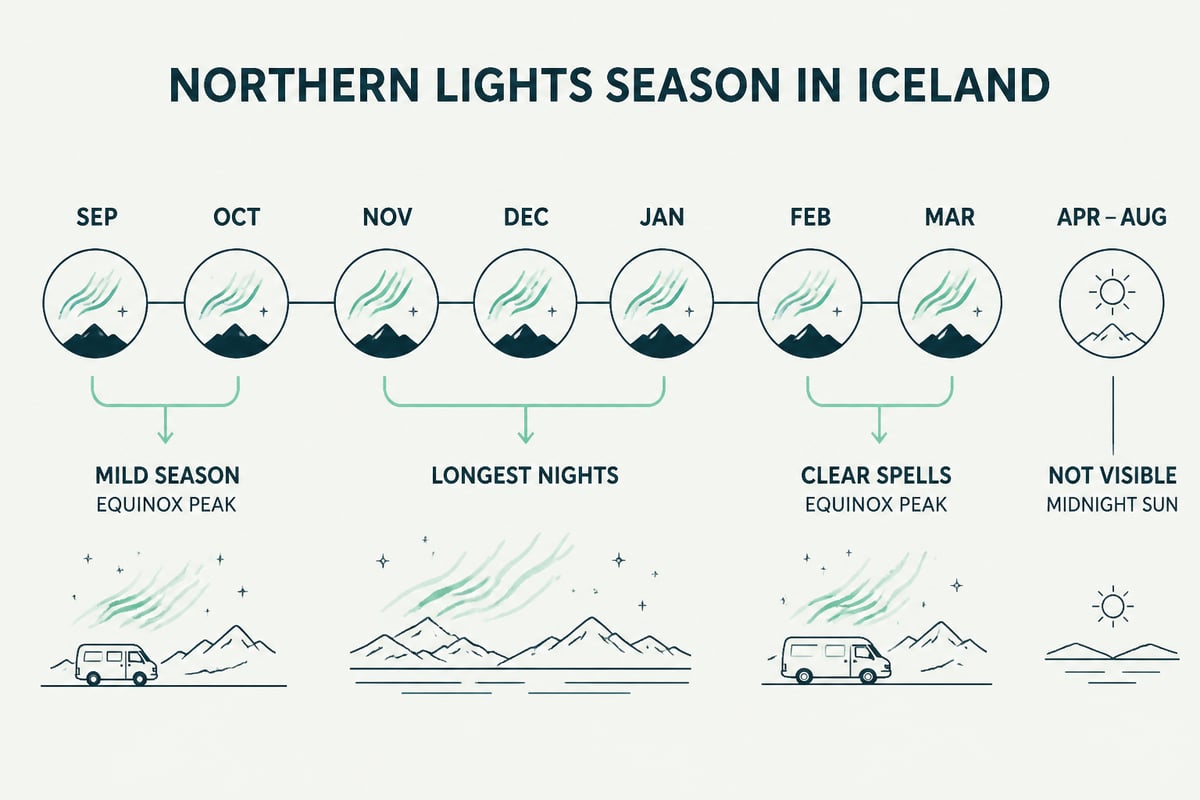
The best time is the dark half of the year, roughly from autumn through early spring, with strong odds on clear nights close to the equinoxes. The aurora itself is active all year, but the midnight sun in summer washes out the sky.
NOAA's National Centers for Environmental Information advises travelers to check aurora visibility forecasts, local cloud forecasts and moon phases, and notes that March and September are favorable months for stronger auroras. The same logic applies in Iceland. A dark, moonless week in late September or March often outperforms a bright-moon week in midwinter.
As for the hour, NOAA's Space Weather Prediction Center says the usual prime viewing window is 10 p.m. to 2 a.m. local time, and stronger geomagnetic activity can extend displays into the evening and the early morning. Most Reykjavik departures are timed to this window.
Here is how the season breaks down:
| Period | Daylight | What to expect |
|---|---|---|
| September to October | Long evenings shrinking fast | Milder temperatures, good equinox activity, darkness arrives earlier each week |
| November to January | Very short days | Longest nights, coldest weather, more snow cover |
| February to March | Days lengthening | Frequent clear spells, strong equinox activity in March |
| April to August | Bright or near-constant light | Aurora not visible |
For a deeper breakdown by month, see this guide to the best time for the northern lights in Reykjavik.
How Many Nights Should You Plan for an Aurora Trip?
Plan for at least three or four nights in Reykjavik, because the aurora is a natural event and a single evening can be lost to cloud. Spreading your chances across several nights is the most effective planning decision you can make.
The State of Alaska makes the same point for its own aurora regions, recommending visitors spend a few days in the Interior or Northern Alaska because viewing is variable. Alaska's season runs from late August to early April, and Fairbanks is a prime viewing area, with February and March as strong winter months. Iceland follows the same pattern of variability, with the added factor of fast-changing maritime weather.
A practical approach:
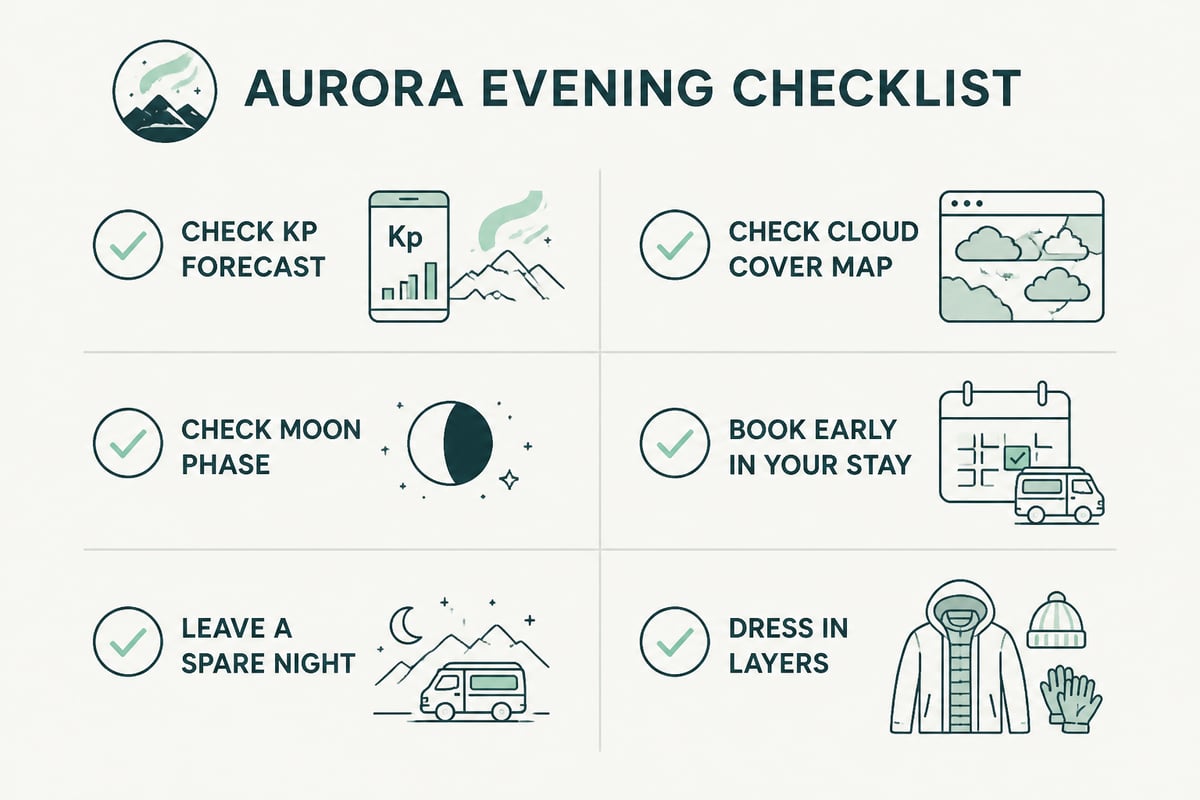
- Book your aurora tour for your first or second night, not your last.
- Leave one or two evenings free so you can rebook when the forecast improves.
- Fill daytime hours with sightseeing that does not leave you exhausted, since aurora evenings run late.
Daytime ideas that pair well with late nights include Gullfoss, the Secret Lagoon for a warm soak, or a relaxed afternoon exploring Reykjavik's restaurants before you head out.
Should You Go on a Guided Tour or Chase the Lights Yourself?
For most visitors to Reykjavik, a guided tour is the more reliable choice, because guides read cloud maps and aurora forecasts in real time and drive to wherever the sky is clearest. Self-driving is possible, but it means navigating dark, icy roads in winter conditions you may not know.
Weigh the two options honestly:
- Guided tour: Someone else handles the driving, the forecasting and the route changes. You can focus on the sky. Good guides also explain the science and folklore as you wait.
- Self-drive: You control the timing and the stops, but you carry the risk of winter driving, limited visibility and a decision you must make alone about where to go.
For a broader look at how operators differ, this overview of northern lights tours in Iceland is a useful reference.
Which Tour Format Suits Your Travel Style?
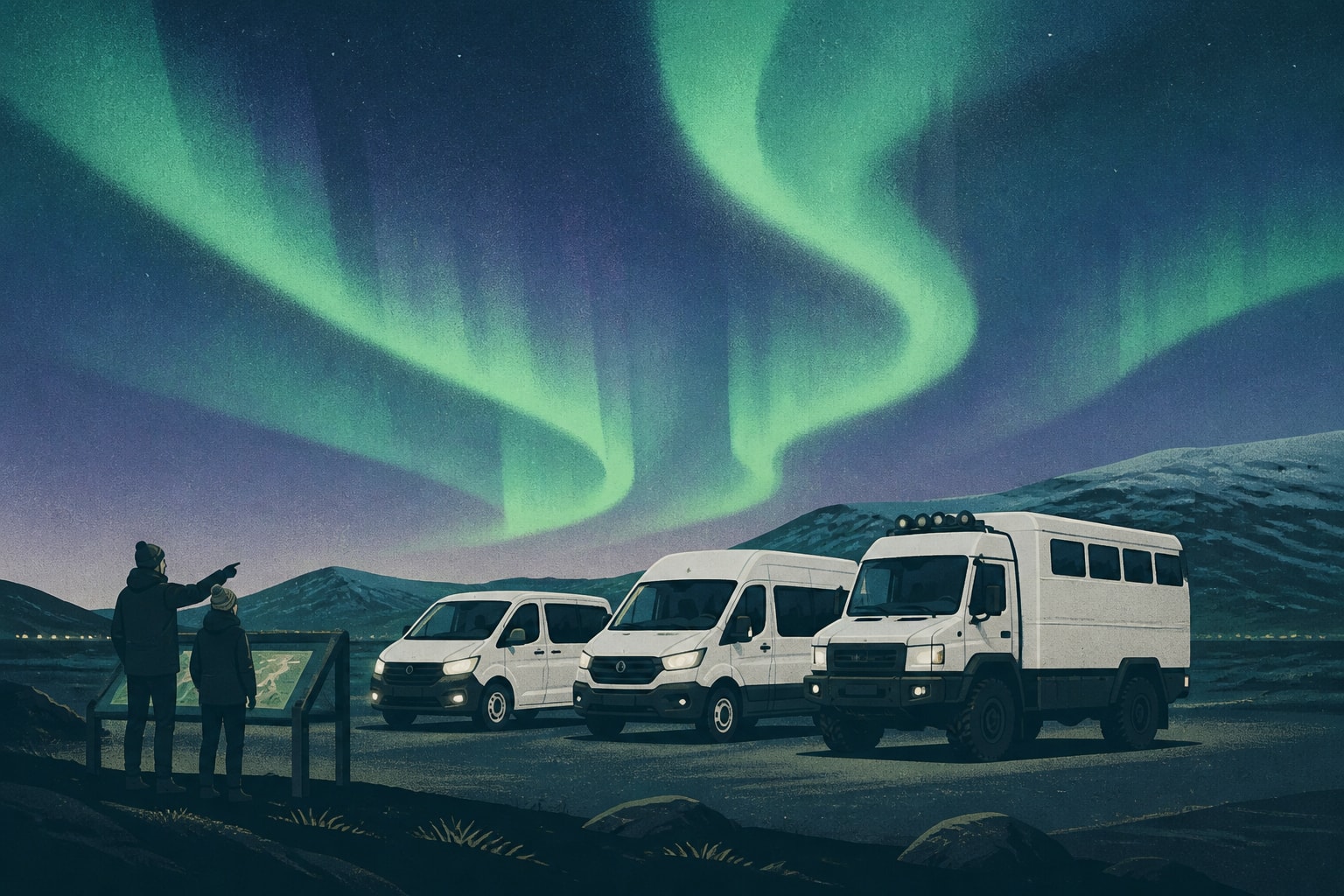
Iceland aurora tours generally fall into three formats, and the right one depends on how much you value price, comfort and a personal atmosphere. Larger vehicles cost less per person, while smaller ones offer a quieter, more flexible evening.
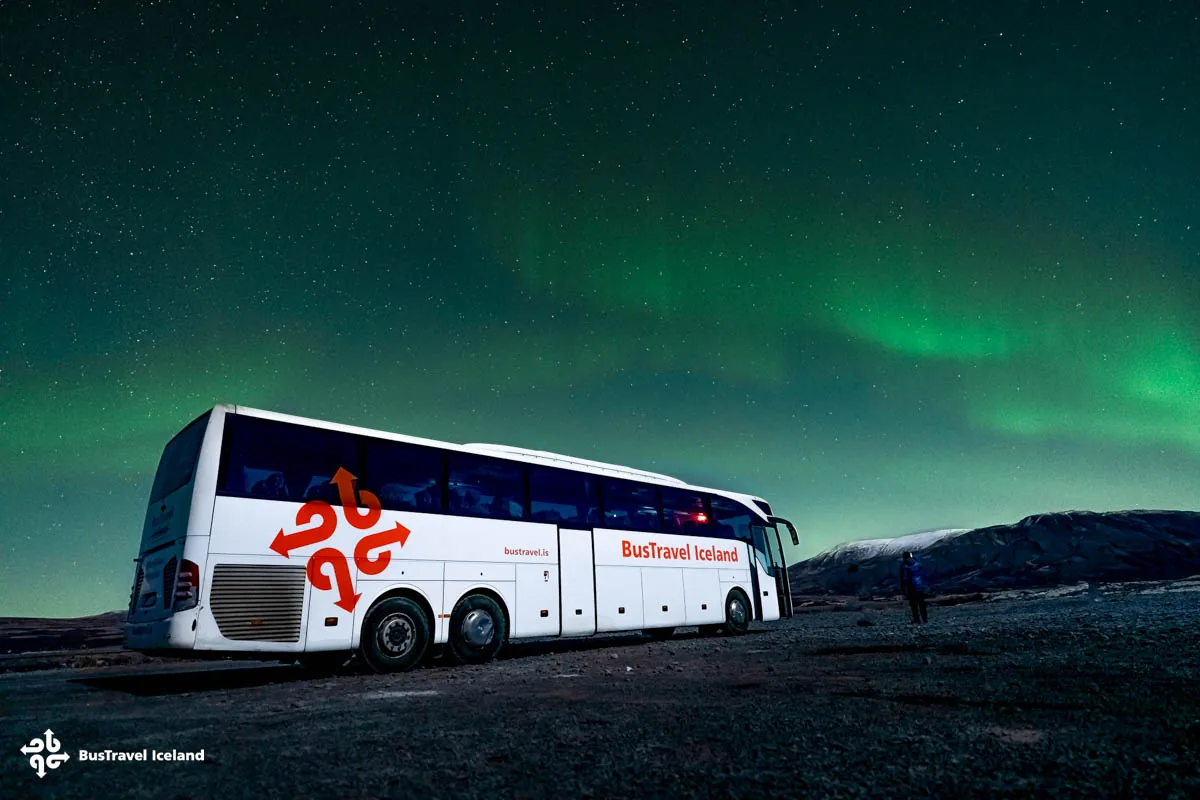
- Coach tour: The most economical option, with comfortable seating and a guide. A good fit if budget matters most and you are happy in a larger group.
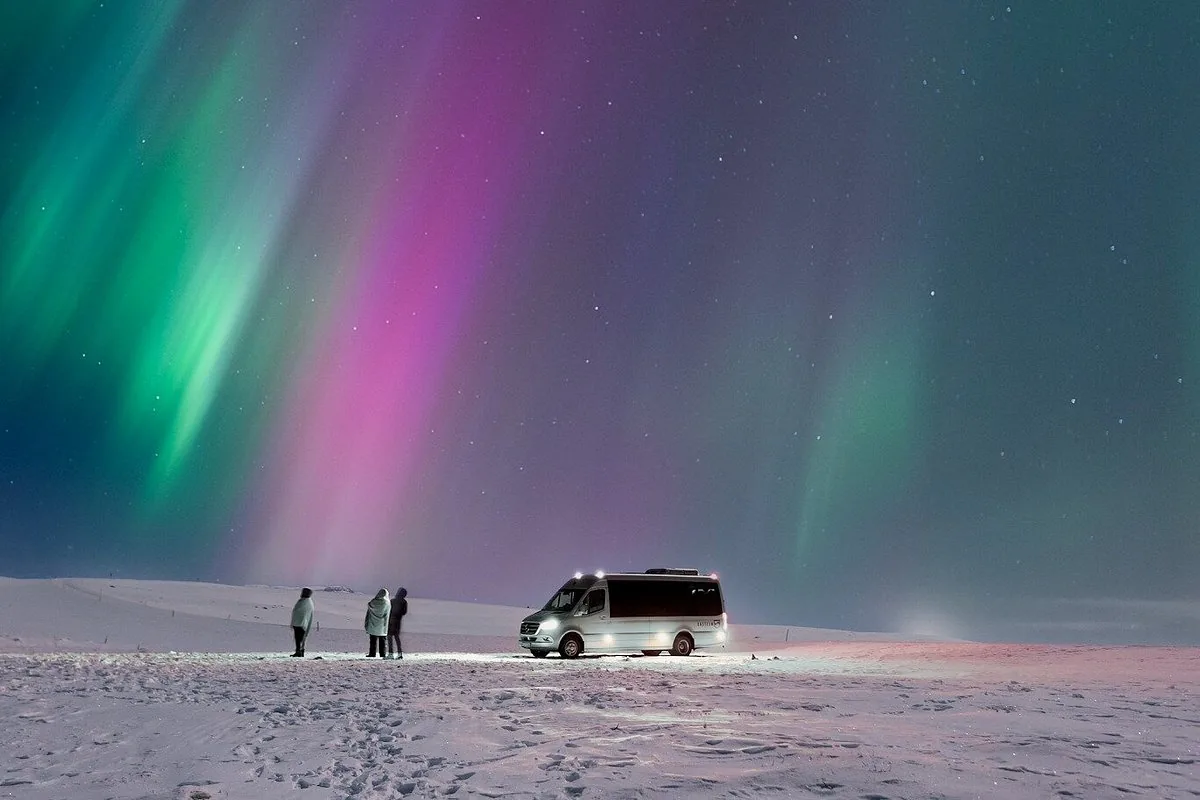
- 19-guest minibus: A step toward a more personal evening, with fewer people at each viewing stop and easier conversation with the guide.
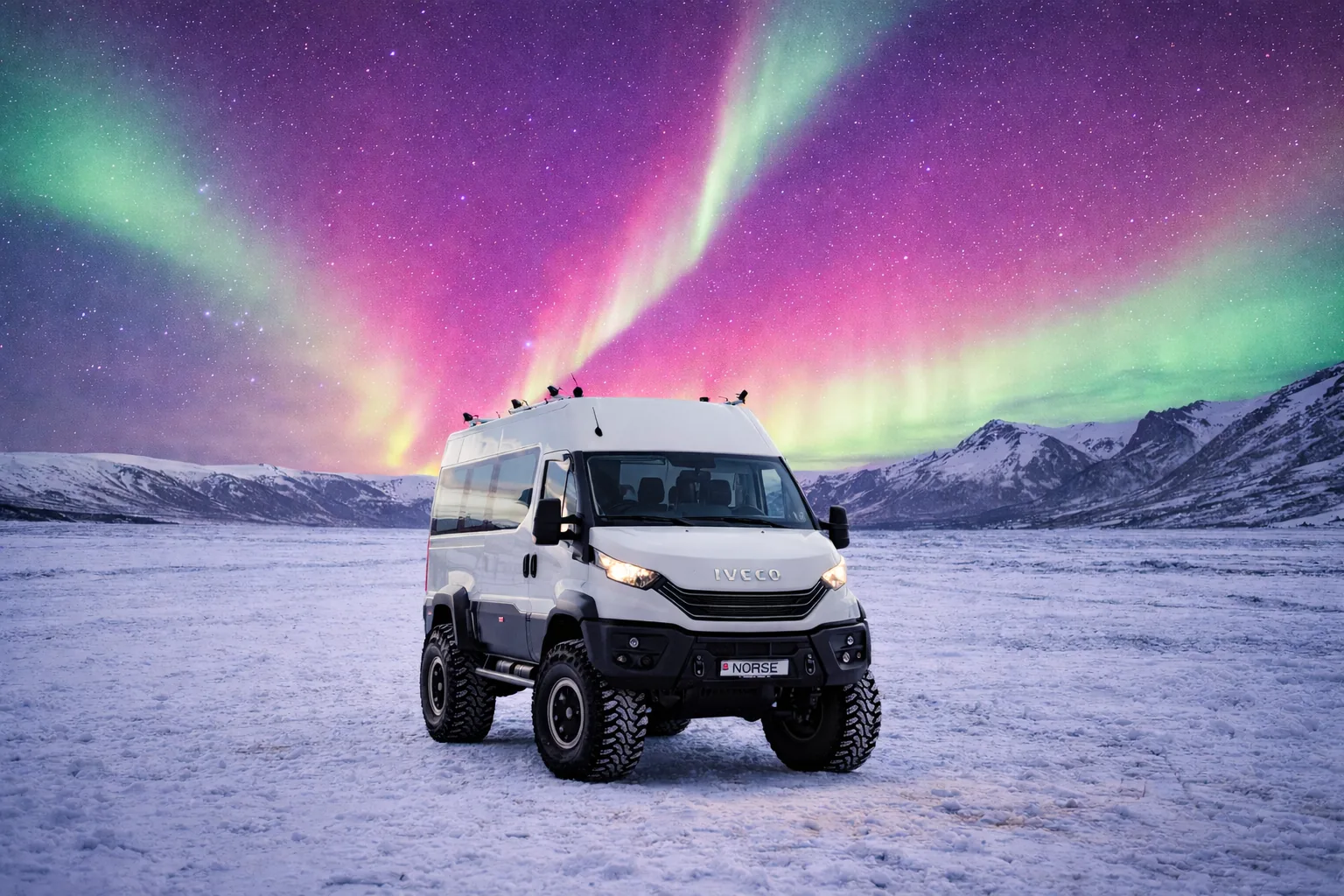
- 14-guest superjeep: The smallest group, suited to couples and small parties who want a closer, storytelling-style experience. A superjeep can also reach spots that larger vehicles cannot. You can read more about what these vehicles do in this piece on superjeeps in Iceland.
Smaller groups tend to mean less crowding at the viewing stop, more room for photography and more time with the guide. Larger coaches mean a lower fare. Neither is better in absolute terms; it comes down to what you want from the evening.
For travelers who want a straightforward, good-value introduction, the Northern Lights Bus Tour departs from Reykjavik with a local guide choosing viewing stops around cloud cover and the aurora forecast.
What Happens If the Lights Don't Appear?
Sometimes the aurora does not show, and a responsible operator tells you so in advance rather than promising a sighting. Cloud, low solar activity or both can leave a tour without a display, and no guide can change that.
Even on a night without lights, a good tour should still deliver value: stargazing away from city glare, explanations of the sky and a warm drink in the cold. Set expectations accordingly, and treat the aurora as a bonus you are well positioned to catch rather than a certainty.
How Do You Track the Aurora and the Weather?
Track two things: the aurora forecast and the cloud forecast. A strong aurora forecast under thick cloud is no use, and a clear sky with no solar activity shows only stars.
Useful habits include:
- Check the Kp forecast for the coming three days, but remember that readings change quickly.
- Check Iceland's cloud cover forecast, which often differs sharply between regions on the same night.
- Note the moon phase. A full moon brightens the sky and can wash out faint displays, while a new moon gives the darkest conditions.
- Be ready to adjust. Guides who monitor conditions live can redirect the vehicle toward a gap in the clouds, which is why live sky routing counts for more than a fixed route.
What Should You Wear on a Northern Lights Tour?
Dress in warm layers, because you will spend long stretches standing still outdoors in subzero wind chill. Cold is the most common reason visitors cut an aurora evening short.
A reliable layering plan:
- Base layer: Thermal top and leggings in wool or synthetic fabric, never cotton.
- Mid layer: A fleece or wool sweater. An Icelandic lopapeysa is both traditional and genuinely warm.
- Outer layer: A windproof, insulated jacket and waterproof trousers if snow is likely.
- Extremities: A hat that covers your ears, insulated gloves, thick socks and waterproof boots with grip.
Bring a pair of thin liner gloves as well, so you can operate a phone or camera without exposing bare skin.
How Can You Photograph the Northern Lights?
You can photograph the aurora with a modern phone or a camera, as long as you keep the device steady and use a long exposure. Handheld shots rarely work because the exposure needs several seconds.
Core settings and habits:
- Stabilize: Use a small tripod, or rest the phone on a solid surface.
- Exposure: On a camera, try 5 to 15 seconds, a wide aperture such as f/2.8 and an ISO around 1600 to 3200. Phone night modes handle much of this automatically.
- Focus: Switch to manual and focus on a distant star or light.
- Battery: Cold drains batteries fast. Keep a spare inside a warm pocket.
Also spend time simply looking. The naked eye often sees a pale, moving glow, while the camera reveals stronger color. Both are part of the experience, and you will enjoy the evening more if you put the device down for a while.
What Will a Typical Aurora Evening Look Like?
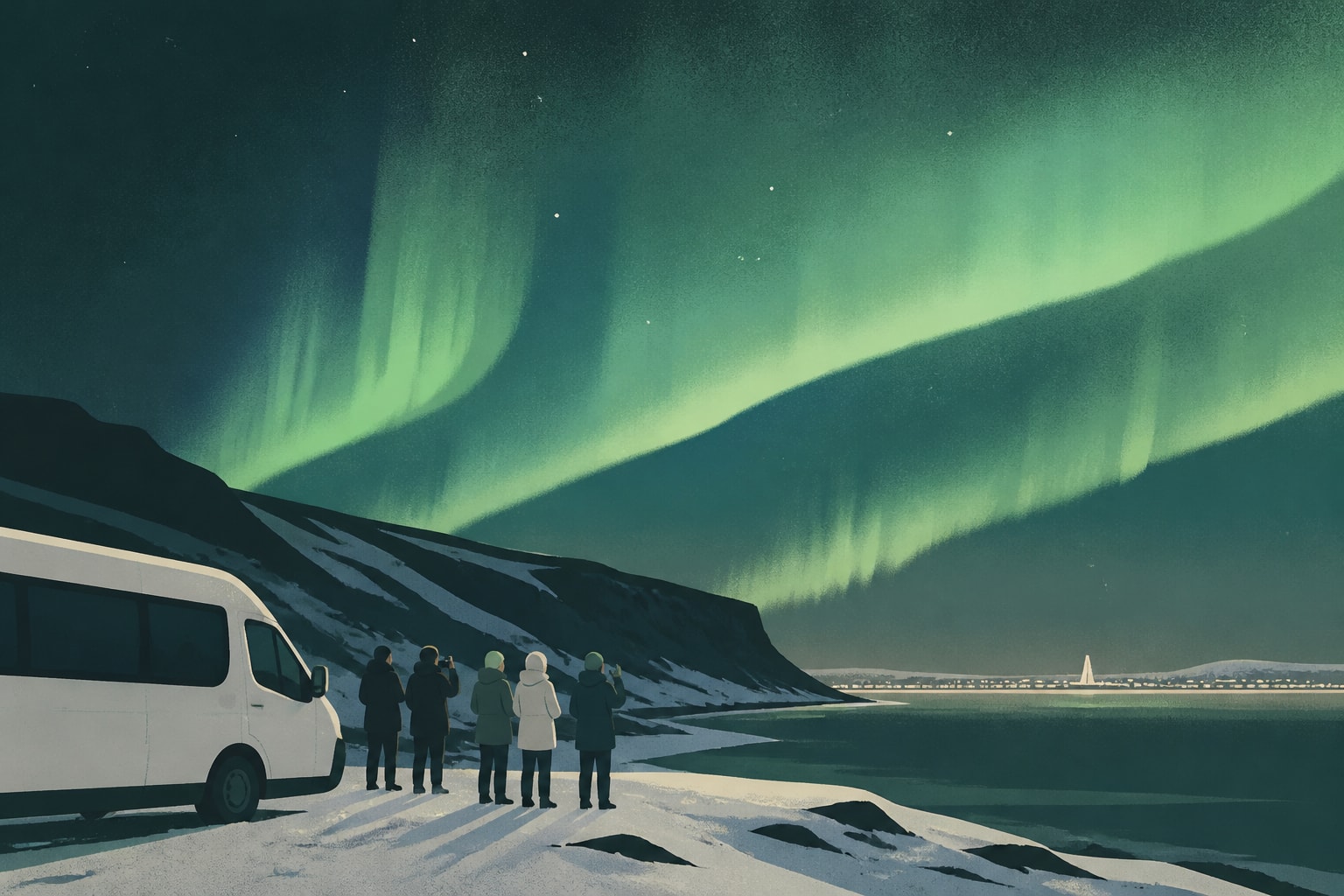
A typical guided evening lasts several hours, beginning with a pickup in Reykjavik and a drive out of the city lights, followed by one or more viewing stops chosen by your guide. The exact route varies each night because it follows the sky.
The usual rhythm goes like this:
- Pickup from a central location in Reykjavik after dark.
- A briefing from the guide about the night's forecast and plan.
- A drive away from light pollution toward the clearest sky.
- One or more stops where you step out, watch and photograph.
- A hot drink, and the return to the city.
Because the route follows the weather rather than a fixed script, expect it to differ from night to night. If you need a set route or a private itinerary, a guided group tour is not the right match, and you should look at self-guided options instead. If you prefer a flexible evening led by someone who knows where the sky is opening up, a group tour fits well.
How Do You Make the Evening More Memorable?
Small choices make an aurora evening feel special: arrive rested, eat beforehand and bring patience. The lights can build slowly, fade and return, so the people who enjoy the night most are the ones who treat waiting as part of it.
A few suggestions for couples and small groups:
- Eat a proper meal before departure, since you will be out late.
- Nap in the afternoon if you can, because the schedule runs past midnight.
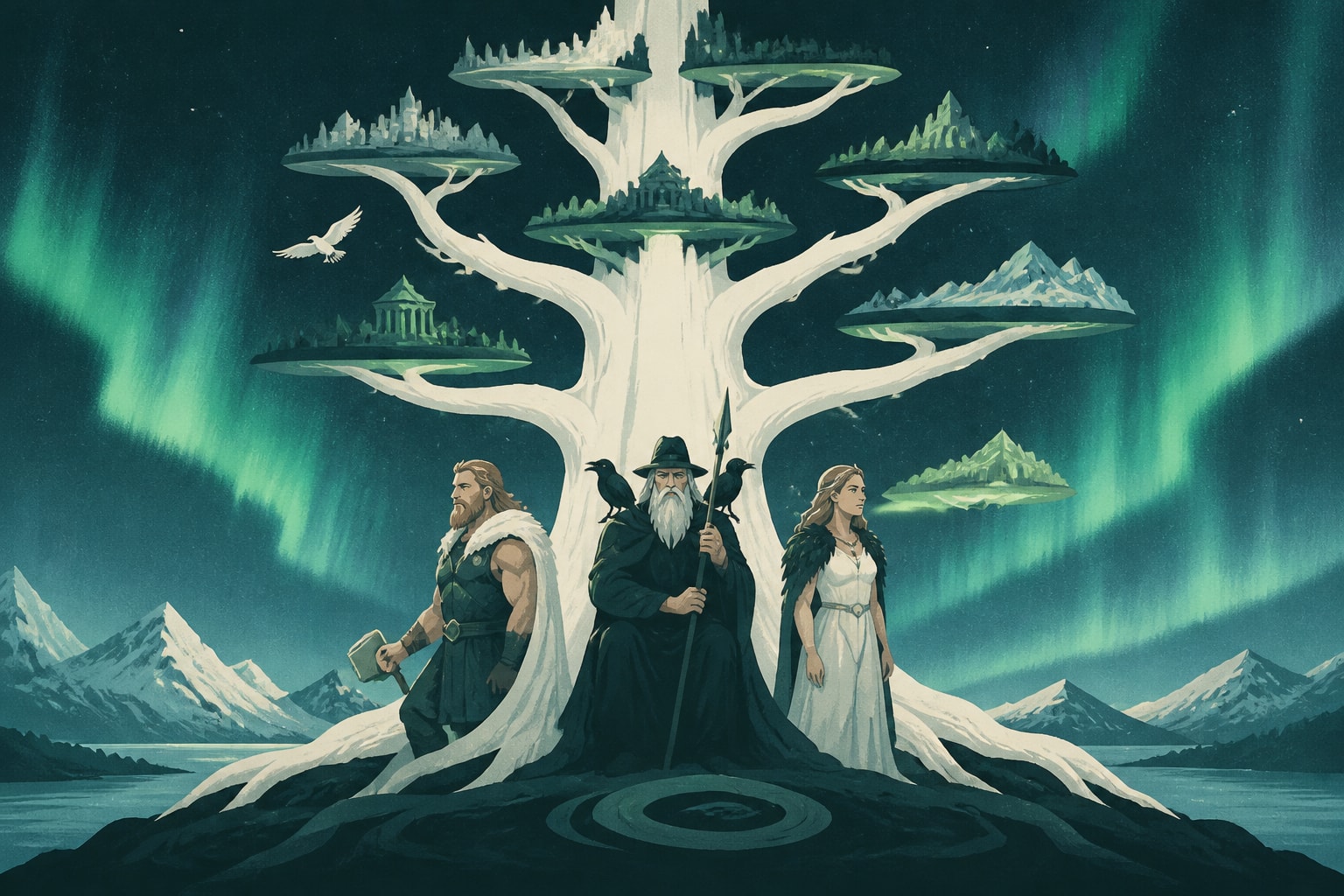
- Ask your guide about Icelandic folklore and the stories behind the sky. Local storytelling adds a great deal while you wait.
- Keep your phone's brightness low so your eyes stay adapted to the dark.
- Stay a little longer at the final stop. Displays often peak when you are about to leave.
Pairing the evening with other Icelandic sights makes the whole journey richer. A day on the Ring Road or a soak in Vok Baths can balance the late nights with unhurried daytime time.