An aurora lights tour from Reykjavik is a guided evening trip that takes you away from city lighting to a dark viewing area, with a local guide choosing where to stop based on cloud cover and the aurora forecast. The main decisions are the season you travel in, the size of the vehicle and how flexible the operator is when the sky does not cooperate. This guide covers each of those points so you can book with realistic expectations.
How does an aurora lights tour work?
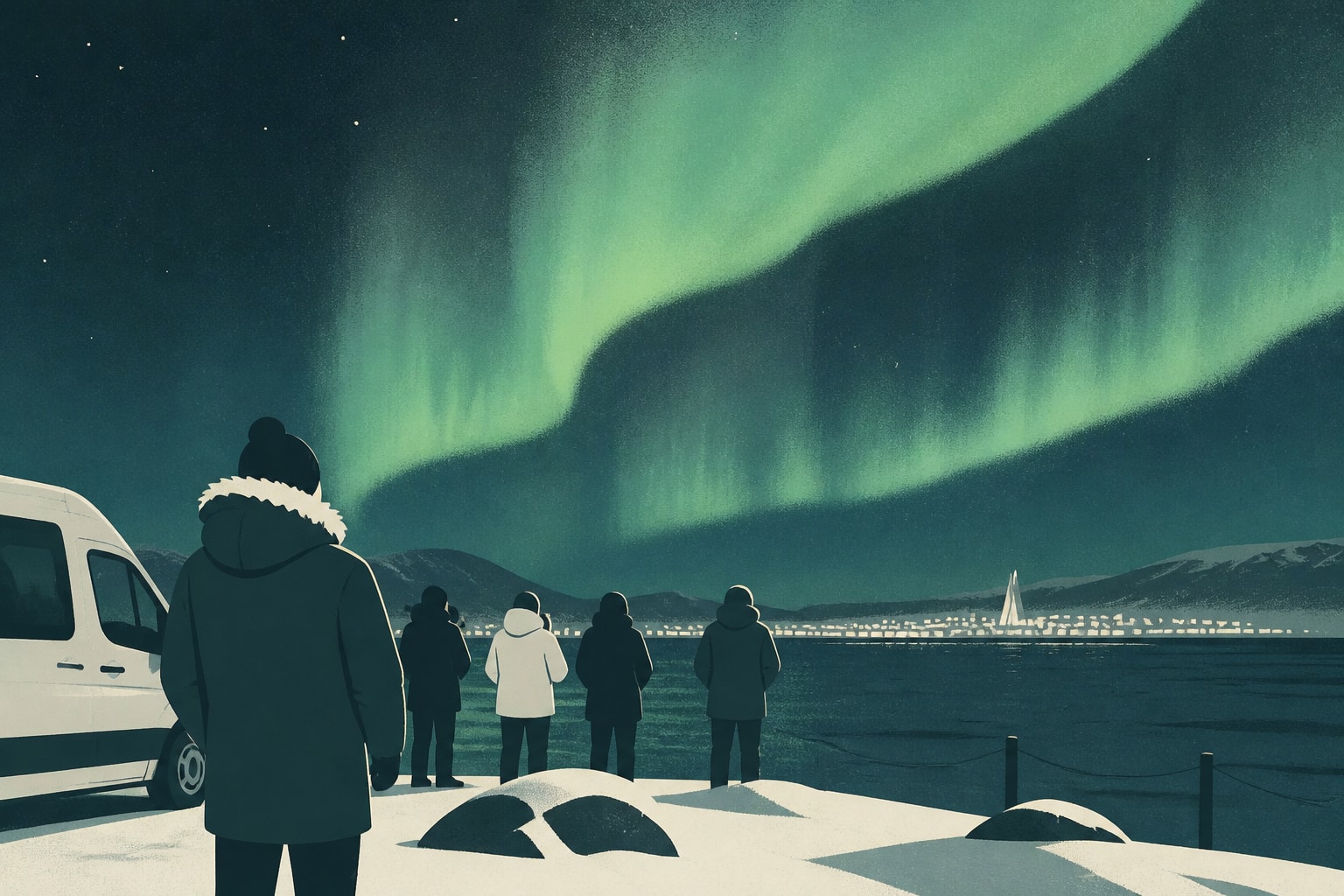
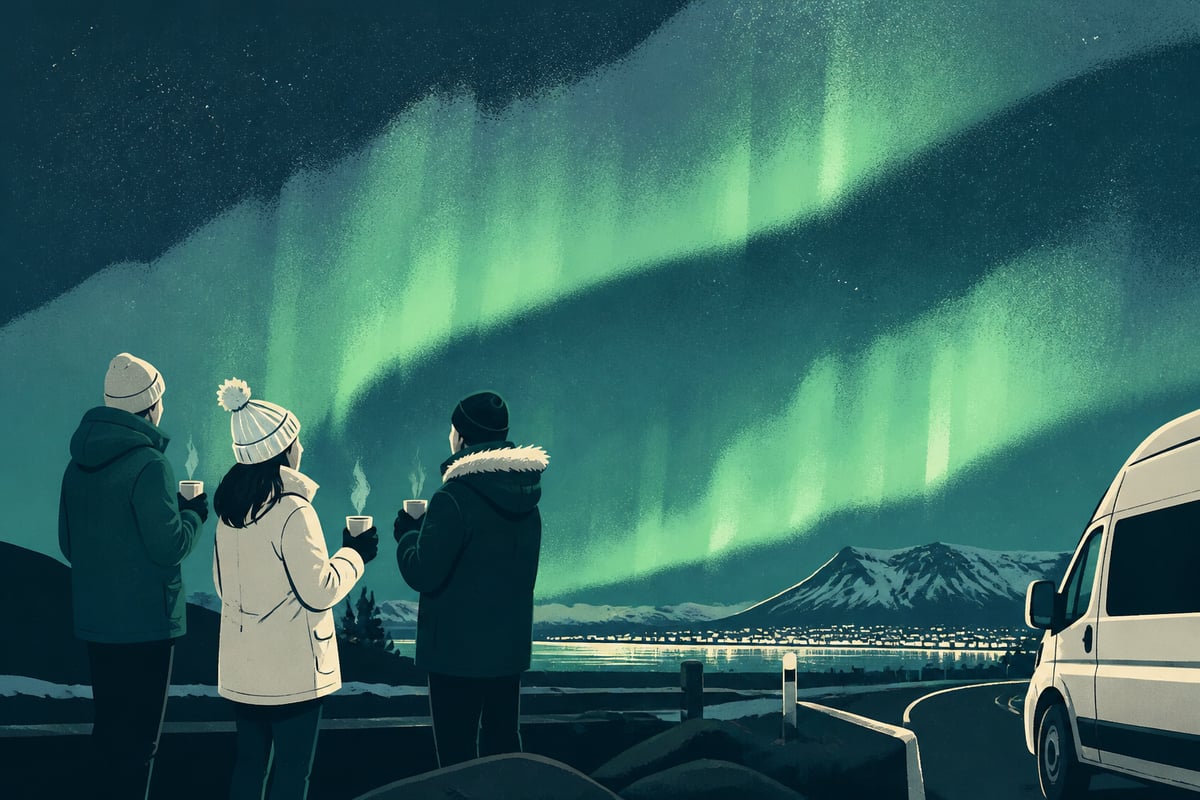
A typical tour departs from Reykjavik in the evening, drives out of the city's light pollution and makes one or more stops where the sky is clearest. The guide watches live weather and aurora data throughout the night and changes the route if conditions shift.
The aurora is a natural event, so no operator can promise a sighting. Visit North Iceland states plainly that sightings are weather-dependent and cannot be guaranteed. What a good tour offers is informed decision-making: a guide who reads the forecast, moves you to the best available sky and explains what you are seeing, including how to photograph it.
Evenings run for a few hours. Expect time on the road, short outdoor stops in the cold and a hot drink to warm up between them.
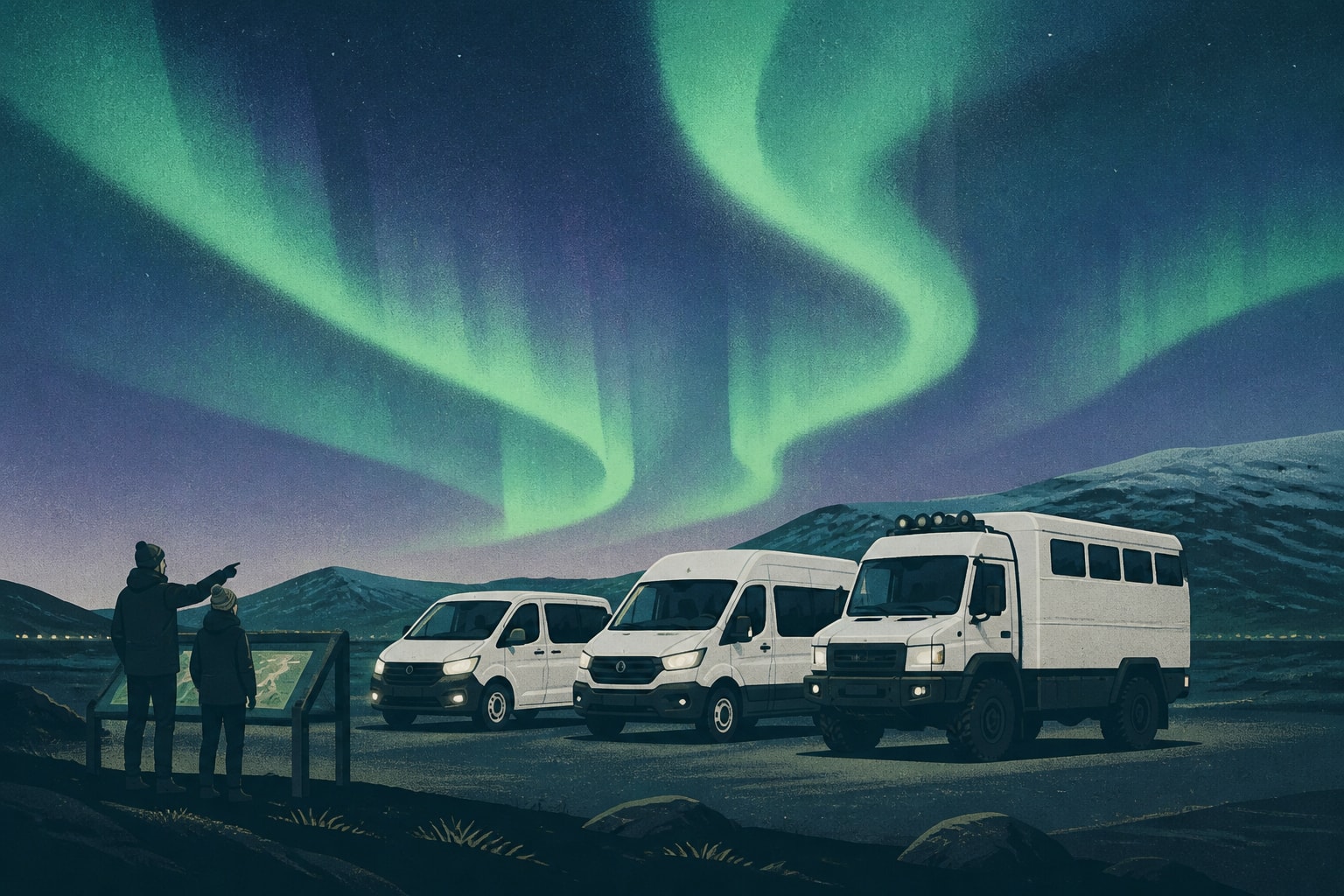
At each stop, the guide typically gives a short briefing on where to look and how long to wait, then lets the group watch at their own pace. The aurora often builds slowly, starting as a pale band near the horizon before brightening, so patience at a single stop can pay off. If clouds roll in or the display fades, the guide can load the group back on board and try a different location, which is the main reason the route stays flexible rather than fixed. Camera questions are welcome, and guides can usually suggest basic settings for night shots.
When is the best time for an aurora lights tour in Iceland?
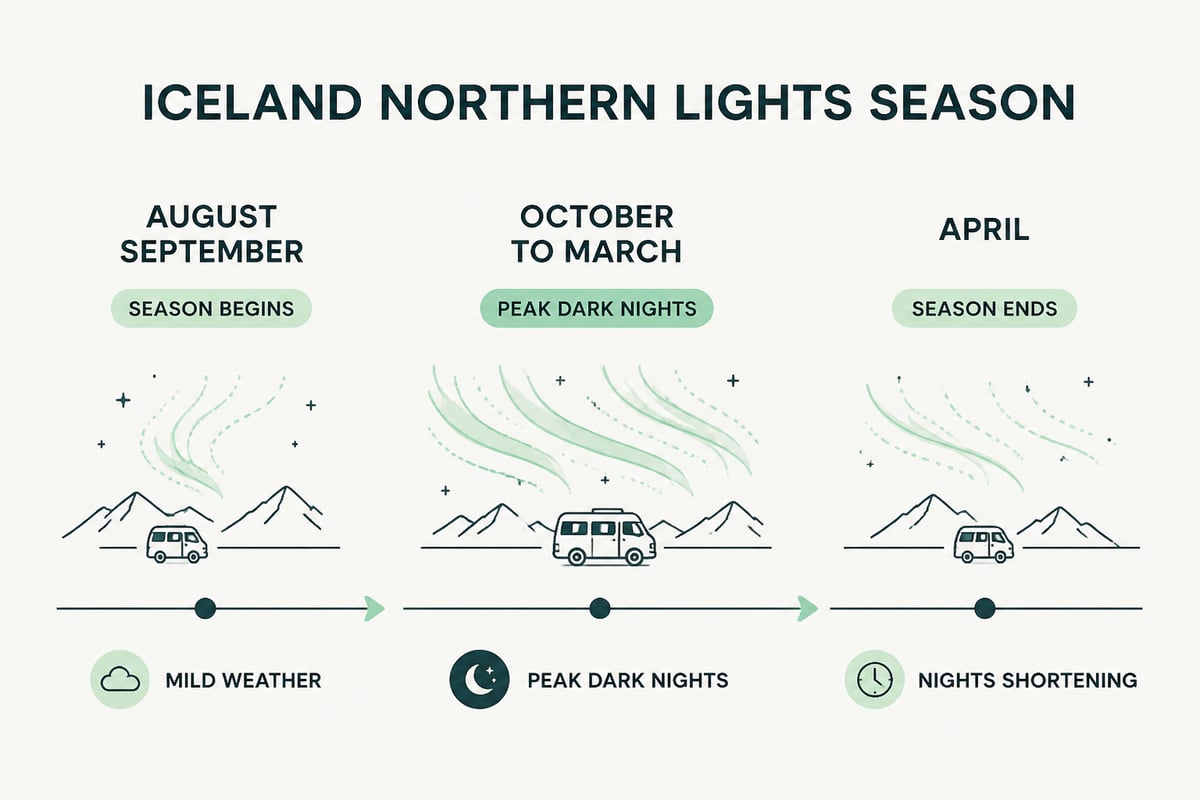
The best time is the dark half of the year, roughly September through April. Visit Iceland gives the viewing season as September through April, when longer nights create the darkness the aurora needs. In the north of the country, the lights can be seen from late August to mid-April.
Within that window, a few practical points help:
- Midwinter (December to February) gives the longest nights, so there is more darkness available for viewing.
- Shoulder months (September, October, March) bring milder temperatures and more daylight for sightseeing before your evening tour.
- Clear nights matter more than the calendar. A cloudy week in January can offer less than a clear evening in October.
- Moonlight can wash out fainter displays, though strong aurora remains visible.
If your trip is short, book your tour on your first or second night. That leaves spare evenings if weather forces a change.
How do you read the aurora and cloud forecast?
You read it by checking two things together: how active the aurora is and how much cloud covers the sky. The Icelandic Meteorological Office notes that aurora viewing requires dark, partly clear skies, and its forecast combines cloud cover with auroral activity on a 0 to 9 scale.
On the Met Office aurora map, green areas indicate cloud and white areas indicate clear skies. The sunset, darkness, sunrise and moonrise times shown apply to Reykjavik.
A high activity number does not help if the sky is covered. The Icelandic Meteorological Office also notes that even a low activity grade of 2 can produce a beautiful display, while grade 3 can be dazzling. So a modest forecast with clear skies is often a better bet than a strong forecast under thick cloud.
For general conditions, the Icelandic Meteorological Office forecast page is worth checking alongside the aurora map. This is the same information a guide uses to decide where to drive, which is why the guide's judgment is the main value of a tour compared with going out alone.
Which type of tour suits your group size and budget?
| Format | Group size | Character | Suits |
|---|---|---|---|
| Coach | Largest | Comfortable, most affordable | Visitors comparing price first |
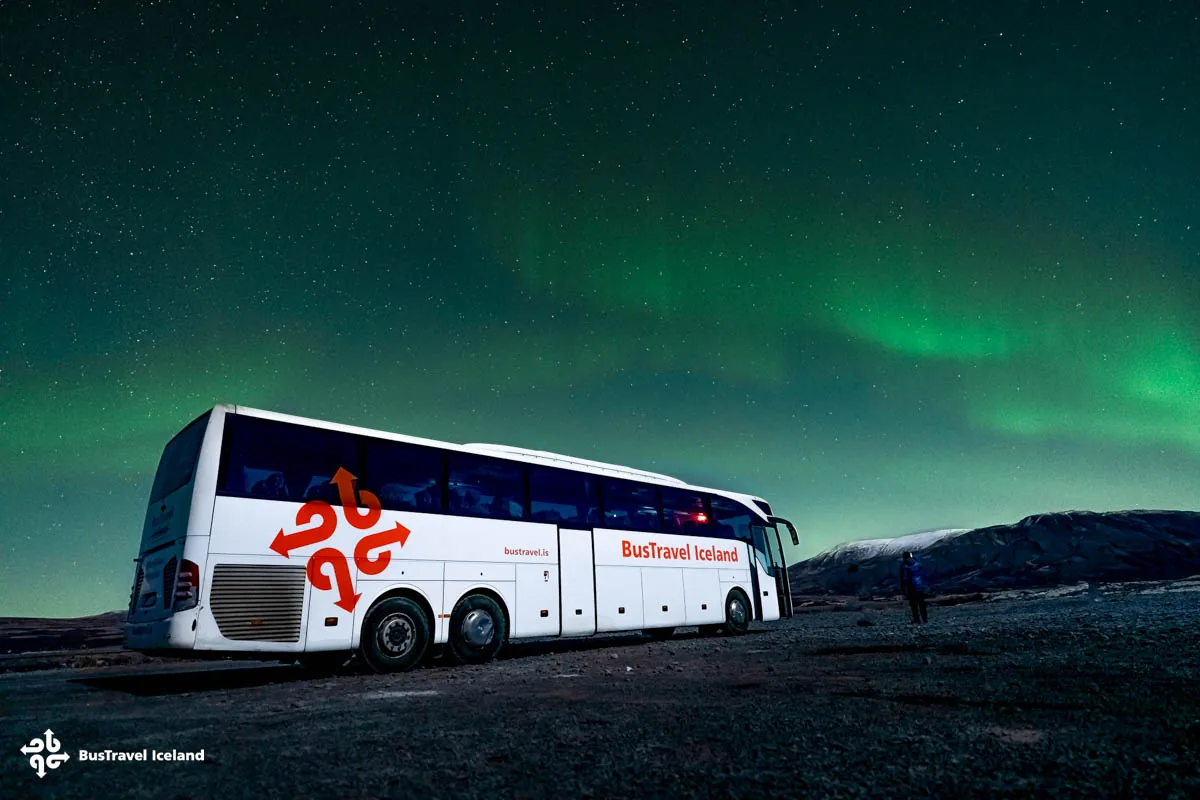
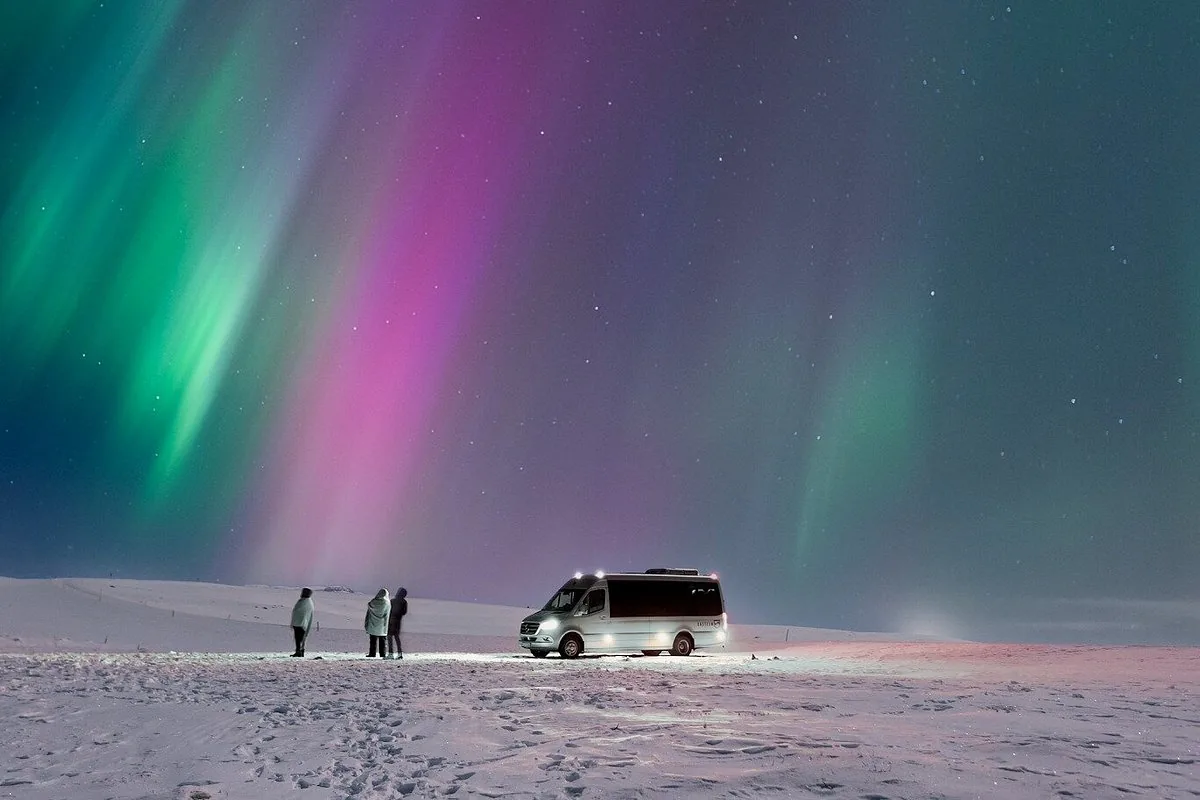
| Minibus | Up to 19 guests | Smaller group, more personal | Couples and small groups |
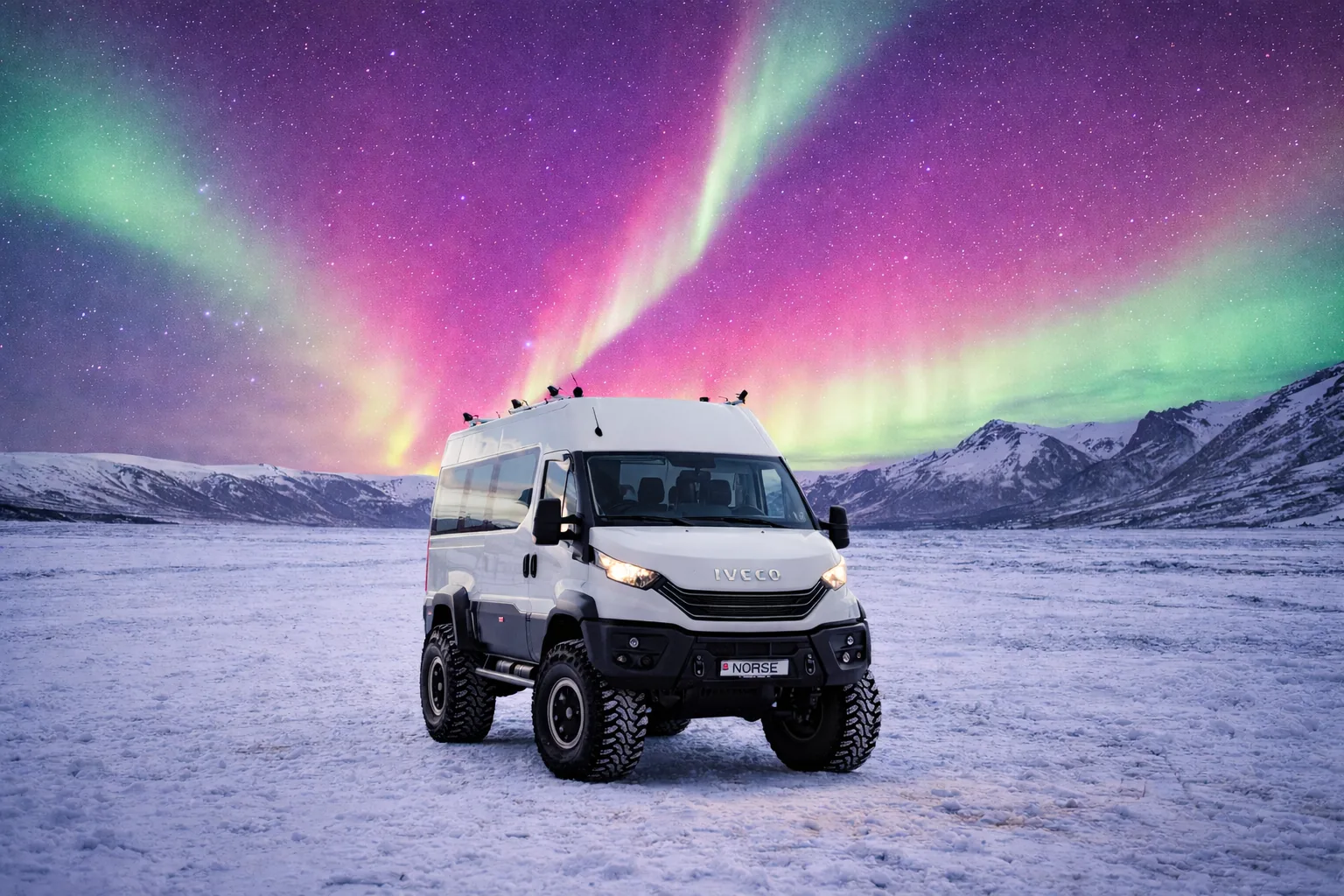
| Superjeep | Up to 14 guests | Most personal, flexible on terrain | Those who want a closer, storyteller feel |
Larger vehicles keep prices lower and suit travelers who simply want a reliable guided evening. Smaller groups mean shorter waits at each stop, easier conversation with the guide and a quieter atmosphere while you watch the sky. A superjeep adds the ability to reach less crowded spots.
What should a good aurora lights tour include?
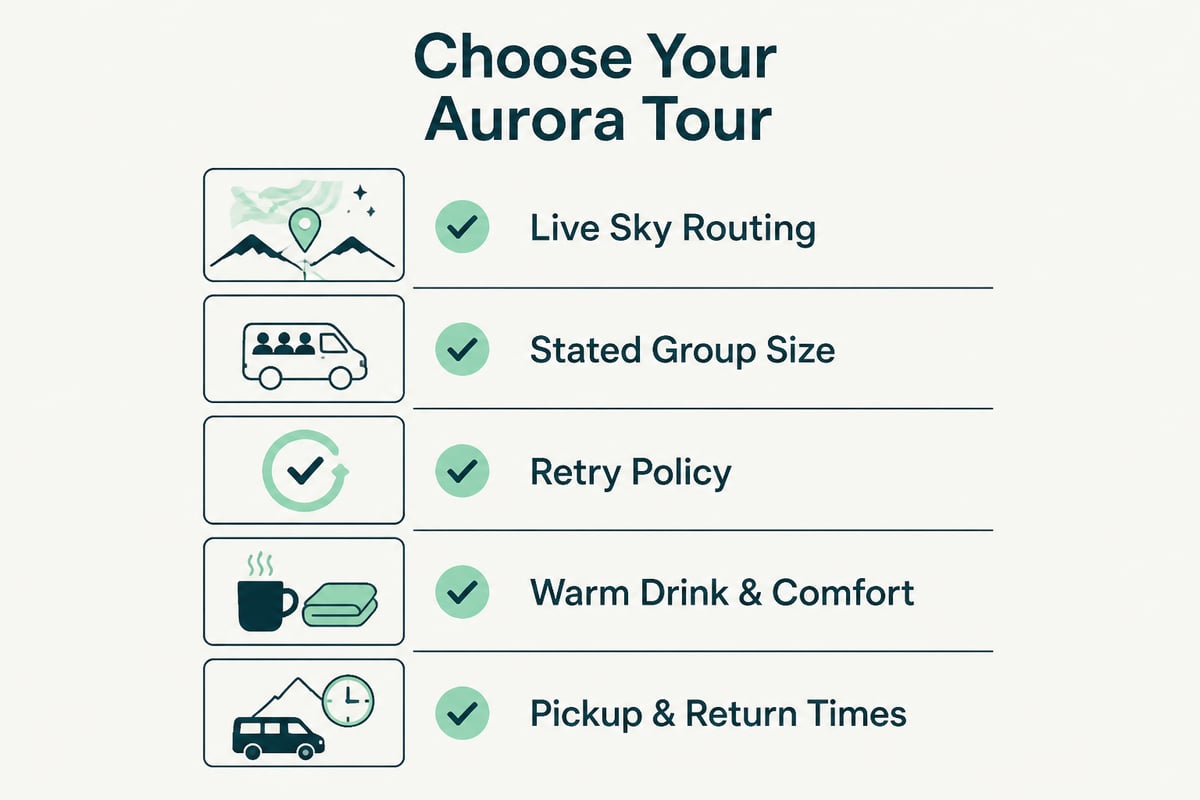
A good tour includes a knowledgeable local guide, a flexible route and basic comforts for a cold night. Before you pay, check these points:
- Live routing. Does the guide adjust the route using current cloud and aurora data, or follow a fixed script?
- Group size. Is the maximum stated clearly?
- Retry policy. What happens if no lights appear?
- Comfort. Is a warm drink provided, and is there somewhere to warm up?
- Pickup and return. Where does the tour start, and how late does it usually finish?
What happens if you do not see the aurora?
If the lights do not appear, the outcome depends on the operator's retry policy, so confirm it before you book. Visit North Iceland describes a complimentary ticket to try again when the lights are not seen on its tour.
Be honest with yourself about the odds. Even in season, some nights are cloudy across the whole country. The retry policy turns a disappointing night into a second chance, but it cannot change the weather.
It helps to read the reason behind a miss. If the forecast showed heavy cloud over the whole region, the issue was the sky rather than the tour, and a retry on a night with more white (clear) areas on the Met Office map has a better chance. Ask the operator how to redeem the retry, whether it must be used within the same season, and how far ahead you need to rebook. Keeping two or three flexible evenings in your itinerary gives the retry room to work. Meanwhile, the stops and the guide's commentary still make the evening a worthwhile night out under Iceland's dark winter sky.
What should you wear on a northern lights evening?
Dress in warm layers, because you will spend long stretches standing still outdoors at night, often with wind. Standing still feels colder than walking, so plan for lower effective temperatures than the forecast suggests.
A reliable layering approach:
- Base layer: thermal top and leggings in wool or synthetic fabric
- Middle layer: a fleece or wool sweater, and an Icelandic lopapeysa is a traditional and practical choice
- Outer layer: a windproof, waterproof jacket and insulated trousers
- Extremities: warm hat, gloves, thick socks and waterproof boots
Hand and foot warmth matters most for comfort over a long night. Cold ground draws heat through the soles of your boots, so choose a pair with room for thick socks rather than a tight fit, since compressed socks insulate poorly. Avoid cotton as a base layer: it holds moisture and cools quickly once you stop moving. If you plan to photograph the sky, thin liner gloves worn under mittens let you adjust camera settings without exposing bare fingers. A neck gaiter or scarf closes the gap at your collar, where wind tends to get in. Keep your phone and spare camera batteries in an inside pocket, because cold drains them faster.
For a more detailed list, the guide on what to wear on a northern lights tour covers each layer.
Should you book a tour or drive yourself?
Book a tour if you are unfamiliar with Icelandic winter driving or do not want to monitor forecasts yourself. A guide handles the weather decisions, the driving and the stops, so you can focus on the sky.
Driving yourself gives freedom but adds responsibility. Winter roads can change quickly, and driving at night in unfamiliar conditions is a real consideration. If you do drive, check road conditions at the Icelandic Road and Coastal Administration and review current advice at SafeTravel Iceland before leaving.
Independent viewing also means doing the forecast work yourself. You would need to compare the cloud layer on the Met Office aurora map with the activity grade, decide which direction offers clear sky, and judge whether a drive of an hour or more is worth it before conditions change. A guide does this continuously through the evening and can redirect the group on short notice. Self-drivers also have to find a safe place to stop, away from traffic and street lighting, which is harder than it sounds on unlit rural roads. Parked cars with headlights on can spoil the darkness for everyone nearby.
A tour also removes a practical problem: you do not need a designated driver who misses watching the sky, and you avoid pulling over on roads that are not designed for stopping.
How do you book an aurora lights tour with confidence?
For a first-time visitor comparing price and comfort, the Northern Lights Bus Tour is a straightforward starting point: a coach evening from Reykjavik where a local guide chooses viewing stops around cloud cover and the aurora forecast.
Follow these steps when booking:
- Choose your format based on group size and budget.
- Pick an early date in your trip to preserve a backup night.
- Confirm the retry policy and what is included.
- Check the weather and aurora forecast on the day, since tours may be adjusted.
- Pack warm layers and charge your phone and camera.
Also consider combining your evening with daytime sightseeing. Winter days are short but full of options, such as the Golden Circle route or other adventure tours in Iceland, which pair well with a late-evening aurora trip.